

 Christopher Barrett
In May, international concert and festival promoter FKP Scorpio announced a restructuring of its family entertainment and exhibitions arm FKP Scorpio Entertainment (FKPE) that saw James Cassidy take on the role of president.
Cassidy runs the international operation from a London HQ with senior promoter Barry Campbell, and comedy & spoken word promoter Ollie Catchpole.
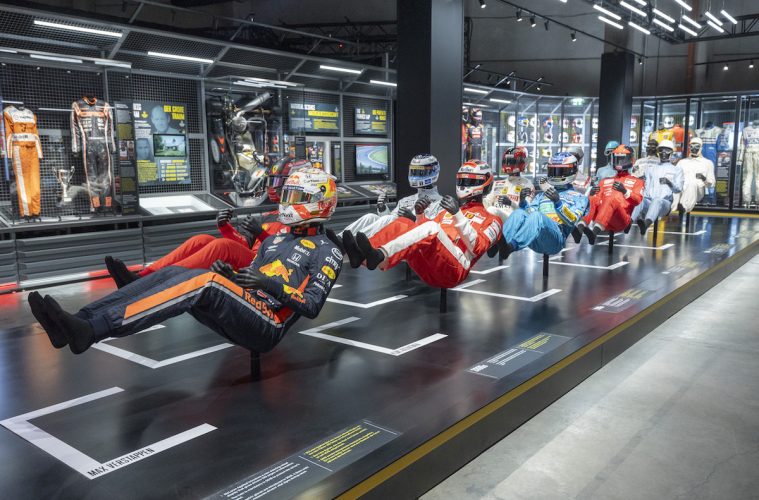
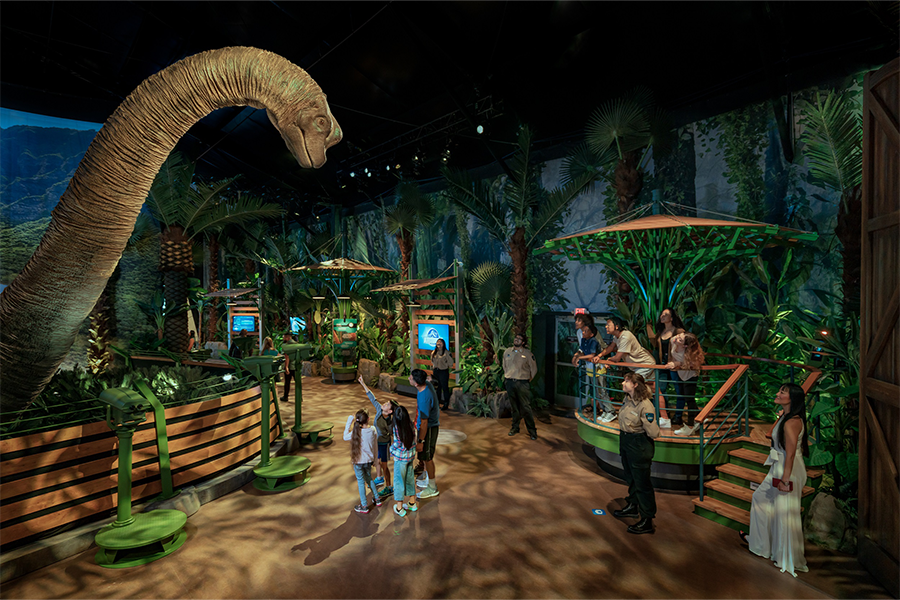
FKPE was formed in 2022, with its first project being the award-winning Jurassic World: The Exhibition, which sold 314,000 tickets in just over four months. The exhibition took place at ExCeL London, where FKPE has secured an exclusive tenancy deal until 2027 and where it will open the Formula 1: The Exhibition on 23 August. Other key current projects include the European rollout of the Minecraft Experience exhibition, while its Disney100: The Exhibition closed this month after an eight-month run at ExCeL that saw 260,000 tickets sold.
Here, Cassidy outlines why the family entertainment and exhibitions business is proving to be such a huge growth area for FKP Scorpio, and what the future holds.
James Cassidy
Your work on exhibitions with FKP Scorpio goes back beyond the formation of FKPE, how have you built that side of the business?
It’s been a natural progression from when we set up FKP Scorpio UK in 2018 with the BBC Studios Blue Planet II Live in Concert arena tour. Barry Campbell and I were focused on special project development rather than traditional rock and pop shows.
Then, during Covid, the company brought in specialists rock and pop promoters Daniel Ealam and Scott O’Neill from DHP Family. In March, FKP Scorpio UK and Communion Presents merged to form Communion One; so that’s very much their lane and we’ve stayed in our lane and kept developing it.
We first laid the foundations in the UK market for special projects and exhibition shows back in 2018. During Covid we started looking at the idea of exhibitions and had discussions with producers. We were very fortunate to secure the Jurassic World exhibition but that was a massive challenge because we were notified that we had the rights to that in May 2022 and we had to open it in August 22. We had to put a huge team together and get the project launched in a very short space of time.
Being forced to deal with a huge IP project that quickly really brought a sense of focus in terms of the teams that we engaged and how we run the business. The exhibition did incredibly well and then we moved straight onto the next one, which was Disney100. Ever since Jurassic landed, the phone has been ringing a lot.
“Being forced to deal with a huge IP project that quickly really brought a sense of focus.”
You have worked with huge IPS and now you have a Minecraft exhibition in the pipeline. What’s the plan with that one?
Microsoft have been developing it. We’re investing in it and will be promoting it across the UK and Europe in all our market. It’s going to be a huge exhibition. It’s opening in Dallas in September, and then we’re hoping to bring it into the UK next year.
Which European markets are you working in?
We’ve got 11 markets through the FKP Scorpio group, including the UK, Belgium, Poland, Germany, Switzerland, Norway and Sweden. The recent expansion really treats London like the international office, and we’re working closely with all our markets to try and grow exhibitions and special events. We’re looking at a balanced portfolio of tier one IPs and also mid-range IPs. It’s everything from really big brands to anything that we think is fantastic and or unique.
You have a long tern deal with ExCeL London but what’s the plan with venues more broadly?
We’re trying to plot our way through the venue maze over the next two to three years and see if we can secure venue footings, because having a venue for a long-term exhibition is the big challenge. It’s okay getting one for three months, but these big IP exhibitions need five or six months to run.
We are looking at other venues in the UK, and we’re constructing a new exhibition venue in Oberhausen, Germany, which is 3,000 square metres and is set to come online at the end of this year. We’ve also got venues and Scandinavia, our own tent structures, and there are greenfield sites we’re looking at.
What’s behind the success of these exhibition shows, and the huge demand?
The whole immersive entertainment world really started to form way back in the mid noughties when Atelier des Lumières were doing fantastic video mapping shows in their venues in select European markets.
The game changer happened during Covid, which was the Van Gogh exhibition. That was one of the only events that anyone could look, and it did incredibly well.
Post-Covid, it just presents an alternative form of entertainment, and the offering has developed as the application of technology to ideas has advanced and created a very interesting landscape for producers. There are a huge range of these experiential shows available to the public, so it is incredibly competitive, and we tread carefully because not everything is going to work.
When it comes to costs and the margins involved in running an immersive exhibition, is there more room for manoeuvre than on projects such as festivals?
No. You’ve not only got the production side of it, but you’ve also got the operations side too. Running Jurassic World was like running a theme park for six months. It requires a lot of people. So, the cost scale is the equivalent of running a small festival.