

 Jim Ottewill
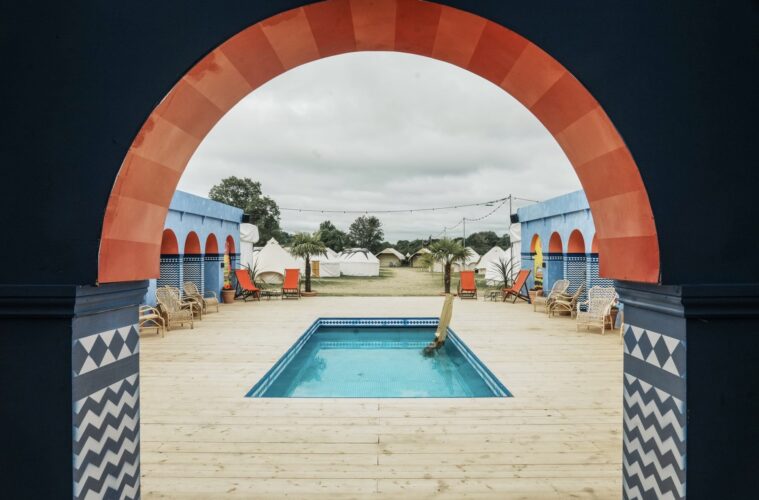
With recent years having seen huge growth in demand for premium experiences at festivals – ranging from on-site swimming pools to culinary delights created by famous chefs – we explore the providers, concepts and consumer behaviours changing the face of festivals.
Anyone looking to attend Glastonbury Festival next year will doubtless have begun budgeting a fair amount for tickets and a weekend of open air enjoyment. For the Pilton pilgrims with deeper pockets a remarkable array of luxury add-ons is available.
Festivalgoers can stay at The Pop-Up Hotel’s tipi suite or in an Airstream while enjoying hot tubs, concierge services and more in dedicated off-site areas. And of course, Glastonbury is not alone in having a gilded edge of luxury. From BST Hyde Park’s VIP Great Oak Roof Garden to Houghton Festival’s Floating Italian restaurant or Love Supreme’s dining collaboration with superstar chef Yotam Ottolenghi; many UK festivals now feature a range of refinements.
The traditions of excess mud, soggy tents and stodgy food are largely a thing of the past with demand having driven a change in the way experiences are planned and delivered at festivals.
“Time is precious to us all and we want to get the most from our weekends,” says The Pop-Up Hotel founder Mark Sorrill, who oversees the independent accommodation provider that works at many major events including Glastonbury.
“It’s something we’ve realised, how we’re bombarded by information and spend so much time online. It means experiencing a band like Coldplay in real life at Glastonbury with our friends and family has become invaluable.”
The idea that we are living in an experience economy has been suggested for years but increasing evidence and research supports it. Findings from Opinium, on behalf of Grant Thornton, revealed how 40% of adults now place more value on experiences over material goods. When it comes to those aged between 18 and 34, it is more than 50%.
Families are increasingly influential too with Ticketmaster’s State of Play report showing how 43% of parents see festivals as a genuine alternative to traditional family holidays. With this comes a need for better toilets, showers and rest areas; a demand that drives nearly half of VIP upgrades.
Togather is a specialist operator that connects events with quality food and drink suppliers. This summer, its team brought Ottolenghi to the Love Supreme Festival for the chef’s first pop-up dining experience at a music event, while also facilitating culinary offerings at Gala and Wilderness.
“When I was younger, my festival experiences would involve sprinting from stage to stage and trying to see as many artists as possible,” says Togather co-founder Hugo Campbell. “I’d make my schedule beforehand, get some chips and a beer and I’d just want as much music as possible.”
“Audiences still love good music and that remains the main reason for attending but they are going for a fuller experience. As more attendees view festivals as holidays, they budget for them accordingly and expect experiences such as food and drink to match.”
Lifestyle choices
While some festivals have benefited from a surge in spending on luxury experiences, others have buckled under post-pandemic financial pressures. Some 43 independent UK festivals were cancelled, postponed or closed in 2025, while 36 were pulled this year, according to the Association of Independent Festivals. For those that have successfully ridden the wave of challenges around the cost-of-living crisis, escalating artist and production fees, along with increased competition from the burgeoning stadium concert business, it has meant striking a delicate balance between providing enticing and potentially lucrative premium experiences and being mindful of the financial pressures faced by many ticket buyers.
“I think that festivalgoers have craved more premium offerings since Covid and the start of the cost-of-living crisis,” says We Group CEO Nick Morgan. “With an increase in ticket prices comes an increase in audience expectation.”
Many of the current generation of music lovers are driven to share their lifestyle choices online, and that sharing of experience has led to some significant developments. The considered curation of digital lives on social media means that the more exciting and glamorous experiences are likely to be documented and shared. As the glitz of Coachella in the US has shown, festivals are opportunities for FOMO-generating content, not least for influencers and brands wanting to participate in cultural moments.
“VIP festival experiences have been around for decades, I remember the likes of V Festival introducing premium offerings, but these elevated festival experiences really started to take off around a decade ago when Instagram was blowing up. Social media has no doubt had a huge impact and this has continued to evolve,” says Morgan.
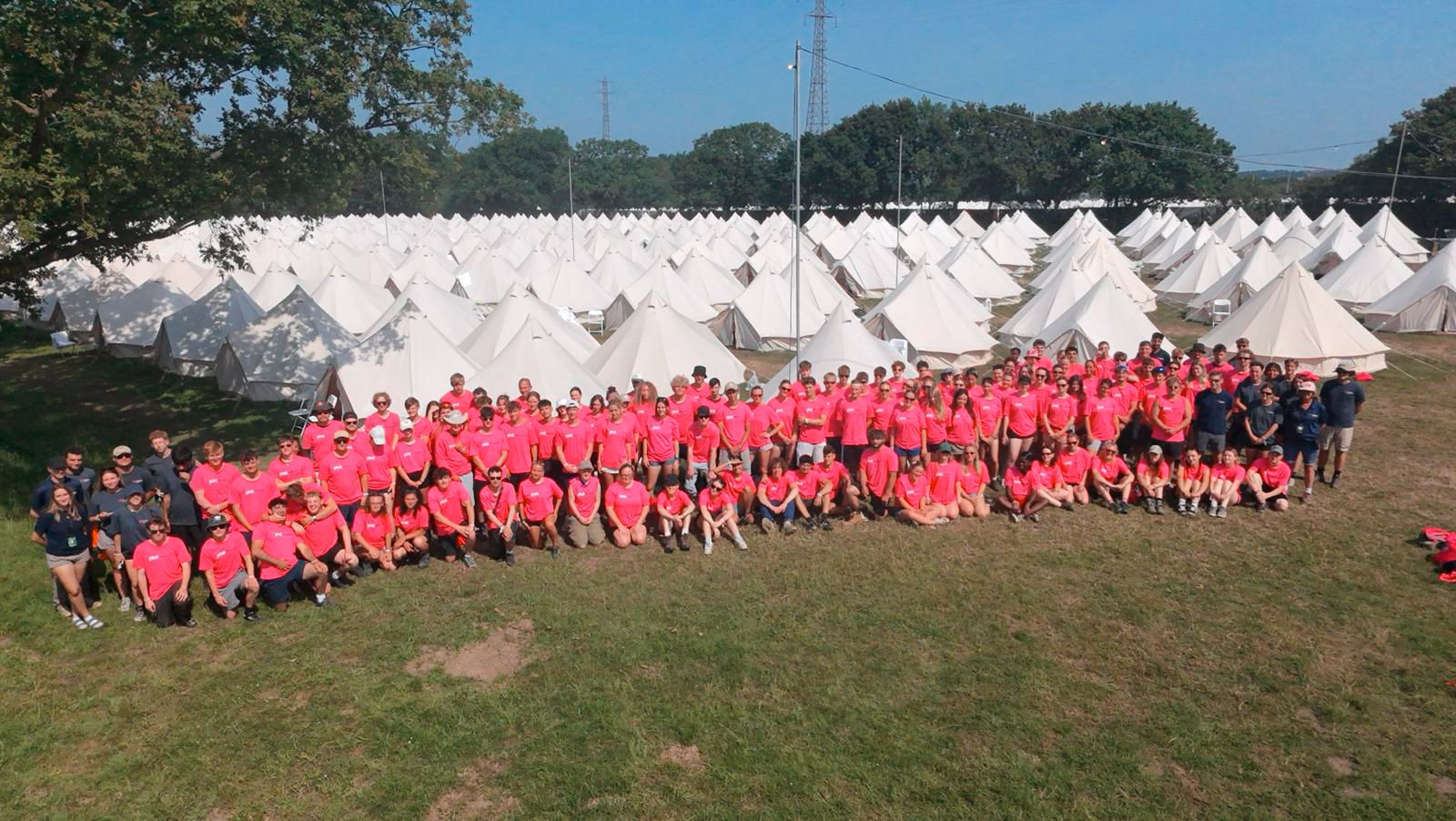
Pink Moon’s staff on site
Social impact
Among We Group’s many production projects this summer was Labyrinth on the Thames, a concert series promoted by Labyrinth Events. Over eight nights, attendees raved with acts including Overmono and Moby, with the UNESCO World Heritage Site of the Old Royal Naval College as a backdrop. The VIP bar was hosted in The Painted Hall, a space known by some as the ‘Sistine Chapel of the UK’ for its stunning Baroque ceiling decorations.
“Nowadays, VIP access at some of our shows includes full stage access, as well as tables on the stage with drinks packages,” says Morgan. “Many festivalgoers want to be closer to artists than ever before, often to capture social media content that general admission-goers would not be able to provide.”
At BST Hyde Park for shows by acts including Duran Duran and Maroon 5 this summer, AEG Presents offered multiple tiers of premium products including primary entry, enhanced viewing locations and hospitality.
“Providing a great experience from announcement through to the show is really important to us so it’s important that we look at the full lifecycle of an event,” says AEG Presents UK senior director of commercial and ticketing strategy Leonie Wakeman.
“We want to ensure a range of VIP and hospitality packages are available as soon as we go on sale. These are offered to the ‘super fans’ and dedicated fan club members, along with advance upgrade opportunities via the festival app. Onsite upgrades are also key. When general access customers arrive, they see the benefits of our premium viewing and hospitality areas and choose to upgrade for a more elevated experience.”
Offering such premium packages and spaces involves close management of an event’s site and careful consideration of crowd flow and logistics.
“This planning is done well in advance,” says Wakeman. “It means we know exactly how many premium packages can be sold without compromising the experience for anyone attending, regardless of ticket type.”
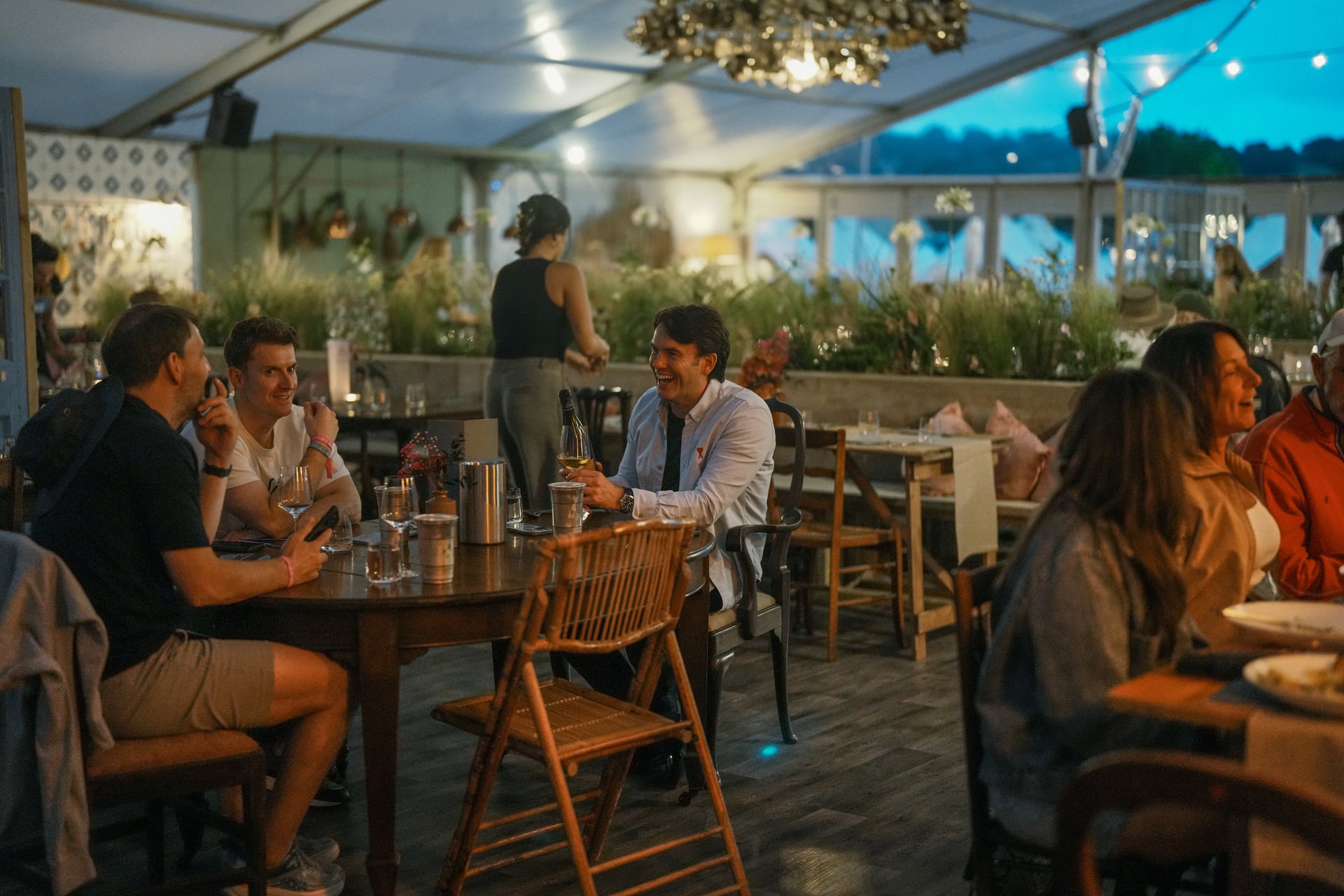
Dining at the Pop-Up Hotel
Immersive experiences
As a Somerset local, The Pop-Up Hotel founder Mark Sorrill has long been a Glastonbury Festival regular. He launched his high-end event experience operation in 2010.
At next year’s Glastonbury guests can choose to stay close to the site in what the company is calling the Festival Fields, or the more tranquil retreat of the Halcyon Fields. Having previously welcomed Hollywood stars Margot Robbie and Brad Pitt, this is a premium experience that festivalgoers must purchase alongside their ticket. With most of their accommodation already sold out, demand for these premium products mirrors the popularity of the festival.
Says Sorrill, “If you go to a festival like Glastonbury, it’s often not about the headliners. It’s about the secret areas you stumble upon, what you see and discover with your friends, and this is what we’re trying to emulate.
“We’re not an official part of Glastonbury but our inspiration comes from the festival. Our aim is to create an immersive experiential weekend that complements what happens on the site, to help people stay in the moment as much as they can.”
At next year’s Glastonbury, The Pop-Up Hotel will again provide 300 spaces in Festival Fields along with the new Halcyon Fields offering. Prior to the festival tickets going on sale, deposits for accommodation can be paid, then refunded if needed.
“After a fallow year, demand is unprecedented; we’ve never known anything like it,” says Sorrill. “Which is why we’ve launched the Halcyon Fields. It’s also to diversify our offer. Here, it’s about the restorative vibes with great views of the main site and Pyramid Stage. We’re hoping it will be like The Healing Field in offering somewhere to recharge.”
Since 2012, Pink Moon has grown into an events company that offers a range of festival solutions, from luxury accommodation and VIP lounges to toilets, showers, tents and marquees.
“Ever since Covid eased, more people are willing to pay for convenience,” says Pink Moon MD Harry Lister. “I compare it to Deliveroo or Uber Eats, customers want products to be easily accessible and this applies to festivals too – they prefer for their tent to be there when they arrive, which is why premium experiences are more popular. The events themselves might not have grown too much but the percentage of people in boutique camping certainly has.”
Over the course of the summer, Lister’s company worked across 20 festivals including Latitude, Isle of Wight and Electric Picnic among others. In 2025, at the Isle of Wight Festival, Pink Moon provided boutique camping for 8,000 guests over five bespoke campsites and constructed 3,000 structures.
“Increasing numbers of people now have the mindset that if they’re going to spend a weekend in a field, then they’re going to do it well,” says Lister. “We can offer different price points for people too; we want to cater for as many as we can.”
Pink Moon also provided services to five nights of the Oasis Live ‘25 tour in Manchester’s Heaton Park, working with SJM Concerts and Live Nation to offer a VIP backstage area that involved building various structures and facilities.
“The Oasis tour was amazing to be a part of,” says Lister. “We looked after more than 2,000 people each night. It was the most popular event we’ve ever done and great to play a small role in what were the biggest gigs of recent times.”
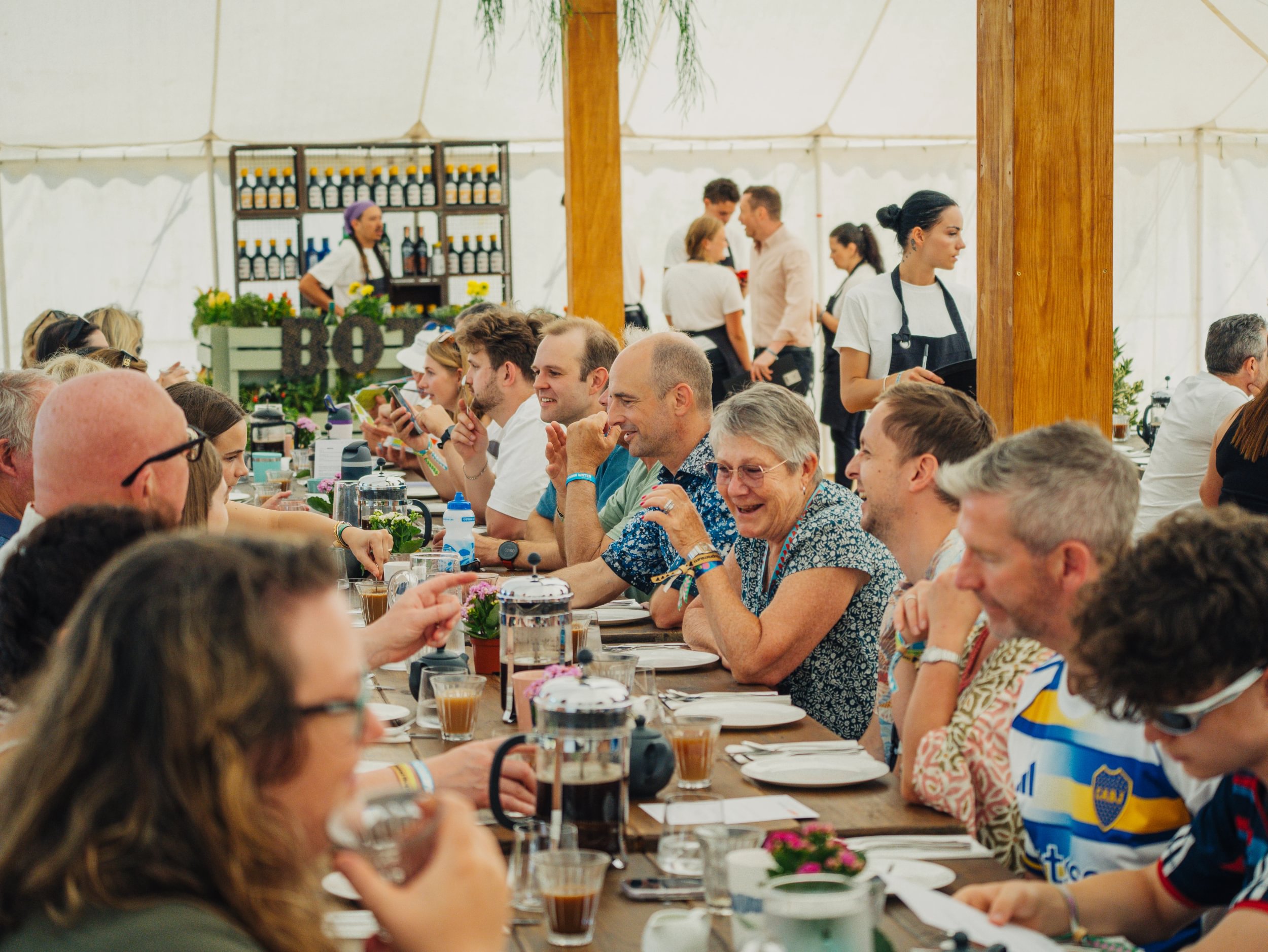
Togather’s Ottolenghi Restaurant at Love Supreme
Tailored experiences
Togather has worked on 48 large events this summer ranging from the Isle of Wight Festival and Wilderness to smaller London day-festivals including Gala and Rally. The company aims to enhance food offerings by pairing festivals with high-quality independent culinary providers.
One of the talking points from the Love Supreme jazz festival was the Ottolenghi pop-up dining experience which caught media attention after Loyle Carner performed his song Ottolenghi and dedicated it to the celebrated chef.
“Food quality has become a real hook for festivals, partly because the festival scene has been so competitive,” says Campbell. “An important part of organising an event is to get festivalgoers to return the following year and food is key to that, particularly now Gen Z and millennials see food as an important part of their identity.”
According to the SIAL Network, which runs a huge number of food and beverage trade shows and exhibitions, perspectives are shifting with food ‘increasingly becoming a language of self-expression’ and growing numbers of young consumers seeing what they eat as an important characteristic. Campbell says that after tickets and accommodation, food accounts for the next biggest percentage of a festivalgoers’ budget which is why Togather believes it’s so crucial to provide great quality. At Wilderness, its team built the Slurp Shop; a bespoke space that resembled a photo booth from the outside. On entering, festivalgoers discovered a surprisingly large area with a bar, DJs and noodles to enjoy.
“People want to step into another world when they go to a festival, and at Wilderness there’s so much to do; people dressed in crazy attire and all these amazing nooks and crannies to get lost in,” he says. “We wanted to respond to this with the Slurp Shop by providing a hidden space themed around food. It became a talking point at the festival and was a cool way of keeping the event and the culinary pairing exciting.”
Shambala is a festival many might not immediately associate with premium experiences, with it primarily being known more for its sustainable commitments, community focus and radical creativity. However, for an additional £45, attendees at this year’s event could upgrade their experience to the Dragonfly Camping site.
“We didn’t want to change what Shambala is at its core, so it was something we thought about carefully,” says Steph Dodd, MD at Kambe Events; the company behind the festival.
“Shambala is built on inclusivity, so has not previously embraced VIP-style packages. Instead, we designed Dragonfly Camping with a range of price points and options, so it adds a layer of comfort while still being an accessible option. We also kept sustainability very much in mind with [posh] compost loos and a Fair Trade coffee stall.”
Attendees could access showers, a dedicated bar, 24-hour reception, close-proximity car parking and a pamper parlour among numerous other treats.
“We wanted Dragonfly Camping to stay affordable, so at the entry level you can pitch your own tent and still get elevated touches,” says Dodd. “From there, people can choose to go further with boutique pre-pitched options like a furnished yurt or tipi.”
Shambala’s approach to elevated experiences is aligned to its organiser’s ethos, yet illustrates how this trend for premium experiences is taking place right across the festival industry. It is clear that festivalgoers now expect more at events, and those organisers who are reacting with creativity and invention are best placed to take advantage.
“Our goal is to deliver onsite experiences that appeal to a range of audiences,” says AEG Presents’ Wakeman. “At the Ateez show at BST Hyde Park this year, we offered a free photobooth in the VIP Garden area and exclusive t-shirts. Really understanding who the audiences are and what they value onsite, from premium upgrades through to merch offerings, is essential to ensuring we deliver the high standard of customer experience our festivals are known for.”
This article features in the autumn edition of Access All Areas magazine – available here.