

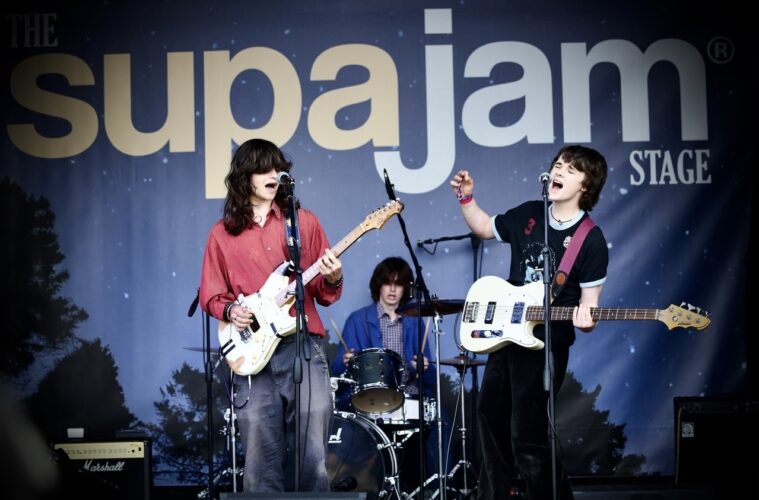
 Max Steventon
“Music is my sanctuary, music is my life”, sings Gary Bartz in his 1977 jazz classic. Music as a sanctuary applies to many people’s lives’, no more so than the students at SupaJam. If there were a music sanctuary, SupaJam’s colleges would be the place.
SupaJam is for students aged 16-25 with an Education, Health and Care Plan (EHCP) and, importantly, who have a passion for music.
It was founded by David Court and Nick Stilwell, who established SupaJam with the aim of creating a music-focused, inclusive, learning environment for young people with additional needs.
Step out of Earls Court tube station and walk five minutes along Warwick Road and you’ll find SupaJam’s newest college. Tucked among the busy streets of West London you might miss it, but behind its doors are recording studios, rehearsal spaces and classrooms providing young people with additional needs a place to learn, create and perform.
Earls Court is one of five SupaJam colleges, with the others based in Swanley, Brighton, Wandsworth and Canterbury. All feature bespoke music and sound equipment, classrooms and learning spaces.
In a time when accessibility in music and live events, whether physical accessibility or career pathways, is under the spotlight more than ever, SupaJam proves its worth as a crucial educational setup.
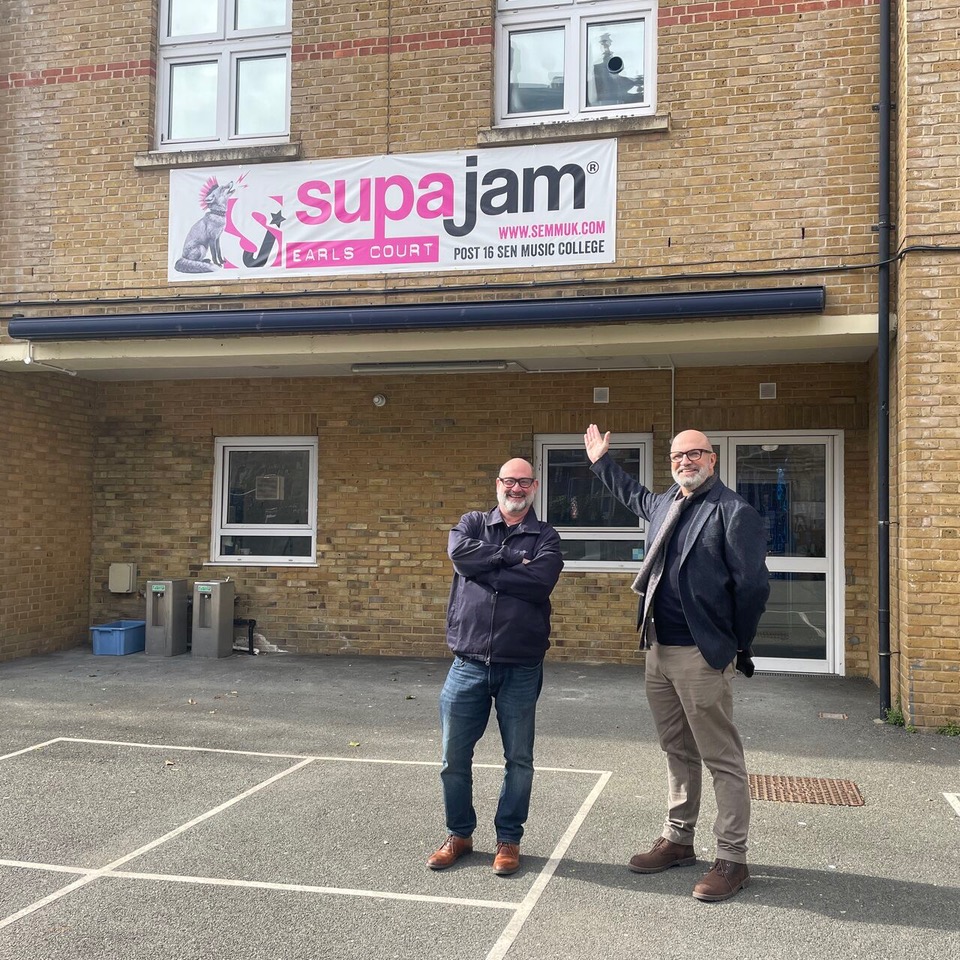
Nick Stilwell and David Court
“You have to accept young people for who they are, you can’t pass judgement on them,” said Stilwell. “It’s our job to encourage them to start to think about who they want to be, where they want to go, and how do they work within their neurodiversity.”
Education built around music and additional needs
Students attending the college all have an EHCP and come from a wide range of backgrounds and support needs. Many are neurodivergent, including young people with autism and ADHD, while others have experienced trauma, PTSD, or additional social and educational challenges.
Stillwell says, “Post-traumatic stress syndrome, PTSD, really underpins a lot of our young people, and as we become much more of a specialist organisation, dealing with trauma and allowing people to be able to acknowledge their trauma, and then to be able to work their way through that trauma is really critical.
“A lot of our young people, also have classic neurodiversity, which is autism, ADHD, they’ve suffered from social and emotional needs as well.”
Standard schooling was a challenge for most of the students. Whether it be lack of support, lack of understanding, bullies or a syllabus that didn’t suit their needs or interests, the conventional education setup was not working for these students. SupaJam came as a relief. All education is tailored around the students’ passion – music.
Whether that be learning maths through working on a music tour budget, English lessons turning into a concert review or history lessons providing the students with knowledge about the rich history and culture of music, the students learn through the realm of music.
“We teach them all about the music industry, every level of it, from putting on gigs to marketing, sound recording and podcasting,” said Court.
Alfie, a student at SupaJam, provides his perspective: “You really do learn about all the job roles in the music industry. It’s not just about being an artist. It’s about the media side of it, the podcasting, photography, filming, music video shoots. And then you also get the side of it where it’s art like artists’ covers for albums and singles.”
The spaces inside the college have been considered with equal importance as the lessons. Rather than simply filling classrooms with rows of chairs and tables, each teaching space is carefully designed around the needs of the students, creating environments that feel safe, welcoming and tailored to how they learn best.
“In every classroom there’s sofas, there’s nice furniture, there’s lamps, there’s really nice artwork on the walls, plants, a lot of muted lighting as well,” Court explains.
The reason for this, he stresses, is to make the environment “deliberately go against” a that of standard schools because attending them resulted in trauma and bad experiences for most SupaJam students, so crafting spaces unlike regular learning spaces was paramount.
“What we try and do is create an aspirational space that’s a little bit more like a record label or a recording studio,” explains Court.
Origins and growth
However, SupaJam didn’t always have five colleges containing top-of-the-range music equipment. Court and Stillwell built it from the ground up.
SupaJam’s story starts in a pub basement. Says Court, “We started off with six students in the basement of a pub that always flooded. It was an absolute health and safety nightmare.”
SupaJam is personal to Stillwell and Court. Both had a difficult time in school themselves. Seeing a gap in the education system, they wanted to right the wrongs of the system in their own way.
Experienced festival promoter Gill Tee has been involved in SupaJam since its infancy. She says, “I got involved 13 years ago, and it was just a few students in a temporary basement that had been converted into the first baby college.
“They asked me if I would come and mentor these seven students, that they’d pulled together to see if they could make a difference to their lives, and if I’d just come and talk to them about how I grew in the music industry. So, I met with them and talked to them about it, and I related to these young people because they’d had, for different reasons, some trauma in their life”
This shared vision among Stillwell and Court, alongside early supporters including Tee who bought into the concept, helped the initiative evolve from a small experiment into a wider educational model with industry backing and increasing recognition.
From its beginning as a basement experiment, SupaJam was expanded steadily over subsequent years. The first college opened in Swanley 10 years ago. Next came Canterbury, which opened in 2019. Three years later the Wandsworth campus opened its doors. Last year, the Brighton campus launched, and the Earls Court campus will open in September.
Court describes how quickly things escalated: “We funded it for the first two years, and then very quickly we started getting more success, counsellors would come, and then MPs would come, and then before you knew it, we had a government contract.”
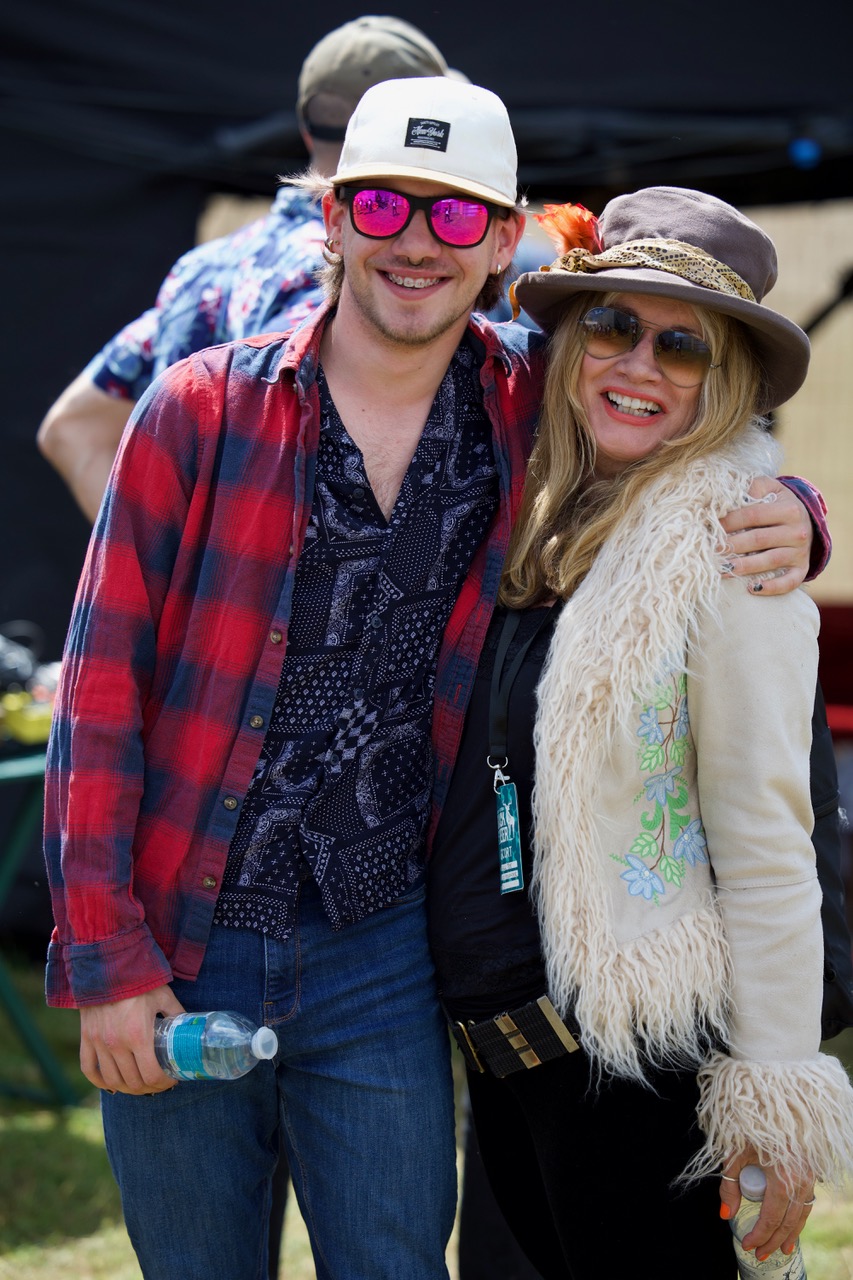
Gill Tee with a Supajam student
When asked if there is room for further growth Stillwell says, “We think there’s room for another two or three SupaJams in London, and then after that we’ll start to look at how we can grow this out nationally.”
Music as community
For staff and students alike, music is someth that goes way beyond education. “Music has so much cultural and historical relevance to various movements and freedom and expression. It crosses cultures, ethnicities, sexuality, background. It is a language that we can all speak,” says SupaJam teacher Tom Johnston.
He says that for students, that universality matters because music often becomes the first point of connection, both to each other and to learning itself.
“I love any kind of music,” says Alfie. “That passion came from a young age, from when I was an infant, hearing my first sounds. I was thinking, ‘wow, all these little sounds’. Then I got into school and I started finding my love for music learning. I always had music around me.”
“Music is a great leveller,” says Court. “You come in your tribe and you’re into metal and you see somebody who’s maybe into a genre of music that you hate, but actually most songs have an intro, verse and a chorus… the language of music is universal.”
Music enables the students to come together and connect in ways that would not be possible at a regular school. Even the dispersed tastes of the students, as Court puts it, “from heavy metal lovers to Disney lovers,” ideas are still exchanged, creativity contagious with a community to support and help the students grow. Music brings people together, and SupaJam exemplifies that mantra.
Career progression, opportunities and looking ahead
A key element of SupaJam is preparing its students for the real-world. The syllabus is not only music-focused but also designed to equip the students with key practical knowledge of the outside world.
“We also do a preparation adulthood syllabus as well,” explains Court. “We teach them all about life beyond college.”
In a single day, students at SupaJam might learn how to play a bar chord on the guitar and gain an understanding of the key principles behind a rental contract, reflecting the breadth of the organisation’s curriculum.
Ultimately though, music reigns at SupaJam, and music performances are not confined to the walls of the colleges.
Tee’s Black Deer Festival, which ceased operating last year, hosted a stage dedicated to SupaJam and its students. Playing at a festival provided the students with valuable experience of public performance, and helped aid their career progression.
Says Court, “When they went to Black Deer, and they saw all these amazing artists, and the power of storytelling with country music and Americana music, you would get that penny drop moment where they’d go, ‘I now know what I want to do for the rest of my life.’”
Alfie has exprienced firsthand the opportunities and progression SupaJam offers.
He says, “I’ve worked with a student who is now signed to Marshall Records and touring this summer. It shows how far you can go in the industry, and the impact that SupaJam can have.”
Tee says that for everyone involved, and particularly with the opening of the new college, now is the time to push the message even further among the live events and music industry. She believes that getting more students involved not only in performing but in areas like production, content and event management, will be a crucial step.
Stillwell sums up SupaJam’s mission: “Our job is to bash down the doors of the music industry and encourage people to take on our students. They are brilliant, they have a skill, and they’re all wonderful people, they just need that opportunity.”