


 Christopher Barrett
Montreux Jazz Festival’s temporary mainstage, built on Lake Geneva, proved so popular this year that CEO Mathieu Jaton has been repeatedly pressed to make it a permanent fixture. He tells Access how providing an inimitable experience for artists and fans alike is paying dividends and driving international expansion.
This year, Deep Purple returned to Montreux Jazz Festival (MJF) for a headline show during which they performed Smoke On The Water just a stone’s throw from where a devastating fire at a 1971 Frank Zappa gig inspired the band’s signature song.
It was not only a gig that brought the band full circle but on top of the very water they have been singing about for five decades. With the stage framed by incredible views of the mountains behind, and pyrotechnics being set off across the lake, it was a stunning element of the event’s 58th edition.
Launched in 1967, MJF has long been a music mecca that’s proven an irresistible draw for many of the world’s most revered musicians, including Prince, David Bowie, Miles Davis and Elton John to name but a tiny fraction. The festival’s allure was not limited to its spectacular setting, on the shore of Lake Geneva and framed by the French Alps, but also the attention to detail its flamboyant founder Claude Nobs lavished on artists to make sure they were well taken care of, both on and off stage.
Nobs tragically died in 2013 but his chalet in the hills remains packed with the remnants of the many star-packed parties he held there. However, a more powerful legacy is the way in which the MJF team continue to echo Nobs’ passion for ensuring artists can have high quality recordings of their performances, and that while they are on stage the sound quality is second to none.
Meyer Sound has overseen sound provision for MJF for no less than 38 years. “Our decades-spanning collaboration with the Montreux Jazz Festival is about a shared commitment to sonic excellence,” avers its director of product & services Andy Davies.
“I wanted to prove to the world that you can do something outside with a beautiful sound quality.”
This year’s MJF saw the unveiling of the Lake Stage. Built by Stageco and featuring a Meyer sound system, it is a temporary solution while Montreux’s Convention Centre, where performances have traditionally taken place across its Miles Davis and Stravinsky Halls, remains closed due to construction work.
The festival’s team saw the closure of the building as an opportunity to take a new approach, and the result was 15 stages set along two kilometers of the Montreux lakefront, many of them free-to-attend, with an overall attendance of around 250,000 across the event.
Most impressive was the 35m wide Lake Stage, with its 5,000-capacity audience area. Among the many acts to perform on it were Air, Massive Attack, PJ Harvey, Jesse Ware, Sting and Justice.
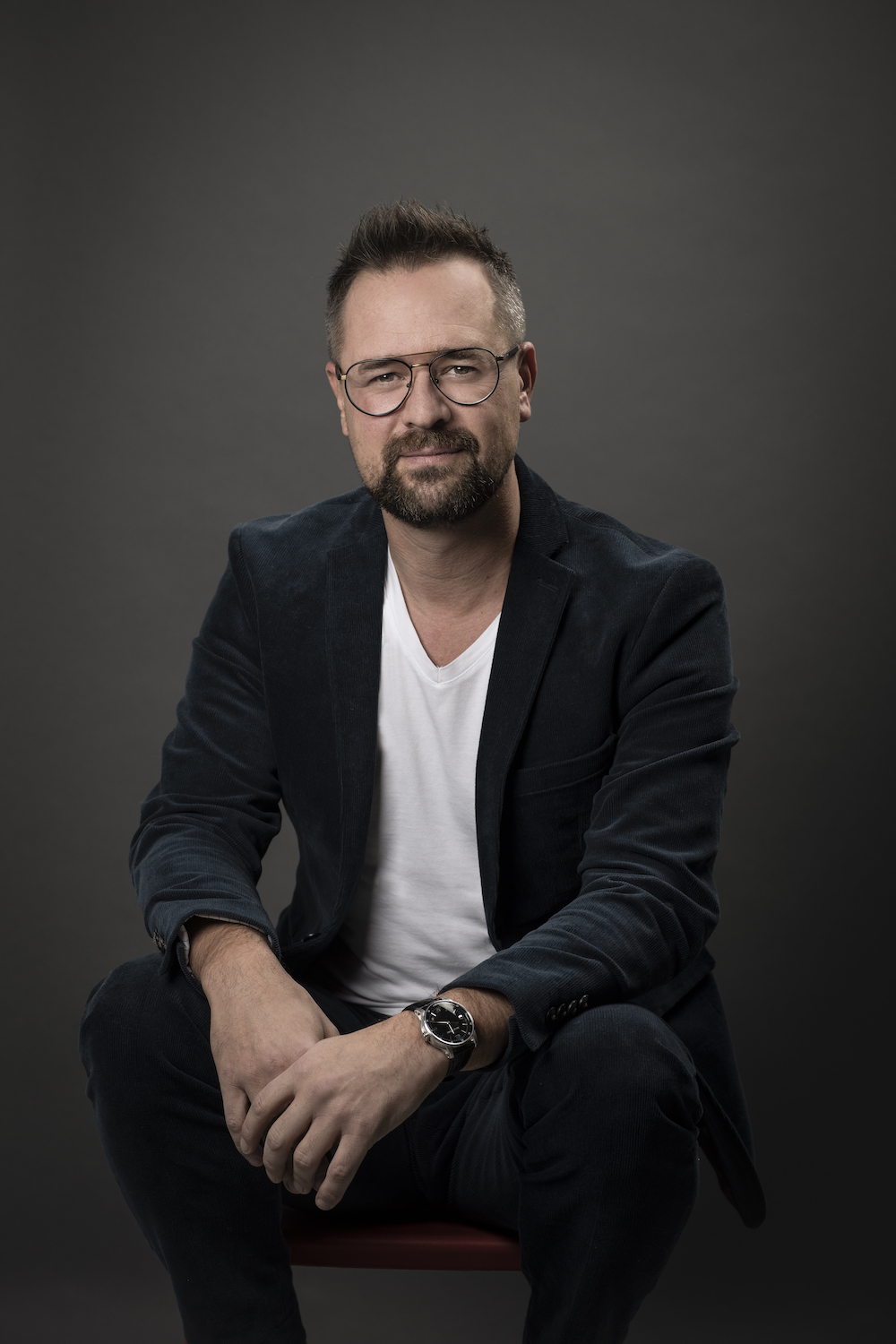 “Our major concern was that a lot of artists and agents book Montreux because of the Stravinsky, it’s an amazing Hall and the sound is perfect,” says Mathieu Jaton (pictured). “We needed something exceptional. When we saw the marketplace by the lake, we knew it would be a challenge to build a stage there but then we decided to go one step further and put the stage on top of the lake because if we put it in front the effect would not have been the same. When we opened the festival with Jon Batiste it was sunset, the stage was open at the back, and it was obvious it was going to be an amazing stage.”
Naturally, given the MJF’s reputation for exceptional sound quality, a major consideration was working with Meyer to make sure the sound would not be compromised by the stage’s position on a, potentially windy, lake.
“I wanted to prove to the world that you can do something outside with a beautiful sound quality. I knew it was going to be difficult with the buildings so close, and with the natural surroundings, so before we did anything I spoke to Helen and Matthew Meyer and they said, ‘Don’t worry, we’re going to put all of our team together to make sure we create something exceptional’.
“The artists and audiences loved the stage, everybody has said ‘you have to keep it’. It’s been the big question, because, especially in Switzerland, to set up such a stage in the middle of the city needs a lot of authorisations, not least because we have businesses and residents very close by.”
For the time being the plan is to keep the Lake Stage for next year’s edition, before returning to the Stravinsky Hall when it reopens in 2026. Among the reasons Jaton says it would be very difficult to make the stage a permanent fixture is that artists who play MJF are used to playing without any curfew.
“I love the idea of keeping it but it is great that we have created something exceptional and unique that may never happen again,” says Jaton.
Some 3,400m2 of terraces were built by the lake, compared to 2,000m2 for last year’s event, and that additional infrastructure didn’t come free. Jaton says the business model is that ticket sales should cover the artists and production cost for all stages. The food and beverage sales should cover the cost of hosting the free activities, and sponsorship revenue should cover fixed and all year-long costs.
“When you achieve that ratio, it works,” says Jaton. “That was the biggest challenge for this year’s setup because we had a lot of additional cost, particularly the infrastructure we had to build within the city. We had CHF 4 million [£3.6m] extra costs this year but fortunately we had the chance to secure more sponsors.”
Since its 1967 debut in Switzerland, the Montreux Jazz Festival has been staged in cities worldwide including São Paulo, Detroit, Singapore, Monaco, Tokyo, Hangzhou and Miami. Along with planned forthcoming editions in Tokyo and Abu Dhabi, projects in the pipeline include festivals in Ibiza and South Africa.
Bringing the look and feel of the event to a broader international audience is a priority for Jaton but not simply to generate revenue.
He says, “The next international edition in 2025 will be Ibiza, I love that project; the idea is to bring jazz and electronic music together.
“Hopefully there will be six international festivals next year. We really want to be in iconic locations not only from a tourism and economic perspective but mainly a cultural perspective. It’s not about someone coming and putting money on the table; it has to be someone who has a project with a cultural impact that adds value to the brand.”
THIS ARTICLE IS INCLUDED IN THE AUTUMN EDITION OF ACCESS ALL AREAS –READ IT HERE