

 Access All Areas
TagMix CCO Steve Jenner provides his perspective on what he describes as an ‘algorithmic window’ through which nimble independent festivals are outpacing group-owned peers.
The news that 150 of the largest European festivals are now owned by just four groups, Live Nation, AEG, CTS Eventim and Superstruct, set my LinkedIn feed ablaze with catastrophic heralding of the end of independent festivals, if not civilisation itself.

Steve Jenner
Simultaneously, a bunch of British indies were running rings around their corporate competitors, selling out faster on smaller line-ups, evoking shades of the Roadrunner outsmarting the better-resourced Wile-E-Coyote. Was it the cartoonlike optic that was stopping everyone from dropping this into the discussion?
I am going to say it, because I truly believe that, underpinning this anomaly, is the biggest festival market shift in a generation. Of course it would be an over-simplification to claim group ownership does not bring advantages in bargaining power, talent access, shared infrastructure and cost-spreading. But there is more to selling a ticket in 2026 than that, as our indie heroes have just proved spectacularly in plain sight.
Five years ago, line-up was everything, and marketing was a passive function: let people know who is playing, then sit back and wait for peer influence to do the rest. Then Instagram and TikTok changed their algorithms without telling the festival industry. They quietly transformed from Social Networks into Interest Networks, shifting their focus almost exclusively to rewarding post engagement. The more engaging a post is, the further it is now pushed, often far beyond the festival’s own followers. Posts that do not engage are cut dead in their tracks, regardless of how many followers an event has.
“Underpinning this anomaly, is the biggest festival market shift in a generation.”
The new playbook is the opposite of the old. Volume is no longer the lever; engagement is. The festivals winning in 2026 have stopped trying to outspend the algorithm and started feeding it the one kind of content it now rewards: high-quality footage of live performance, published while the performance is still happening, with audio strong enough to make the viewer feel the moment they are missing.
That last point matters more than the industry has historically realised. A 2020 Scientific Reports study led by UCL’s Professor Joseph Devlin found that audio triggers a stronger emotional response than video, significantly raising the probability of a ticket purchase. Camera-mic audio strips that charge out of a clip before it has a chance to land. TagMix, whose technology is patented in the US, Europe and China, solves this by syncing sound-desk audio to live video automatically, in real time, as the performance happens.
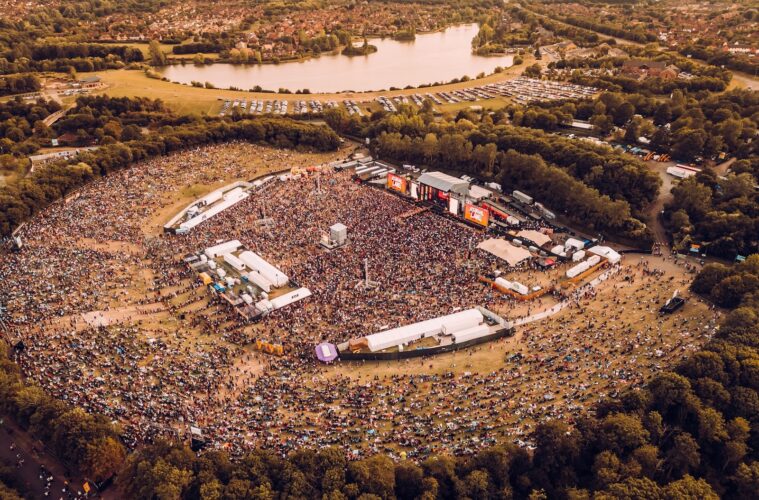
Reggae Land (pictured) is the example that joins the dots. The privately owned independent at Milton Keynes National Bowl sold all 100,000 tickets for its original two-day 2026 allocation in six hours before expanding to three. The sell-out speed any group owner would envy was a function of demand engineered nine months earlier, in the live emotional window of the 2025 edition, with real-time content turning viewers who could not be at the show into pre-committed buyers waiting for the on-sale moment.
The pattern is consistent across the wider TagMix client base. An audit of 1,811 posts over 75 client accounts in 2025 showed real-time clips averaging 3.6 times the engagements per post on Instagram and 2.5 times on TikTok compared with other content from the same accounts in the same event periods. A single TagMixed clip from Lollapalooza Berlin generated 2.1 million organic engagements at a 10.19% engagement rate, 3.6 times the industry benchmark (Influencer Marketing Factory, 2026).
The US market is years ahead on this. Coachella, Lollapalooza, ACL and Gov Ball all run heavily resourced real-time content operations as standard. The UK and European market is at an earlier stage, with group-owned early adopters including TRNSMT, Y Not, Mighty Hoopla, Tramlines, Truck and Victorious already proving the strategy works at scale.
The four groups will roll this out across their European estates, building on what their US counterparts have proven but this will inevitably take some time, and that window is the independents’ current opportunity. Festivals that move at pace right now can get ahead of the market before it catches up. Reggae Land has shown the way.