


 Christopher Barrett
With Tomorrowland celebrating its 20th anniversary, the dance festival empire’s co-founder Michiel Beers reflects on how one brave investor had a pivotal impact on his career. He calls on today’s investors to take a more positive approach to supporting young live event entrepreneurs.
Tomorrowland is firmly established as one of the world’s biggest festival brands, with multiple international events, a huge online community, and revenue streams stretching far beyond ticket sales to travel packages and a truly remarkable merchandise line that encompasses a Tomorrowland novel series and even furniture.
Since the first festival was staged at the De Schorre park in Boom, Belgium, back in 2005, brothers Manu and Michiel Beers have built Tomorrowland into a global entertainment company active in Belgium, Brazil, Colombia, Mexico, the Netherlands, France, Spain and Dubai. With a festival in Thailand in the pipeline.
The Tomorrowland team has generated a vast following both in the real world and online. The release of the beautifully produced festival ‘after movies’ have become a hugely important aspect of Tomorrowland’s reach, with its YouTube channel having more than 11.2 million subscribers.
Not even the pandemic halted Tomorrowland’s progress, with virtual festival Tomorrowland Around the World seeing more than one million people pay up to €20 to watch the action across eight virtual stages, with performances by around 60 artists including David Guetta, Armin van Buuren, and Adam Beyer. That was followed by a digital-only New Year’s Eve online event adapted for all 27 worldwide time zones, with more than 25 artists performing in an immersive virtual venue named NAOZ.
Aside from festivals and other live events, the Beers brothers’ reach now extends to areas including artist management and booking, media (One World Radio), the Tomorrowland DJ Academy and fashion. There is also the charitable Tomorrowland Foundation, which has launched Tomorrowland Music and Arts Schools in India, Nepal and Brazil, while working with mobile schools in 30 countries.
At the heart of the operation remains the original Tomorrowland festival in Belgium, which started out as a 10,000 capacity one-day event, with performances by acts including Armin van Buuren and David Guetta. It has been expanded steadily over the years and now takes place across two weekends, involving more than 800 dance acts over 16 stages, with around 400,000 visitors from 200 countries in attendance.
The Beers brothers, who are now fully independent owners of the Tomorrowland empire, have invested around €40 million in the De Schorre park since they started staging the festival there. Clearly appreciative of the huge benefits of Tomorrowland, the local government recently signed a contract with the Beers ensuring the festival can be staged in the park for the next 66 years.
In August, WeAreOne.World, the company behind Tomorrowland, reported a profit of €8.4m for 2023, with revenue amounting to €129m. The company was reported to have net assets of €30m.
The local and domestic economic impact of Tomorrowland Belgium is, not surprisingly, huge. The organisation of the Belgian edition of Tomorrowland in 2023 saw WeAreOne.World purchase goods and services from more than 1,200 Belgian suppliers, at a cost of €37m. The company reported that the the two festival weekends in Boom increased local economic activity by nearly €28m, resulting in an increase of 1,900 full-time jobs. The financial return to the Belgian government, through contributions including corporate tax and VAT, amounted to €75.9m.
It’s a hugely impressive achievement by the Beers brothers, and the result of their remarkable perseverance, imagination and self-belief from the outset. However, before Tomorrowland became a reality, the duo’s entrepreneurial endeavours could have been abruptly halted if it wasn’t for one investor sticking his neck out.
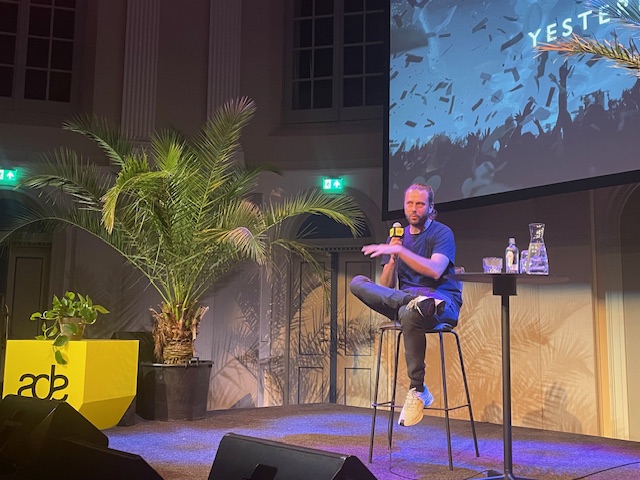
Speaking at the Amsterdam Dance Event conference, Michiel Beers (pictured) gave a rare insight into how he and his brother Manu first got involved in staging events, the years leading up to the launch of Tomorrowland, and the fact that support from one lone banker proved pivotal.
“It all started in 1997 when my brother Manu threw a party for the Boy Scouts,” says Beers. “I was 21, four years older than him, and I had a driver’s license, so he asked me to drive him around to distribute posters and flyers. They ended up having 500 people at the party, and we thought ‘this is fun let’s do another party together’, so we did a club night on a Wednesday and 1,500 people showed up, which was amazing. Then we said to each other, ‘Okay, we’ve made a bit of money, let’s start a company’.
House music
“In 1998 we started Lineup Productions. Our office was our bedroom in our parents’ house. We spent a lot of time together planning, and thought we should do something for students on a Wednesday in Antwerp. Club culture in the city was really big back then, you had very famous clubs in Antwerp. Our idea was to have one ticket that enabled you to go to every club. We contacted all the clubs, and all the student associations and had them sell tickets to their members. We were very creative with the marketing and convinced the local newspaper to make a special announcement that on this night, for the first time ever, all the students associations and all the clubs in Antwerp would work together.
“We called it The Night of The Students, and it was a really big success. Around 8,000 people showed up, which we didn’t expect in our wildest dreams. Not everything went super well, we also did three other club nights that were a complete disaster, but we thought if we can do this on a Wednesday, maybe we should also try it on a Friday. Back then, Friday was a really busy night in all the clubs, but we convinced them.
“It was the same concept, five clubs in Antwerp on a Friday. We had Bob Sinclar in one club, DJ Pippi from Ibiza in another; it was a very broad programme, and a real success – 8,000 people showed up. Suddenly we had two successful events in Antwerp. In the years that followed we kept them growing by adding venues and locations around the city.
With the business building and the income stream flowing increasingly strongly as the brothers worked day and night organising and promoting events, Michiel took the decision to give up on being a university student and focus his energy entirely on building the events operation. Believing their youth and relative inexperience might hold them back, the brothers decided to team up with a partner.
“We wanted to have a thriving company, but we were young and we felt that we were not being taken seriously enough by the local government, by sponsors, and by a lot of our partners,” says Beers. “So, we looked for somebody else to join us and to give us a bit more credibility. Very soon we found somebody who had come back from Cape Town in South Africa. He was a guy I had played soccer with, when I was aged six or seven, on a small field in our little village. I knew him from back then and hadn’t seen him for many years. He came back with big stories from Cape Town about running events with the likes of Carl Cox and Paul Oakenfold for 20,000 people at clubs out there.
Fired up
“It felt good, so we teamed up with him. Our Antwerp Is Burning became a really strong event brand, and we decided to do a bigger edition of it in a place in Antwerp called Het Eilandje, the little islands, where there were two big old hangars. We put some tents outside and booked big names like Tiesto and Roger Sanchez.
“We had an accountant who came from a very small village near Antwerp, they specialised in working for the local bakery and grocery store. So, we asked our partner, ‘hey, maybe for this event, you can do the invoicing via your accountant, and they can guide this’. We started organising the event, and of course we forgot to tell the suppliers that we had switched accounts companies, so we got invoices in from artists and paid them. Then the event happened. It was successful, 12,000 people attended, which these days doesn’t sound a lot but back then it was really big.
“Straight after that event our new partner went abroad, and said he wanted to do parties again in South Africa. After about a month, he came back, and we had a meeting. We said, ‘You want to focus on things outside Belgium, but we want to take our steps here where we started, so let’s split’. He said, ‘Okay, but the money that’s on my account stays on my account and what you have stays on your account. We were like, ‘but you got the full turnover of the event, the ticketing income and the bar revenue, and we just paid all the invoices. Our bank account is at zero, and you have the turnover’.
“This sounds super naïve but when you’re young, you’re just focusing on doing the event, taping up posters and making sure people are coming. We never signed a contract with him, and so the harsh reality was that he took off with the turnover.
“We lost our office, our furniture, everything. And although we did a good, profitable, event, we were bankrupt, which was so surreal. The liquidator said, ‘you don’t have anything on paper, you can start a lawsuit but knowing the Belgian law, in five or six-years’ time, you will still be in court and you probably won’t get anything’.
Tomorrow’s another day
“We were still very motivated, we had never done a big event that made a loss, and we had grown over time. We were back in my bedroom at my parents’ house, and we wanted to start again. So, I went to a lot of banks to get a loan but of course, if you’re young, you don’t have any warranties, you don’t have any money on your account or a house to give to the bank as a guarantee for the loan. It’s very difficult. No none would give us a loan except for one person. His name is Francis, and he’s a hero. He gave us a loan of €75,000. He was the only person that said, ‘I’m going to make sure you get a loan so you can continue. I believe in you guys. It’s my risk, and I don’t need any guarantee’.
“The beautiful thing about this story is that we’re still with him today, so many years later, all our accounts are with his bank, because he believed in us back then. Loans are very hard to get for young entrepreneurs these days, it all goes through computer systems that make the decision if you get a loan or not. My advice to banks and investors is to take a personal approach and support young entrepreneurs, because that is vital – it was Francis’ belief that saved us.”
This article is included in the Winter edition of Access All Areas magazine, which is available here.