

 Christopher Barrett
The live entertainment boom in Saudi Arabia has seen countless eye wateringly complex productions staged, and many remarkable venues built. UK-based companies have been quick to get involved. We explore the key challenges and opportunities involved in working there.
Historically an extremely conservative Islamic kingdom, where concerts were banned for decades, Saudi Arabia’s image has been dramatically redrawn in recent years as an entertainment hot spot where international artists and sports stars, tourists and event professionals are warmly welcomed.
The Kingdom of Saudi Arabia (KSA) began forming its live entertainment industry with the establishment of the General Entertainment Authority (GEA) in 2016, backed by $2.7 billion in funding, to spearhead investment and encourage international partnerships.
Saudi crown prince Mohammed bin Salman launched Vision 2030, an initiative designed to help expand the domestic entertainment industry, bolster tourism and reduce the Sunni theocracy’s economic dependence on the oil trade.
In 2018, the inaugural Saudi Ad Diriyah E-Prix became the first event in KSA to have an unsegregated audience. Since then the evolution and expansion of the KSA live entertainment market has continued apace, and alongside Middle East neighbours Abu Dhabi and Dubai, KSA has become an increasingly regular stop on the major international artist touring circuit.
From Riyadh out to the coast in Jeddah, up to the northern cities including AlUla, live entertainment has flooded KSA, with huge investment in events, venues and sparkling new megacities such as Neom.
With 40% of KSA’s 36 million population aged under 24, and ticket prices largely being very affordable, there is a huge appetite for both international stars and domestic talent.
With no history of accommodating huge concerts, festivals and international sports events, the need for new entertainment venues has led to a construction boom. Among the countless ongoing projects are the 45,000-capacity Prince Mohammed bin Salman Stadium located in Qiddiya, an entertainment and tourism megaproject in Riyadh; ASM Global’s 20,000- capacity Jeddah Arena Airport City, due to open in December 2025; and KSA’s first opera house – The Jeddah Opera House – designed by Buro Happold.
Around 90% of the KSA entertainment business is understood to be government-underwritten by its Public Investment Fund (PIF). Among the many PIF-owned events companies is Sela, which is heavily involved in event production and management, while also owning and/or manage key facilities including retail, hospitality and entertainment districts VIA Riyadh, Boulevard City and Boulevard World, along with multi-purpose event venues such as the 40,000-capacity Jeddah Superdome.
-
- Soundstorm
-
- Saudi Evemt Show
-
- Battle of the Baddest, Boulevard Hall. (Photo by Christophe Viseux)
-
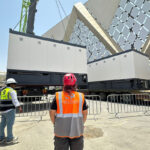
- Onyx Arena
-
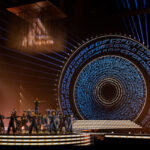
- E-Sports World Cup Closing Ceremony
-
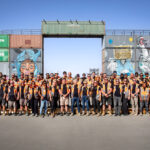
- Special Projects team
Promoting success
There is no shortage of promoters in KSA helping to fan the flames of the huge explosion in live entertainment. Live Nation (LN), the world’s biggest promoter, has not been slow to get involved.
In April 2020, PIF acquired a 5.7% stake in LN, which at the time was valued at around $500 million (£382m), making PIF LN’s third-largest shareholder.
Established in 2009, Live Nation Middle East is overseen by regional president James Craven who presides over the company’s extensive activities in the region including Saudi Arabia where its Live Nation Arabia arm recently secured a three-year deal with PIF-owned AlUla Development Company to operate Maraya. Maraya, meaning ‘mirror’ in Arabic, is a multi-purpose venue in AlUla that has already attracted major international acts including Mariah Carey, John Legend, Andrea Bocelli and Usher.
“This venue is truly unique and I would encourage everyone to visit AlUla and experience its beauty first-hand,” says Craven.
Event operator Ethara, which means ‘thrill’ in Arabic, was born out of the merging of established Middle East live events operations Flash Entertainment and Abu Dhabi Motorsports Management in May last year. The company now operates venues throughout the Middle East and promotes events including the Formula 1 Etihad Airways Abu Dhabi Grand Prix and Yasalam After-Race Concerts.
Ethara opened an office in Riyadh in 2022, which houses a team focused on building a year-round events calendar involving international and regional acts. Last year, it partnered with global venue operator Oak View Group (OVG) and its Rhubarb Hospitality Collection arm to provide hospitality services at venues across the Middle East including the KSA.
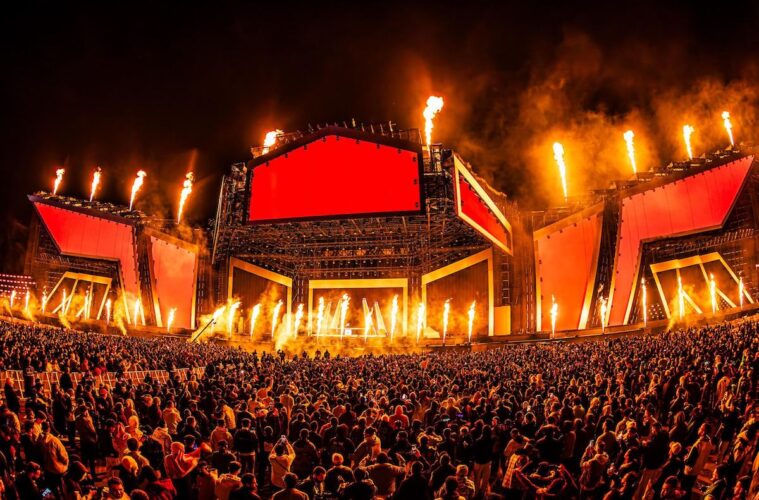
One of the leading promoters in KSA, MDLBEAST was launched in 2019 and has since grown to become responsible for the country’s best known and biggest music festival, Soundstorm. The huge event in Riyadh attracted no less than 1.7 million visitors across its first three editions, followed by last year’s festival seeing 700,000 attend across its three days. The next Soundstorm is scheduled for 12-14 December, with a lineup including Eminem, Muse and Thirty Seconds To Mars.
Overseen by CEO Ramadan Alharatani, MDLBEAST’s other Saudi festivals include Balad Beast, which last took place in January in Jeddah with a line up including Wu-Tang Clan and Ty Dolla; and Azimuth at the Al-‘Ula oasis city in Medina Province. MDLBEAST is also behind industry events such as XP Music Futures; a three-day music conference in Riyadh featuring workshops, panel discussions and networking opportunities. Launched in 2021, it was created with the aim of accelerating the growth of the KSA music industry.
One of the key partners working closely with MDLBEAST on its many events is Special Projects, which has been providing site management for large-scale events across the Gulf region since 2006. In 2022, it set down roots in KSA with the opening of an office in Riyadh.
Among the many vast and spectacular KSA events Special Projects has worked on are Soundstorm and Balad Beast festivals, the after-race concerts for the Saudi GP Formula 1 and Formula E. It was also heavily involved in the construction management of Jeddah’s Onyx Arena, with a MDLBEAST-promoted show by American rap star Don Toliver on 2 August being among the first staged there.
Originally set up in Scotland, Special Projects CEO and founder John Wilson says that around 80% of his business’s revenue is now generated in KSA across overlay & site management, site design and construction management jobs.
“In Scotland the margins are too tight. In the Middle East, we have greater freedom to produce jobs that look great, that are correctly costed, and allow us to show off our skills set,” says Wilson.
When it comes to the ease of working in KSA, he says the industry has evolved rapidly since 2019, and in the last 18 months it has become easier for foreign-owned companies to set up there, and work within the tax and regulatory systems.
“The challenge is that it is new for everybody, and that includes the Saudi Arabians who are administering the processes. We’re still finding it difficult for people to get up to speed in terms of what they can allow us to do, what they should be allowing us to do and having the systems in place for us to do what we need to do.”
Filling the skills gap
Special Projects is playing a part in helping to educate the next generation of event professionals in KSA having delivered two site management courses – one as part of a wider study programme for the GEA and the other as part of the MDLBeast Career Path Programme.
“We have more than 100 site staff at Soundstorm, we’re a small core team and so use a lot of freelancers,” says Wilson. “With the courses we’re building knowledge among local young people who want to get into site management.”
Another organisation playing a part in filling the knowledge gap is Informa Connect. On the back of the success of its Middle East Event Show exhibition and conference in Dubai, where more than 5,000 event professions gather each June, Informa Connect launched the Saudi Event Show (SES) in 2019.
SES was last held in Riyadh from 11-12 September, and sold out months in advance. It was attended by around 4,500 industry professionals from 30 countries.
“For live events suppliers the Middle East and KSA is an amazing opportunity,” says portfolio director Amar Daginawala. “It’s a booming market and we have seen a lot of European and US-based companies want to know more about working here.”
He says that since its launch, SES has grown from a 3,000sqm exhibition to 5,000sqm, and demand is so strong that he confidently expects to be able to expand it to around 10,000 sqm by 2027.
SES’s lead content manager Ayman Akaily says the conference sessions are designed to play an important role in knowledge sharing, and he has been impressed by the rate at which the KSA events industry is building domestic expertise: “The catch-up process is very fast in KSA. Because of the level of investment put in to bringing the best of the best to the KSA to teach them, we are seeing them reach a level of expertise much sooner than a lot of countries have managed.”
Present and correct
Since it was launched in London in 1997 by a team including CEO Simon Pizey, Done + Dusted has produced a huge number of live events and TV shows ranging from a Robbie Williams concert for 375,000 to the Opening Ceremony for the London Olympics.
For many years the vast majority of Done + Dusted’s work was in the UK and US, but Pizey says that KSA has quickly become a core focus: “We have been in America for a decade, that has been the powerhouse within Done + Dusted, but in recent years Saudi has become our biggest division by numbers.”
The company has been working in KSA for four years, and among its many projects there include this year’s Saudi Esports World Cup Closing Ceremony, Ring of Fire Tyson Fury vs Oleksandr Usyk pre-fight entertainment along with the Joy Awards; a star-studded ceremony in Riyadh that runs for four hours.
“The Joy Awards is the number one show in the region for MBC, it features an enormous amount of international talent and attracts a huge number of views on socials,” says Pizey. “In Saudi, a few years ago there wasn’t a cinema, now they host this unbelievably glossy award show where very glamorous people dress as if they are going to The Oscars.
“In terms of production values, their desire every year is to do it bigger and better. To be delivering for a client who’s appreciative of what we do, and for it to be a huge success, is really satisfying.”
Pizey says that while it is very rewarding working in KSA it is not without its challenges. “We all went into this business to do something that’s interesting, and working in Saudi may not be simple but it is certainly very interesting. If you simply try to impose the British or American way of doing production out here, you’re on a losing path; there must be flexibility and an appreciation of different cultural elements.”
Done + Dusted is going through the final stages of opening an office in KSA and Pizey encourages suppliers to follow suit: “An awful lot of our suppliers are setting up Saudi companies and we’re delighted if they do because working with a Saudi-based company makes life easier.
“It only really makes sense when you are employing other Saudi companies. If you’re still bringing in lots of equipment and people from the UK, you’re having to pay tax to bring them in. It is not an uncomplicated procedure to get a Saudi registered office, company registration and VAT number, but it’s worth it.”
Well covered
Another UK-based company with years of experience working in the KSA is Ginger Owl, which has provided accreditation and artist liaison services for many of MDLBEAST’s biggest events, and is currently working with Done + Dusted.
“It has been a real experience to see it right from the beginning, as the live events industry emerged in KSA,” says Ginger Owl co-founder Nancy Skipper. “Our first KSA event was Jeddah World Fest in June 2019, and we have just finished the Esports World Cup in Riyadh’s Boulevard City. In five years, the growth and the change in our working experience over there has been amazing.”
Skipper says much of its work is around managing logistics – overseeing crew and artist transport, visas and accommodation: “For Sandsorm it involved bringing in 1,800 crew, and around 1,000 artists needed visas. When it comes to transport, it is all by car in KSA because there’s no public transport infrastructure, so the logistics around these events can be hugely complex.”
That lack of public transport means travel time need careful consideration. “Saudi Arabia is a huge country; it’s a 10-hour drive from Riyadh to Jeddah, and there can be traffic congestions in the cities – any journey in Riyadh is going to take you at least 45 minutes,” says Skipper.
While KSA has hosted some of the world’s biggest international acts including Metallica, Beyoncé and Mariah Carey, Skipper has seen a move toward more niche cultural events: “We’ve met with some companies recently who’ve said that they are looking to make the entertainment offering in KSA more culturally balanced by bringing through the regional talent.”
With an astronomical amount of money being spent on flamboyant and complex event productions in the KSA, making sure they are covered by insurance is a key focus for all involved.
A well-established broker with a history of creating bespoke insurance products for the live entertainment industry, backed by major Lloyd’s of London underwriters, Tysers has had representation in the Middle East for nearly 20 years and a base in Riyadh for the past 13 years, from which it reinsures many major KSA insurance companies. Tysers Live uses this local expertise to help clients moving or working out there; from suppliers to promoters.
The company’s KSA base is a gateway for local insurance companies to have access to the London and international markets for products ranging from property, liability and cancelation cover to professional indemnity.
“In emerging territories such as the KSA it is very useful for operators to be able to draw on our expertise so that when they are pulling together a large event or a festival they have appropriate cover,” says Tysers Live MD Tim Thornhill.
He says numerous factors are considered when assessing risk, including the huge cost and complexity of productions in KSA, the fact many of the venues are newly purpose built, that alcohol is not served, and there is far less chance of inclement weather somewhere like Riyadh than in locations such as the UK coastline.
“The disadvantages in KSA are that you must pull in subcontractors from all over the world, and for many they are working in a new place that they are not used to. We can help to assess those risks based on our knowledge,” says Thornhill.
“The advantages of KSA being such a new market is that with significant investment they are able to start from scratch and purpose build amazing things that are very well made, whether that’s a venue or festival site. In KSA, remarkable things are happening.”
THIS ARTICLE IS INCLUDED IN THE AUTUMN EDITION OF ACCESS ALL AREAS –READ IT HERE