

 Christopher Barrett
Expert witnesses in the Astroworld Festival court case, two of the international event industry’s most experienced crowd safety and security experts; Steve Allen and Dr Mark Hamilton, took to the main stage at the Event Production Show conference today, 26 February, to announce the launch of The Showstop® Procedure Course.
The Showstop Procedure Course has been created with the full support of the Pink Bows Foundation, an organisation set up by the parents of Madison Alexis Dubiski, who at the age of 23 was one of ten fans who died during a surge in the audience at a Travis Scott performance at the Astroworld Festival in Texas.
Two expert witnesses in the court case that followed the Live Nation and Scoremore promoted event on 5 November 2021, were Dr Mark Hamilton and Steve Allen. Between them, they have more than 80 years’ experience working in the live events security.
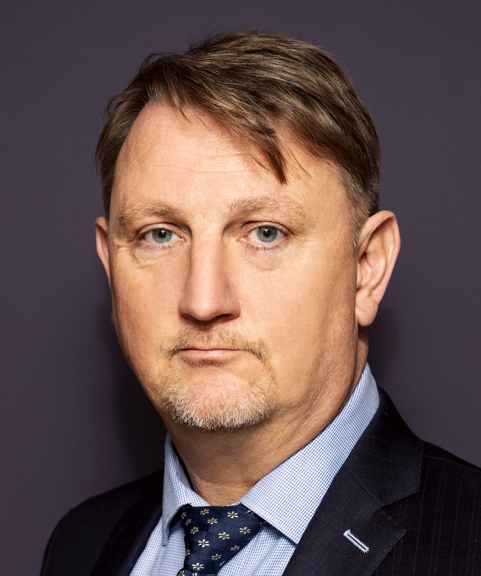
Steve Allen
While Allen (pictured) has managed safety and security at major events for the past three decades in some 48 countries, touring with artists including Oasis, Led Zeppelin and Red Hot Chilli Peppers, Hamilton was MD of ground operations at the London 2012 Olympics and remains the security director for all Sir Paul McCartney’s worldwide tours; having first started working with the former Beatle back in 1989.
Along with the ten deaths at Astroworld, hundreds of other fans were harmed. Following its investigation into the tragedy, The Houston Police Department said, “All ten deaths, and injuries, sustained at the 2021 Astroworld Festival could have been prevented”.
Set up with the aim of reducing the risk of anything like that happening again, The Pink Bows Foundation is committed to educating, raising awareness and promoting crowd safety. It is supporting the work of Hamilton and Allen in setting up The Showstop Course, which has been designed to enable event organisers worldwide to implement proven, tested and approved emergency procedures for their events and prevent future tragedies.
International Recognition
The Showstop Procedure Course has already been approved by the International Institute of Risk & Safety Management and CPD. The Pink Bows Foundation, Event Safety Alliance, UKCMA , Event Safety Alliance Canada and the Global Crowd Management Alliance are all aligned in recognising the importance of the Showstop Procedure. Informed by their decades of experience working at some of the biggest venues and events in the world, the first training and certification course will be launched by the Pink Bows Foundation in Houston, Texas, in March, followed by the UK in April.
“It’s incredible how everybody has a different understanding of what Showstop is.”
Allen says the safety bodies were quick to endorse the course because despite the obvious need for it, nothing like it exists: “Everyone talks about having a Showstop procedure, but few really understand the effectiveness of it as a crisis management tool.”

Mark Hamiltonb
In his years of travelling the world Hamilton (pictured) has found there are wildly differing understandings of what Showstop should be: “The failure at AstroWorld highlighted that Showstop is a key component to crisis managing an event. If there’s an imminent threat to life, you need to stop the show. And yet, when I travel around the world on tour – and I’ve been just completed one in Central and South America with Paul McCartney – when I start to engage with the team at a stadium, arena or festival, and I go over the emergency procedures, it’s incredible how everybody has a different understanding of what Showstop is. Everybody knows the name, but there’s a lot of different understandings about how it’s approached.
“Some people believe you can have this committee meeting approach to stopping a show but after someone in an audience has been subjected to severe pressure, they can lose their life within minutes. So, there’s not a lot of time available to restore that situation once it starts to escalate. Timescales are critical.
“Another inconsistency is when I ask who the person is who will inform the artist if the show needs to stop. They start to have a debate about who that’s going to be.
“Production managers and stage managers have already got busy lives, and so the Showstop responsibility really fits better with a security or safety professional to implement it; someone who understands the context of why a Showstop is needed at that moment in time, and then is able to communicate that to the relevant individual who the artist recognises as the liaison person.”
Allen is the pioneer of the Showstop Procedure having first used it on tour with Oasis back in 1997 and has since used it at more than 30 major events and not just as a result of crowd surges but also emergencies resulting from issues such as fires and structural collapse.
He says, “The Showstop procedure has been proven to be effective time and again. It aligns with anything that can happen that is a threat to life; that could be a tangible situation involving a crowd, fire or structural collapse, or an emerging threat such as terrorism or adverse weather.
“Having established that incidents during a performance are a regular occurrence, it is therefore reasonable to say that these situations are foreseeable and as such, there should be competent risk mitigation and emergency procedures in place should a life safety incident occur.”
Since the outset with Noel Gallagher, Allen has found artists to be hugely supportive of the Showstop Procedure. He says, “Their role is to entertain, and they want to know that their fans are safe. Ultimately, they don’t want to end up as a co-defendant if it goes wrong.
“Artists welcome the fact that we have a system in place that means we can call an immediate halt to an issue in the audience, gain their attention, regain control, and coordinate the proportionate response. That is best led initially with communication from the performer because that’s ultimately who these people have purchased tickets to come and see.”
The duo asserts that for event organisers and venues, not only will the Showstop Procedure save lives, but it will also provide mitigation that competent professionals were in place with a proven, tested, and robust Showstop Procedure should any court action arise.
“We are of the firm belief that public perception around this will be important,” says Allen. “If you’re going to a show you want to know that there is a team, with a procedure in place, so that if there’s an emergency they’re going to respond accordingly. The Showstop Procedure will benefit organisers of events, production and touring crews, performers and audiences alike’.
“Also, having been involved an as expert witness in high profile criminal and civil court cases resulting from tragedies, what stands out to me is the fact that ultimately, when a tragedy occurs, you don’t want to be on the wrong end of it. You want to be secure in the knowledge that if you were to be challenged by an expert everything that was put in place was correct, appropriate and proportionate, and it was just a result of an undesirable occurrence far from the realm of normality. This is where the Showstop Procedure kicks in. Mark and I have got the benefit of being expert witnesses, and we know that this Showstop Procedure would stand up to that scrutiny test.”
This article is included in the spring edition of Access All Areas magazine, which is available here.