

 Max Steventon
Accessibility and inclusion took centre stage during a panel discussion at the Event Production Show, where industry voices came together to explore how events can become more representative, sustainable, and open to all.
The conversation focused on breaking down not only physical barriers, but also the cultural and creative obstacles that prevent people from fully participating in event spaces.
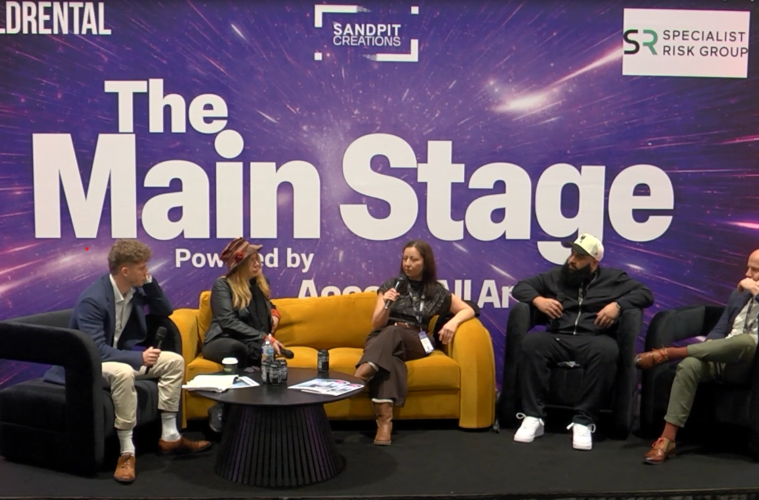
The session brought together live events accessibility charity Attitude is Everything’s campaigns and commercial services consultant Andrew Lansley, music charity Super Jam Foundation chair and trustee Gill Tee, event production agency Continental Drifts director Mel Wilds, and Kick and Play Events founder Tyree Sutherland.
Across the conversation, panellists explored the progress being made in accessibility, the ongoing challenges facing grassroots initiatives, and the importance of nurturing diverse talent pipelines.
A key theme throughout was the UK’s position as a global leader in accessibility standards for live events yet one that remains fragile without consistent government backing. Lansley highlighted that while frameworks and best practices exist, the real challenge lies in implementation and long-term support. “We’re performing above average,” he noted, “but without proper backing, there’s always a risk of slipping backwards.”
The discussion also shone a spotlight on the power of mentorship and education in driving meaningful change. Gill Tee shared how Super Jam Foundation has grown from mentoring just seven students to supporting hundreds of neurodivergent young people across multiple colleges. With around 70% of students progressing to university, the programme demonstrates the impact of sustained support and belief in underrepresented talent.
“We’re not just teaching skills, we’re nurturing confidence and identity,” she explained, emphasising the importance of recognising creative potential that might otherwise be overlooked.
For Sutherland, the conversation was grounded in lived experience. Through his work with Kick and Play Events, he described the barriers faced when trying to bring urban and contemporary genres into new spaces, and how initiatives like Festival Lab have helped unlock opportunities. By providing platforms for live mixes, releases, and performance, he has been able to elevate emerging artists while reshaping perceptions of what inclusive programming can look like.
Mel expanded on this through the work of Continental Drifts’ Festival and Carnival Lab, which was created to address a lack of diversity, particularly at senior production levels. By offering paid opportunities and hands-on experience, the programme is building a more representative workforce behind the scenes as well as on stage.
“We’re looking at the whole ecosystem,” she said. “Not just who’s performing, but who’s producing, who’s building, who’s making decisions.”
The panel also addressed the ongoing tension between inclusion and commercial viability. Rising costs, post-pandemic recovery, and limited funding were all cited as barriers to progress. Yet, the consensus was clear: inclusion should not be treated as an optional extra, but as a fundamental part of event design and delivery.
Real-world examples illustrated what best practice can look like. From sensory-friendly spaces at major festivals to proactive accessibility planning at large-scale public events, panellists highlighted how thoughtful design can transform audience experiences. These initiatives, however, often rely on passionate individuals and organisations pushing change forward without sufficient institutional support.
Ultimately, the conversation returned to the need for stronger collaboration between industry, government, and grassroots organisations. While innovation and goodwill are driving progress, panellists agreed that long-term change will depend on sustained investment, clearer regulation, and a shared commitment to equity.
As Lansley put it, “There’s a lot of brilliance in this space but it needs backing, it needs structure, and it needs to be protected.”
Picture (left to right): Max Steventon, Gill Tee, Mil Wilds, Tyree Sutherland and Andrew Lansley