

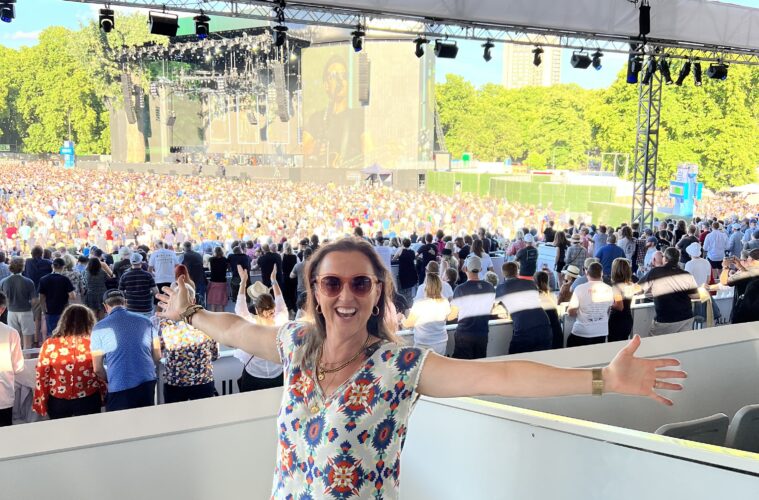
 Christopher Barrett
From seeing The Police live in Brighton aged 10, to working closely with the real thing on the planning and delivery of Operation London Bridge, LS Events VP of strategy and engagement Grace Noest has clearly never lost her passion for events. Here she outlines her eventful career path, while flagging the many landmark moments and key people involved along the way.
What was the first major live event you attended, and did it have a lasting impact?
There were a couple of formative moments. My first ever was back in 1985, seeing The Police in Brighton with my family. I was only ten years old, and I was completely blown away. It absolutely embedded in me a lifelong love of music.
Alongside that, I come from a big sporting background. I’m a Chelsea fan and have been going to Stamford Bridge since I was a child. Being part of a huge crowd, all pulling for the same thing, feeling that shared emotion; that’s always really resonated with me. That sense of collective energy is something I’ve been drawn to at every event I’ve experienced since.
What led to your first role in event production, and what was it?
I was incredibly fortunate early on. My dream had always been to work in sport and help shape major sporting events. My first proper role was in 1998 with Craigie Taylor International, a sports marketing and sponsorship agency led by Marcus Robertson, who remains one of the most pivotal figures in my career.
Marcus had a philosophy of hiring “blank sheets of paper” — people with enthusiasm, confidence and passion — and then moulding them. It was a small agency but we punched well above our weight. Within months, I was working on global sponsorships, the Rugby World Cup, and Vodafone’s partnerships with Manchester United, Formula One and the England cricket team.
What made it special was that junior team members weren’t left behind. Everyone was encouraged to experience events first-hand, to believe in what they were delivering. That role was where I truly learned about live events; what we now call ‘experiential’ has always existed, it’s just evolved. I also travelled extensively, running round-the-world yacht races like The Volvo Ocean Race, which was an extraordinary education in both what to do and what not to do in those formative years.
You’ve worked on several events involving the Royal Family. How did that relationship evolve?
That’s an area of my career I’m deeply proud of. It began through a combination of personal connection and timing. A close friend of mine, Peter Phillips — the Queen’s eldest grandson — had an idea to mark Her Majesty’s 90th birthday. I’d just had twins and was coming out of maternity leave, barely remembering how to turn on a computer, when he asked me to lead the project.
The result was The Patron’s Lunch: 10,000 people on The Mall celebrating HM The Queen’s charities, with a major parade and full Royal Household involvement. It was my first time working directly with the Royal Household, DCMS, the GLA and other major London stakeholders. It was a huge turning point in my career.
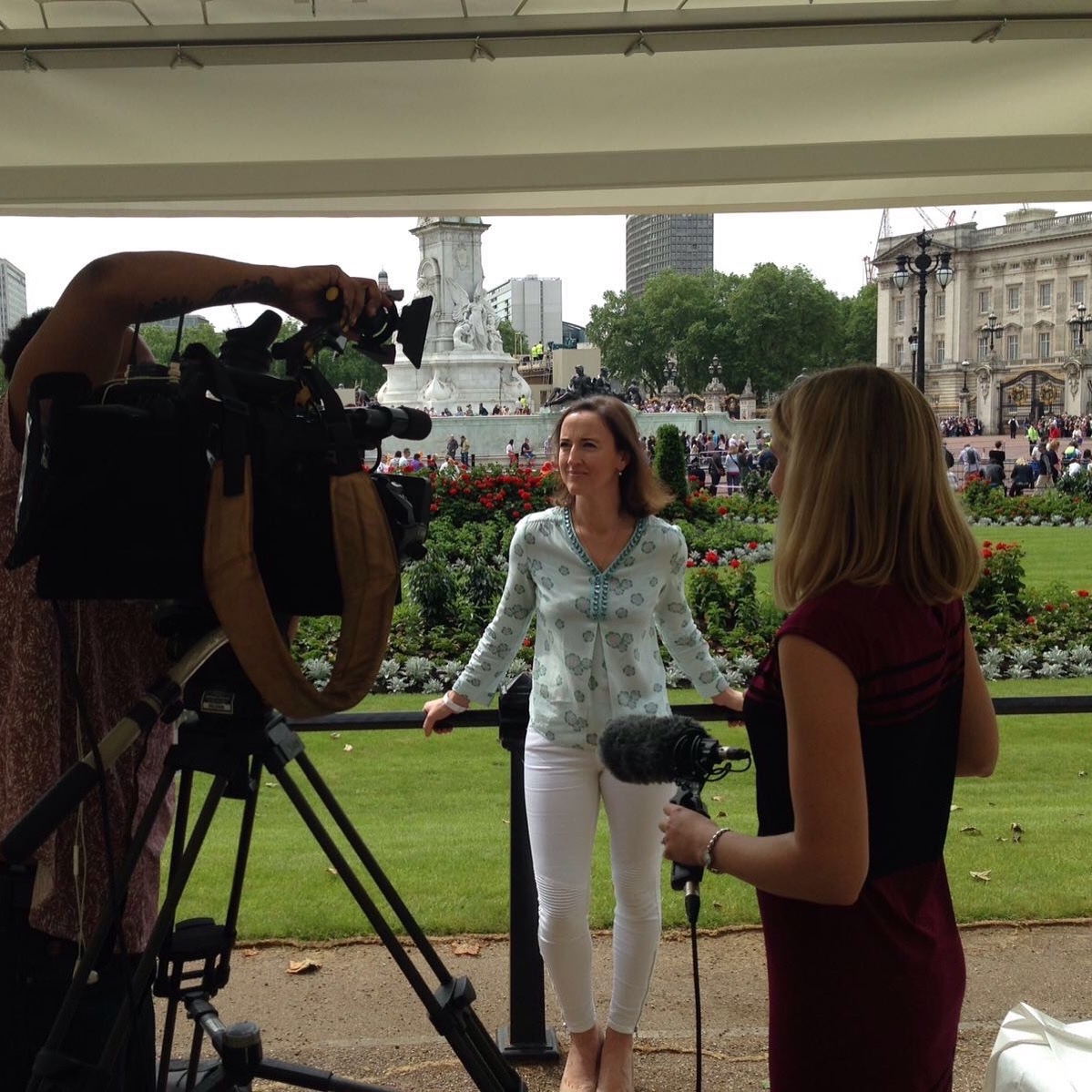
Interviewed at The Patrons Lunch by the BBC.
That event embedded long-standing relationships and taught me what it truly means to deliver something of national importance. It was also where I began working closely with Jen-e Jones and Steve Reynolds — relationships that continue today at LS Events.
Operation London Bridge was a historic and highly complex project in which LS Events played a leading role. What were the most challenging and rewarding aspects of your involvement?
It is impossible to overstate the honour of being involved in Operation London Bridge. We were initially appointed during the pandemic to review whether long-standing plans would even be viable if a demise occurred during Covid. From that starting point, we helped create a new model of central coordination. That’s something I’m incredibly proud of.
That coordination piece may sound unglamorous but it was transformative. For the first time, all stakeholders could work from a single, principal set of plans. It allowed us to de-conflict activity, layer logistics intelligently, and deliver something that was safe, secure and respectful, while keeping London moving.
“That collective effort built enormous pride, loyalty and confidence.”
Crucially, it was a no-notice event. Within hours, we had to mobilise around 12,000 stewards, hundreds of freelancers, and an entire supply chain. There was no precedent. From the moment of Her Majesty’s passing, the senior team had to be in London within four hours.
For me, it remains the proudest moment of my life, not just professionally but personally. Every single person at LS Events played a role. That collective effort built enormous pride, loyalty and confidence, which we carry into every major event we now deliver.
LS Events has evolved significantly in recent years. How do you see the business now, and where is it heading?
Since I joined in 2019 as projects director, and in my current role as VP of strategy and engagement, growth has been a key focus. While we were known primarily as a music festival agency, that was never the full picture. The senior leadership team mapped out a clear strategy to diversify into sport, ceremonial events, creative partnerships, food and beverage, and pan-London delivery — while always honouring our music roots.
The last five years have proven that approach works. We’re proud of our role in Pride in London, our growing sports portfolio, and our continued expansion in music, including launching LIDO with AEG and supporting new festivals such as the Roundhay Festival in Leeds.
What really differentiates us now is our ability to go from concept to delivery. We understand the operational realities of live events, which allows us to help brands create meaningful, emotional connections not just logo placement. Sport, in particular, is a major growth area, building on our work across Formula E, SailGP, the UEFA Champions League Final and beyond.
Looking ahead, we’re excited, ambitious and busy, with a strong pipeline and a clear vision for the next five years.
If you could change one thing about the events industry overnight, what would it be?
Access to the industry. I’d particularly like to see the number of people who feels this industry is ‘for them’ broadened significantly, and I don’t just mean diversity in the traditional sense. I mean ensuring that people from any background can see a place for themselves in the live events industry.
This industry has given me an extraordinary life: unforgettable experiences, lifelong friendships, moments you could never plan for. I want the next generation to feel confident saying yes to opportunities, even if they don’t see themselves reflected in our industry at first glance.
At LS Events, we run something called Road to LS, where every team member shares their journey — where they grew up, where they went to school, how they arrived here. The variety is incredible. This industry needs a wide range of skills, personalities and perspectives, and we have to demystify that pathway collectively.
When you get the chance, how do you unwind?
This industry is all-consuming and I love that but I do need time out. I have three teenage boys, which is a job in itself. My absolute therapy is horse riding. Getting out into the countryside, galloping as fast as I can with the wind in my hair. That’s where everything resets. After that, I feel ready to take on anything.