

 Christopher Barrett
At the end of a sun-drenched summer that many agree was the best for years for outdoor events, industry leaders discuss the key trends and major challenges involved in staging many of the season’s biggest events, along with progress made to reform licensing, support grassroots, and gain festival tax relief on the back of a government pledge to support the sector.
While many promoters and live event production companies were busy creating the summer’s countless landmark events; from huge stadium runs by the likes of Oasis to festival launches including Lido and Come Together, and multi-entertainment offerings such as LIV Golf; behind the scenes events industry associations were pressing for measures to help ease processes and bolster its finances.
From licensing to festival tax relief, the impact of Martyn’s Law to preparing for the first payments from the LIVE Trust grassroots fund, LIVE CEO Jon Collins has had a lot on his plate. Over the summer, he continued spearheading attempts to increase governmental support for the live music industry, and is largely positive about the progress made, despite a cabinet reshuffle that saw industry advocate Chis Bryant moved on from his role as the minister of state for the DCMS.
“I’ve started to regard Wembley Stadium as a gig venue that has the odd football match.”
Collins’ weighty workload reflects a vibrant industry that he says shows no sign of slowing down: “We’ve had a brilliant summer of music. I’ve started to regard Wembley Stadium as a gig venue that has the odd football match, because that, to me, seems to be the balance of it these days. We’ve had a succession of stadium artists performing at stadia up and down the country and business has also been strong in the arenas. It’s been a jam-packed summer of music, which is tremendous.”
LIVE’s boss has also been encouraged by the attitude the UK government is taking to the live music sector, and the publication in June of its Industrial Strategy; a 10-year plan to significantly increase business investment in eight growth-driving sectors; known as IS-8.
“The creative industries are now one of the IS-8, and that could become one our favourite phrases over the next few years, because the IS-8 are the priority sectors of the economy that the whole machinery of government is supposed to be getting behind to drive growth. The fact that we’re in the eight has already seen new investment unlocked in things like the £30m New Music Growth Package, but should also unlock legislative initiatives to support us, so the secondary ticketing legislation that we are expecting to be announced soon would be viewed through that lens.”
Time for licensing reform
Earlier this year, LIVE was asked to sit on a taskforce to develop proposals to deliver more business-friendly licensing of venues and events. In August, the Government responded by publishing the Licensing Taskforce report in which it accepted the majority of LIVE’s recommendations. Proposals to be taken forward include the introduction of a National Licensing Policy Framework; to deliver a more consistent, transparent and pro-growth licensing system; and to review licence lengths and fees for festivals.
“The government is looking to have much of it underway, if not in place, by the budget, which means venues will have more flexibility and a bit more security around the licences, and for festivals a route to longer term licences to give them the ability to plan. That industrial strategy really sets the bedrock for changes to come.”
Collins has also been busy working with the Home Office on the statutory guidance for Martyn’s Law. He says, “The Act is not set to be live until 2027 but there’s a lot of work to do, because it is so broad, to ensure that the responsibilities under this Act align and land correctly alongside our existing responsibilities under primarily licencing legislation. We’re pleased that the Home Office has taken on board our recommendation to have an advisory panel, and we are optimistic that we’re going to be on it.”
In LIVE we trust
Collins also reports good progress following July’s first meeting of the trustees of the LIVE Trust; the funding initiative to support grassroots artists, venues, festivals and promoters via a £1 per ticket contribution from shows with a capacity of more than 5,000. Among the touring artists to have backed it are Gorillaz, My Chemical Romance, Ed Sheeran, Rick Astley, Radiohead and Olivia Dean.
“There’s been an increasing roster of tours involved as we build towards making this the norm,” says Collins.
The trustees are now preparing to issue grants by the end of the year, which Collins expects to be a few hundred thousand pounds. He says, “This is phase one, which will give us a learning opportunity, and our expectation is that it will run through to the end of Q1 next year, then we’ll put the next phase in place and it will take us into the millions of pounds of distribution, and then we’ll have the third phase running in the second half of next year, and then that, we hope, is going to step up again because we’re seeing the monies that have been committed and the roster of shows broadening out.”
LIVE has long been campaigning for festival tax relief to bring the UK sector in line with European neighbours with a reduction in VAT to help mitigate against hugely increased production costs and resulting mass closures.
Taxing times
“This IS-8 label means that government is committed to driving growth in the creative industries. There are two longstanding arguments for a tax relief; it corrects a failing market, and it drives growth. With festivals you see the challenges and there’s a very clean-cut model where all the risk sits with the festival organiser and so it’s very clear who should benefit from the tax relief. Given the margins involved in festivals, a tax relief would mean more festivals will go ahead and/or go ahead in a more fully developed way. We are pushing for it, and the government has opened the door to us on this one. Realistically it is unlikely to happen in this budget, but is it something we can shoot for in the next budget? Absolutely.”
One of 15 industry bodies that makes up LIVE, the Association of Independent Festivals has been on the frontline when it comes to seeing the impact of the challenges facing the sector. Following 78 festival closures in 2024, AIF CEO John Rostron says times remain tough but the mood among operators lifted considerably this summer and AIF’s membership has grown to 152.
“I’m just coming up to three years in post, and following the summer the mood among members is the most optimistic and buoyant it’s been in those times,” he says. “There are still struggles and hardships, the biggest challenges being production costs, cash flow and the margins, but over the summer we saw sold out events, tickets selling really well, and organisers staging great events. It feels like there has been a move beyond the gloom and we’re in a really interesting space.”
The AIF will continue to push hard for a reduction in VAT for festivals though, and Rostron explains why: “In the last week alone, I’ve spoken to organisers of festivals at 20,000 capacity, 30,000 capacity, and a few sizes in between, who sold out but lost money this summer. There was a 20,000-capacity festival I spoke to this week who sold out and had a great show but lost £1,000 pounds. That’s the thing that we need to address because that’s simply not sustainable.”
The Oasis masterplan
For Manchester-based live event production specialists Engine No 4, this summer was among the busiest and best yet, according to its director Jim Gee. “This year’s was our biggest summer yet in terms of running live projects, and the weather was a blessing; we didn’t have a very wet site anywhere,” he says.
“This year’s was our biggest summer yet.”
Among Engine No 4’s key projects during the summer were festivals Kendal Calling (cap. 35,000) and Lost Village (20,000), along with the 30,000-capacity Wythenshawe Park show series that ran over the August bank holiday weekend and featured acts including Sam Fender and Fontaines D.C.
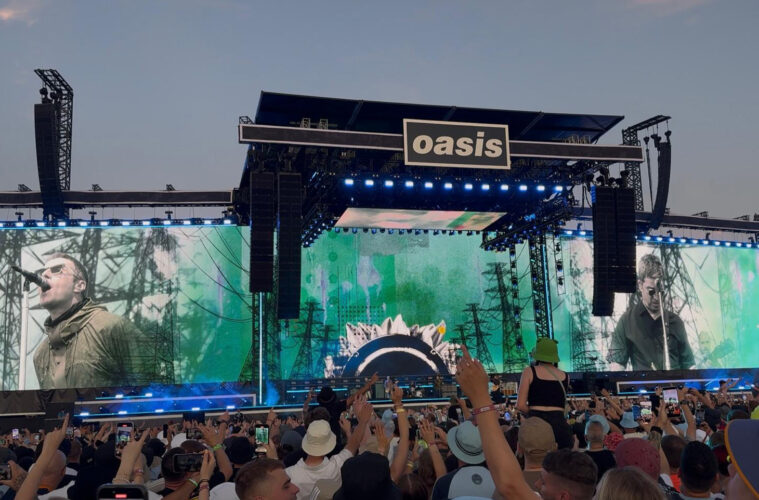
The biggest project, by far, for the independent operation was handling both Parklife (80,000) and Oasis’ five shows at Manchester’s Heaton Park that followed the festival. It meant Engine No 4 having a team on site for 10 weeks of the summer, with the transition between the two events presenting no shortage of challenges.
Engine No. 4 not only handled the site management for the five Oasis shows but also Parklife; with the latter involving the production and advance of nine major stages, compiling a security plan with more than 1,000 onsite security personnel, along with the infrastructure and transport plan. Meanwhile, Engine No 4’s co-founder Jon Drape led the community impact team for both events, handling residents liaison and community impact considerations.
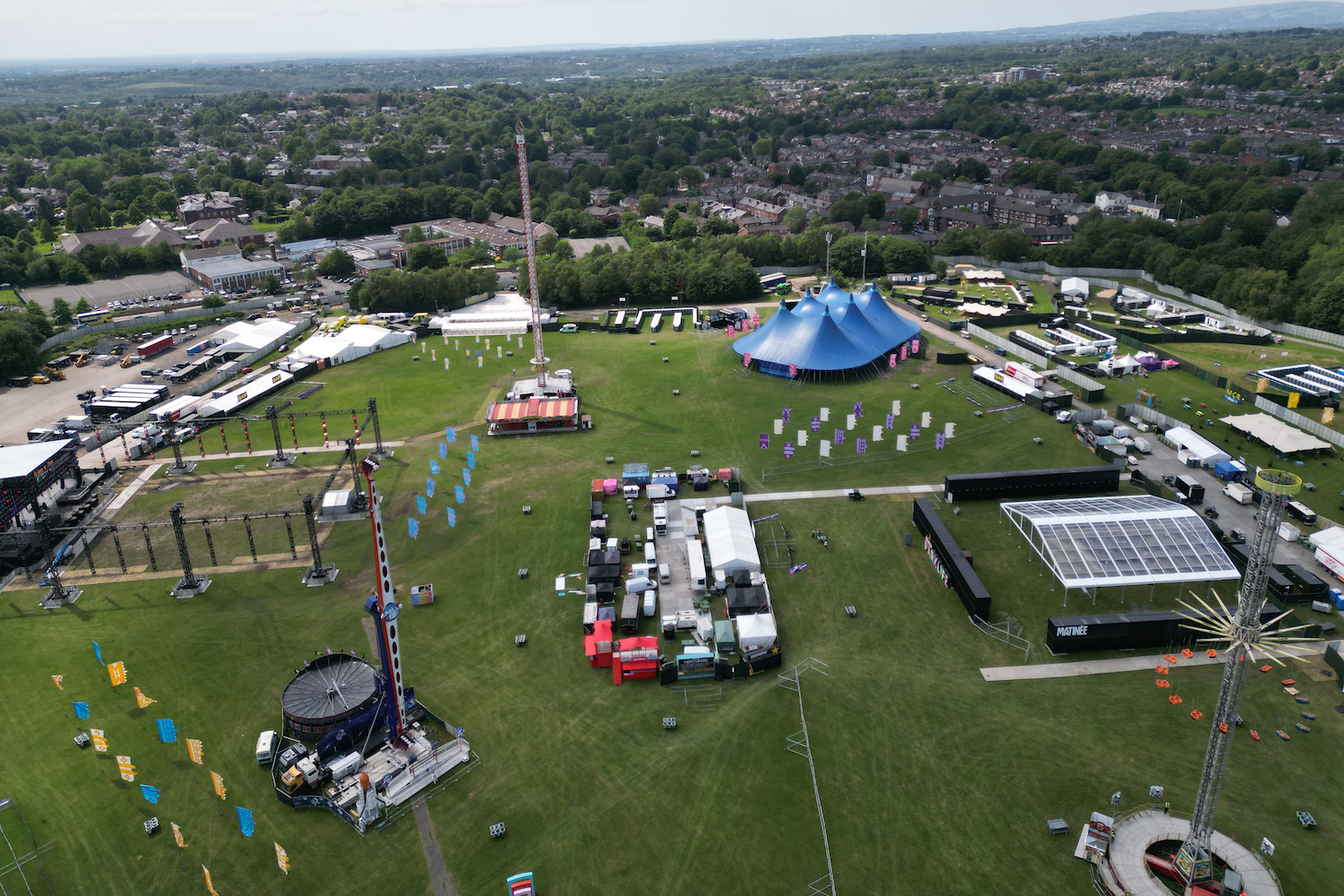
Switching from Parklife to Oasis at Heaton Park
“Heaton Park was amazing,” says Gee. “We went there on 23 May to get Parklife built and didn’t leave until mid-August because we rolled Parklife straight into Oasis. Heaton Park ended up feeling like home for a lot of the team for much of the summer. It was a great experience, challenging and interesting, to shift that site from being a festival layout into a single stage layout and then keeping that running for five nights, over 10 days.
“In terms of specifics of the changeover between the two shows, everyone was very keen on sharing as much infrastructure as possible,” says Gee. “There were multiple layers of almost every bit of site infrastructure kit on the CAD plan, to cover what it would look like for Parklife and what it would then look like for Oasis. Doing the swap over between those two shows in the turnaround period was quite complicated in lots of ways. It would have been easier just to take it all out and start again from scratch.
“Literally every single cabin that was on site for Parklife was either staying in place and getting turned into something else or getting moved somewhere else into storage before it could be moved into its final position for Oasis. Around 50% of the trackway that went down for Parklife stayed in position, but then more came in to create coach stations and bus stations – overall there was a slightly bigger set up for Oasis. So, working with the trackway teams to make sure they were lifting the right panels and then bone yarding them in the right place to put them back down in the right place for the next phase of it was a challenge.”
Gee says Wythenshawe Park also proved to be one of the highlights of the summer for the team: “It’s another really positive event for the Manchester area. It was the event’s third year, and it felt like it had really cemented; we got the park set up and running efficiently and proved the model on paper works for it to continue rolling out. It was a great finishing weekend of the summer.”
Coming together
At the tail end of last year, Far and Beyond (FAB) founder Jess Shields hired former Live Nation UK COO John Probyn as group head of event operations. She says Probyn’s involvement has helped significantly boost operations this year, at what was already a burgeoning production company. Among FAB’s many notable projects this summer were Forbidden Forest, Radio 1’s Big Weekend, Radio 2 in the Park , Creamfields, Download, the British Grand Prix Concert and the debut of Newcastle festival Come Together.
The launch of TEG Live Europe and RG Live’s 70,000-capacity Come Together in June at Newcastle’s Town Moor was billed as the ‘largest outdoor music event the North East has ever seen’. It saw headline performances by acts including Robbie Williams and Kings Of Leon. Probyn took on the role of event director.
Another key summer project handled by Probyn, who is currently preparing to take on some major FAB event projects in Asia, was 50 Cent’s headline show at Tottenham Hotspur Stadium in July.
FAB took over as operator of the Forbidden Forrest Festival this year on the back of its daily capacity having been expanded from 7,000 to 22,000. Promoted by Forbidden Festival Ltd, the event was staged in the grounds of Belvoir Castle in Leicestershire from 29 May to 1 June on the back of a £1 million investment in an improved site layout and infrastructure improvements.
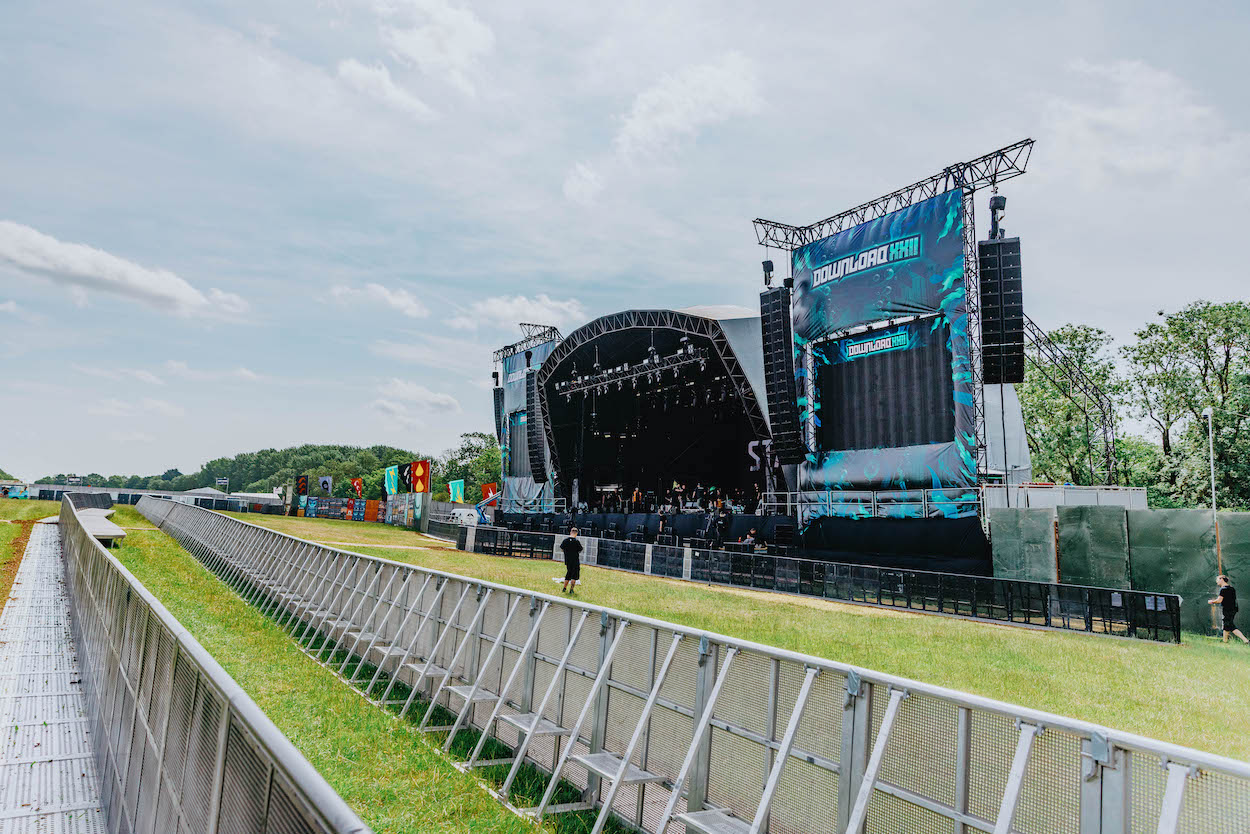
A mud-free Download for FAB
Last year, FAB took over the running of Download festival, an event Shields has had a lifelong association with having grown up next door to its Donington Park site. Her first role in the events industry came in 2008 when, straight out of university, she took on the role of production assistant at Download. Shields has learned to associate Download with mud, but as with almost all the events FAB worked on this summer, this years’ Download was blessed with dry weather.
“It’s been a great year for FAB, and I think it’s been a great year overall for event operators because the weather has been so kind,” says Shields. “I haven’t had a single show this summer where we’ve had any sort of weather instances; for most of them we’ve had glorious sunshine. It turns out, doing this job when you’re not knee-deep in mud is actually quite joyful. I’ve never known Download not to have been hit by horrific weather at some point. It’s been brilliant.”
Having been a local resident herself, Shields says building strong relationships with the local authority and community are integral to FAB’s approach, and much has been done at Download to improve that relationship.
“Since we took over Download, one of our biggest areas of focus was winning back the good faith of the local residents, because from years previous to us being there it had gone really badly wrong,” says Shield. “Now we’ve got everyone on side, and our job is ten times easier.”
Generational changes
Gen Z is widely understood to be a digitally native, socially conscious, group that favours authenticity, sustainability, and purpose-driven experiences, while being less interested in eating meat and drinking alcohol.
The demands, and behaviour, of Gen Z at events has led operators to refresh the offering at even the most established of major events this summer, and there has also been a huge rise in the number of major outdoor live music series made up of single show days that don’t involve camping.
“At two festivals we ran this summer the biggest queue was for the smoothie bar.”
“At shows that attract a younger audience things are shifting; we’re definitely seeing the same number of day ticket buyers wanting to attend, but less wanting to camp,” says Shields. “People tend to be staying in local hotels more, and nine times out of 10 any sort of glamping offering will sell out. People are happy to pay a premium for a better camping experience but otherwise they just want to stay off site. Partly that must be down to the weather, because there’s only so many times you can go to a festival and enjoy being in horrific weather in a tent. It appears they still love the festival and want to come back but they just don’t necessarily want to have the experience of camping. We’re seeing that with the younger generation, and they’re spending their time differently on site.
“At two festivals we ran this summer the biggest queue on site was for the smoothie bar. Additional activities, such as morning exercise classes, are proving really popular because people don’t want to just come for the music, they are looking for a broader experience, so festival operators are having to diversify the offering.”
Branching out
LS Events co-CEO Steve Reynolds says the summer also proved to be a great one for his burgeoning live events production empire. Recent years have seen the company branch out way beyond its live music and festival roots to become a flourishing multi-service operation involved in some of the world’s largest public and sports events, including Operation London Bridge and last year’s UEFA Champions League Final.
LS Events portfolio continued to expand this summer, and in July alone it worked on a diverse range of events from Barcode Festival and BST Hyde Park to London Pride, 7/7 Memorial, Sail GP, Formula E and the LIV Golf Fan Concert.
“We continued delivering our staple annual events such as BST Hyde Park and Pride in London but added a few new ones,” says Reynolds. “The LIDO Festival in Victoria Park started the summer and then we added the Barcode Festival in July on behalf of GroceryAid. We also added Sail GP to our growing sporting roster. We finished the summer with This Oxford Street in September; an event to launch the pedestrianisation of Oxford Street in central London.”
The UK grocery industry’s annual fundraising event, Barcode was staged at Kenwood House this year, where around 6,000 attendees from the grocery industry were presented with a mix of headline acts, networking opportunities, complimentary food and drink, and some 127 brand activations. Reynolds describes the move of venue as being a game changer, and it certainly proved a fundraising success with the refreshed event format resulting in £1.4 million being donated to GroceryAid. LS Events handled every aspect of the festival’s production, including creative site design, staging, branding, and technical delivery.
“The transition of Barcode from an industry exhibition to a full-scale festival was a key step in its evolution, and the core of the project was about creating a truly immersive and contemporary event experience,” says Reynolds.
Owned by AEG Presents UK and European festivals CEO Kim King, LS Events worked on the promoter’s launch of Lido Festival this summer. Staged across two weekends in June, AEG Presents’ new 35,000-capacity festival was said to be the global promoter’s most sustainable festival to date. Among the acts to perform were Massive Attack, Charli xcx and London Grammar.
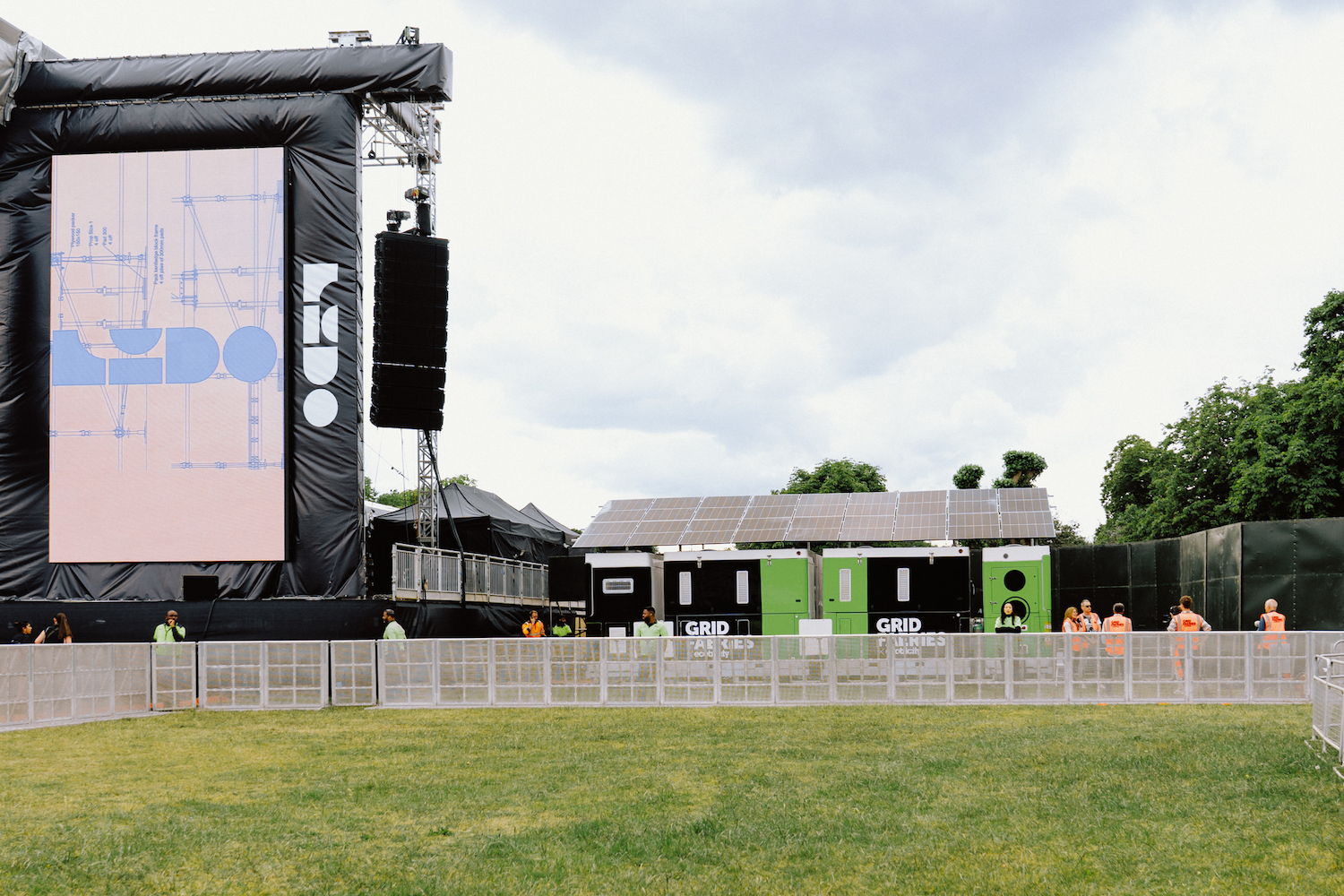
Battery-powered Lido
Looking ahead to next year, Reynolds and his LS team are preparing to bring another major new AEG Presents festival to life; Roundhay Festival.
Set to take place in Leeds’ huge Roundhay Park in July next year, the festival is expected to have a capacity close to BST Hyde Park’s and run over two weekends with a series of headline shows by acts including Lewis Capaldi. At Roundhay Festival, LS Events’ responsibilities will include event and site management, partner production, food traders, finance management, and creative content.
“2026 is looking incredibly exciting,” he says. “It’s looking to be a record year for us in terms of the number of events we deliver and the number of fans we entertain at our clients’ events.”
This article is included in the latest edition of Access All Areas magazine, available here.