

 Max Steventon
As Belladrum Tartan Heart Festival celebrates its 21st year, the festival’s producer Dougie Brown reflects on its evolution, navigating challenges such as the pandemic, building lasting community ties, maintaining its family-friendly focus and shaping plans for its future.
What were the origins of Belladrum and how has the event evolved over the years?
I went to the very first one as a young music lover. Joe Gibbs is the landowner, and he set up the festival in 2004. Initially it was just 2000 people. The festival was a massive success in the first year. It kind of just grew year-on-year, we have added stages and added capacity.
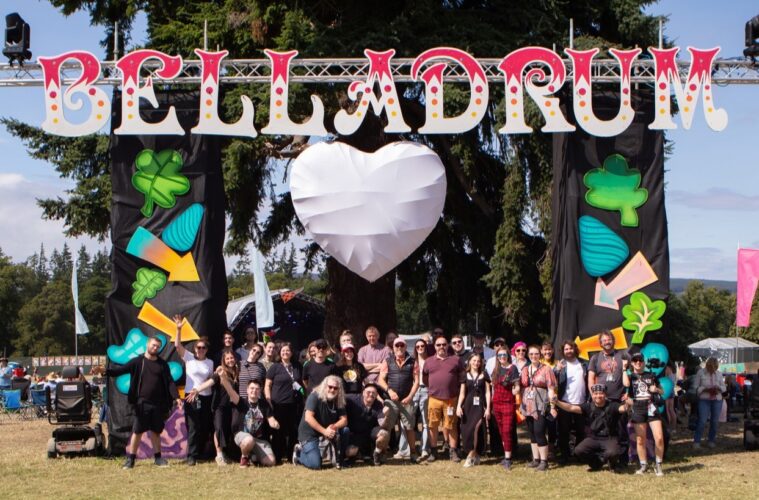
What amazes me about Bella’s success is that not only has it grown from a 2000 capacity event to 24,500 but it has grown organically, the increase has been incremental overtime. Because it has grown organically it has managed to maintain the essence of what it is, which is a proper Highland gathering and a strong family friendly, multi-generational, event. And 21 years later I still see the same friends that I went to that very first festival with, but, like me, they’re going with their kids.
21 years is an impressive feat for a festival, not least considering the many challenges the sector has faced in recent years. How have you worked your way through the difficult times, such as the pandemic?
Having faith in what you are doing. When things are tough stick to your guns and deliver a strong event. Belladrum is at a point where for 10 years in a row we have sold out in advance. Where we are post Covid is a very different landscape. The sales patterns, like you have with a lot of events, have a great on-sale and big spike off the previous year but it can be a slog at times to sell the rest of the tickets. What seems to be happening at the moment is there are late surges in the lead up, so there is an element of holding your nerve.
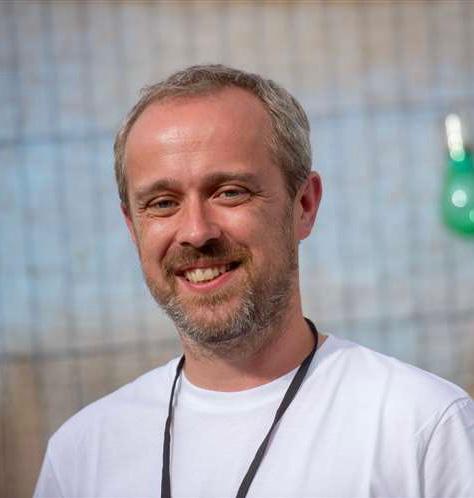
Belladrum producer Dougie Brown
How have you worked to create a good working relationship with the local community?
We spend a lot of time with them throughout the year and in most parts they are super positive and they’re fans of the festival. Right next to us, we’ve got a couple of villages. and what’s been lovely about Belladrum from the start is that the villagers just walk across the road to come in.
We have worked closely with the Community Hall Association since the very first Belladrum. For 21 years we have given them one of the prime sites on the festival site. They run a tea and cake stall ,and all the local community bake. It’s the biggest fundraising event annually for the hall, and over the years it’s helped towards a new roof.
In 2018 the festival was bought by Kilimanjaro, and they’re a great team to be involved with but it’s important that there is still a Highlands office. We’re located in the centre of Inverness just 12 miles away from the festival site.
Does the festival’s location in the Highlands enable you to attract visitors from across the UK and beyond?
The location of the festival makes a huge difference. There’s been an increase in the city-style, one-day, festivals but escaping to a beautiful location still has the magic. Our location is absolutely stunning. The one thing we are very proud of when people come to the festival is when an artist arrives and they go for a walk in the morning. We are always blown away by the feedback of attendees, with many saying ‘this is one of the most beautiful festival sites we have been to in the world’. The Highlands is naturally beautiful but having our 14 stages, which are all secret spots, really adds to the experience.
“The uniqueness of it is born out of its geographic location.”
Having been involved in the main stage booking for years, DEAG’s Kilimanjaro Live acquired Belladrum in 2018. How has that impacted the running of the event?
Kilimanjaro have done an incredible job of ingratiating themselves into what is a family. I think Kilimanjaro is 100% the right company to have because they had that long-standing relationship on the programming side, they knew the festival and they knew the team. We were brought on and kept as permanent members of staff to oversee the local side of things.
We still programme the majority of the festival from the office here because a lot of what Bella is, the uniqueness of it, is born out of its geographic location. We’ve got artists at the festival that will draw 8,000 people in front of a stage, yet are not known anywhere else in the UK. There are certain things that are intrinsically Belladrum and when Kilimanjaro took over the festival they understood and respected that.
What are some of your personal Belladrum highlights over the years?
There’s so many of them. It’s such a hard question. From a personal point of view, I always count myself first and foremost as a Belladrum fan because I went to that first one. I fell in love with it. This year was the first year my son really spent more time at the festival hanging around with his friends rather than being with my wife the whole time. The thing I feel most proud of, and what makes it so special, is watching how much it becomes part of people’s lives up in the Highlands.
Over the years, we’ve had artists like Sam Fender, Lewis Capaldi, Catfish and the Bottlemen at the early stages of their careers. Ed Sheeran also performed early on.
We also have a tradition at the end of every year. On Saturday night, headliners finish their mainstage set with fireworks. During that, we shuffle on a Pipe Band and end with a mass sing-along of a Scottish classic like Caledonia or Loch Lomond. The headliner is obviously the headliner, but this other moment feels very special.
What’s your process for programming Belladrum’s line-up to appeal to such a wide range of audience members?
Festivals often succeed by having a clear niche, whether that’s dance, rock or folk. Bella is different. Because of our geography, and being Scotland’s largest camping festival since T in the Park ended, we’ve had to be a festival for everyone. We attract all ages and demographics, which leads to an eclectic programming policy where almost anything goes.
We have 14 stages, each with its own niche such as jazz, blues, funk, or country, but because our audience is so broad, we can’t always book acts that sit too far in one genre. Headliners especially need to have wide appeal. At the same time, Scotland has an amazing music scene, particularly with the resurgence of traditional music. There are young, exciting artists blending folk with electronica and world music, and we showcase a lot of that at Bella.
Has there always been a focus on making Belladrum family friendly?
Joe’s vision from day one was always about family. I remember the first year: only 2,000 people, but around 20% were teenagers or younger. That ratio has stayed the same.
The programming for families is huge. What we are proud of is how much is free. Festivals are not cheap anymore, but once you are there, 99% of kids’ activities cost nothing. There is pottery, BMX, wrestling shows, STEM workshops, astronomy and more. It is designed for everyone from babies to teenagers, with a team curating it every year.
Just booking artists and putting them in a field is not enough anymore. People should leave saying, “I didn’t get a chance to do everything.” At Belladrum, it is impossible to be bored. That is what keeps people coming back.
This year we had five weddings on site. There is a 200-year-old temple that holds 60 people, so some ceremonies are traditional, others more rustic festival-style. We host full weddings, receptions and even christenings. We have had babies named after the festival. Last year a woman gave birth on the Thursday and she was back on site with the baby by Saturday.
“At Belladrum it is impossible to be bored”
What does the future hold for Belladrum?
I think the festival has reached its natural capacity. It feels right. It feels like everything’s manageable within the infrastructure side of the roads and campsites. With the space we’ve got, it feels busy and exciting without feeling overcrowded and I think that’s the sweet spot. Belladrum is an incredible event and we’re all super proud of it. There’s no fundamental changes needed. It’s about tweaking, improving little things, and adding new experiences and keeping it exciting.