

 Christopher Barrett
Kendal Calling has been expanded steadily from a 900 to 35,000-capacity event since it was founded in 2006, with every edition having sold out. On the back of the 20th anniversary festival, its co-founder Andy Smith, along with key partners and associates, outline the secret to the event’s success.
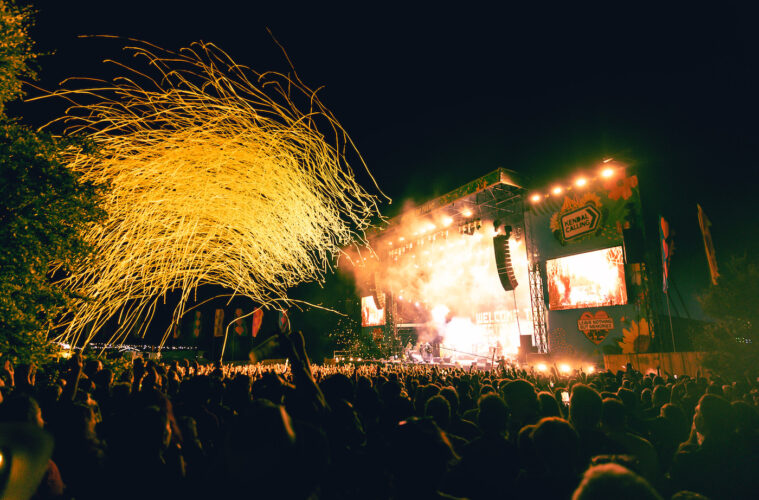
This year’s Kendal Calling saw 35,000 attendees treated to headline sets from Kaiser Chiefs, The Courteeners, Fatboy Slim, and The Prodigy. As with all previous editions the festival sold out in advance, but this year’s ticket take-up was faster than ever with all of them snapped up less than three weeks after the lineup was announced.
The From The Fields-promoted event, which took place on 31 July-3 August at the Lake District’s Lowther Deer Park, was one of the best in its two-decade history and the demand shows no sign of diminishing, according to its co-founder Andy Smith.
“We are up 51% on ticket sales, on this same point last year, for the 2026 festival,” he says. “I’m not surprised, because it was an incredible festival this year; we couldn’t have done a better show.”
It’s been a long and successful run since Smith launched the festival as a 17-year-old who successfully booked Pendulum and Kendal-born British Sea Power to headline the debut event with an audience of just 900.
“It turns out putting a drum & bass act on next to a housing estate isn’t a great idea.”
Having been in a band and staged a series of small gigs and events in and around the local area, Smith became increasingly determined to have a go at staging a festival. The turning point came when he met Kendal Calling co-founder Ben Robinson.
“I was involved in this fantastic council-funded initiative in Cumbria, led by music development charity Generator, which at the time was headed by Jim Mawdsley,” says Smith. “The initiative found several promoters from across Cumbria and got them talking to one another with the idea that they would collaborate and create a touring network. Through it I met Ben, who had organised a small music festival in his little village. I said, ‘We should team up and do something. If you can make it work in your little village, imagine what we could do in Kendal; that’s a comparative metropolis of 30,000 people’.”
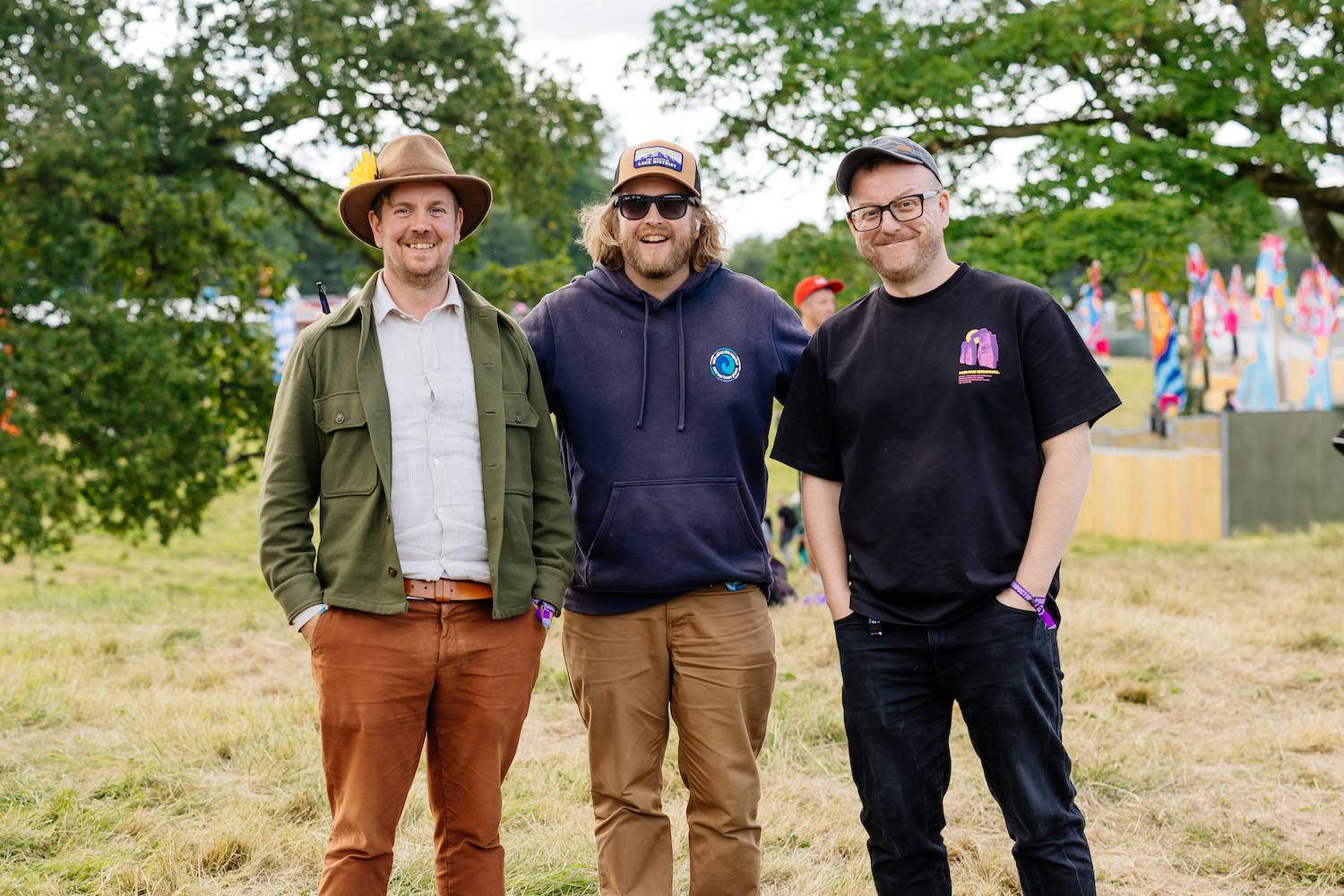
From The Field’s Andy Smith, Jamie Smith and Ben Robertson (L-R)
Smith had already been talking to British Sea Power, and their manager Roy Wilkinson, who were looking to play a homecoming show but were unable to find a venue large enough in Cumbria.
“We thought ‘if there’s not a venue let’s build one’,” says Smith. “Having never been to a festival before, I went to Leeds Festival to meet Roy. I remember sitting on the steps of the dodgems; a 17-year-old with a folder of ideas about a new festival on his lap. It’s very difficult when you’ve not got a reputation or any experience to book the bigger acts but Roy and the band were up for it.”
“The first event was staged in 2006 at Abbot Hall Park in Kendal, but we didn’t stay there long. That first year we got kicked out of the town because it turns out putting a drum & bass act on next to a housing estate isn’t a great idea.”
The following year Smith and Robinson moved the event to Grate Farm on the outskirts of Kendal, expanded the capacity from 900 to 2,000 and introduced camping. In 2008 the capacity was doubled again, to 4,000, and a third day was added.
“That was a fantastic event but we accidentally closed down the M6 because we had traffic issues, so we had to move site again and were very fortunate to find ourselves at Lowther Deer Park the following year,” says Smith.
From then on Kendal Calling’s founders steadily grew the event in size each year, and it is that slow but steady approach to expansion that Smith believes is one of the key factors in its long-term success.
“One of the secrets of our success is growing slowly – if a tree grows too quickly, it falls over in the wind because it’s too brittle,” he says. “It has taken us 20 years to get to a 35,000 capacity, when some festivals debut at that size. We’ve just taken a very slow scenic route to get to where we are, and along the way we have always listened carefully to the audience and what direction they want to see the festival go in future”
A landmark moment in the development of Kendal Calling was a phone call from respected live agent and co-founder of X-ray Touring Steve Strange. “He was in LA at the time, and I’d never spoken to him before,” says Smith. “He phoned and asked if I wanted to book Blondie. That was breathtaking. It was one of the most amazing phone calls I’ve had in my life. Her performing in 2011 really elevated the festival, it really took people by surprise and certainly made other agents take the festival a lot more seriously, which was very helpful.”
Ticket sales data shows that the vast majority of ticket buyers to Kendal Calling return year on year, and that around 50% of the audience is made up of locals. For Smith, bringing top-level music and culture to the area he grew up in has always been a key driver.
“It’s really important to bring something like Kendal Calling to an area that otherwise doesn’t have that kind of cultural activity going on,” he says. “I have firsthand experience of that. I grew up in a small village in Cumbria, and I woke up one day when I was 17 to find that all my friends had gone to university. Even those who didn’t care about studying at university went anyway because there was nothing to do at home. It’s important to have a festival to make an area feel fresh and to give people something to look forward to. We can’t lose the younger generations in these areas, otherwise the whole economy starts falling down. It can’t just be made up of a load of second homes.”
With the aim of keeping the event fresh for attendees over the years, aside from updating the offering with new strands of entertainment, new stages and interesting performance spaces, the playful approach of Kendal Calling’s operators has led to it staging a series of Guinness World Record attempts, including successfully hosting the largest gathering of people dressed as Superman.
“We can’t lose the younger generations in these areas, otherwise the whole economy starts falling down.”
“We almost got the record for the largest Kendal Mint Cake, and we tried to get the record for the most people doing the moonwalk, but it was a wet year and it turns out it is very hard to do the moonwalk in mud,” laughs Smith.
It may have sold out every year for two decades but, like every festival, Kendal Calling was not immune to the impact of the Covid pandemic. The festival was one of a number sold by Global to Superstruct in April 2019, and during the pandemic Superstruct strengthened its holding in Kendal Calling.
Says Smith, “The pandemic was a massive challenge. We really didn’t anticipate the price shocks that came through. Everything increased, but some things absolutely walloped us. We managed to increase ticket prices to cover costs, but it wasn’t ideal because we sell around 50% of the tickets in the local area, and in Cumbria, like many rural counties, the average wage isn’t high. We didn’t want to price out locals, so there was a real balancing act between us producing the best show we could and being able to make it affordable.
“[Superstruct] founder James Barton is brilliant, and so was the former CEO Roderik Schlösser. After just one meeting with them we knew we were in really safe hands; they are people who understand and care about festivals. We worked very closely together during the pandemic, and it has worked extremely well since.”
Another key part of the wider Kendal Calling machine is a partnership with independent Manchester-based production company Engine No 4. Smith has history with the team, having gone to work for a stint with its co-founder Jon Drape at Ground Control Productions in Manchester in the very early days of Kendal Calling.
“We already had two festivals under our belt, and it was a full-time job working on it but there were quiet weeks when I was concerned I would fall into delinquency if I didn’t have something to occupy me,” says Smith. “I was keen to professionalise, and they were great; it was a very eye opening experience understanding the relationship that they had with events, and really understanding why people don’t do production in-house. We wanted to concentrate our efforts on promoting and pass the production to professionals because you can’t do both to the best of your abilities. We chose to work with the people we knew, and we have had a very long relationship with them since; it’s been marvellous.”
Engine No 4 director Jim Gee began working on Kendal Calling in 2014 as site manager, and in recent years has worked even more closely with the From The Fields team as the festival’s project director.
“They are a very good team who started off as young, relatively naïve, kids wanting to put a festival on,” says Gee. “They’ve matured and grown up with the industry but they’ve still got a passion for it. They are effectively still those same enthusiastic kids from 20 years ago. They absolutely love that gig, they put their heart and soul into it, and it’s a pleasure working with them.”
Looking to the future, Smith is now focused on trying to better what he says was the best Kendal Calling yet.
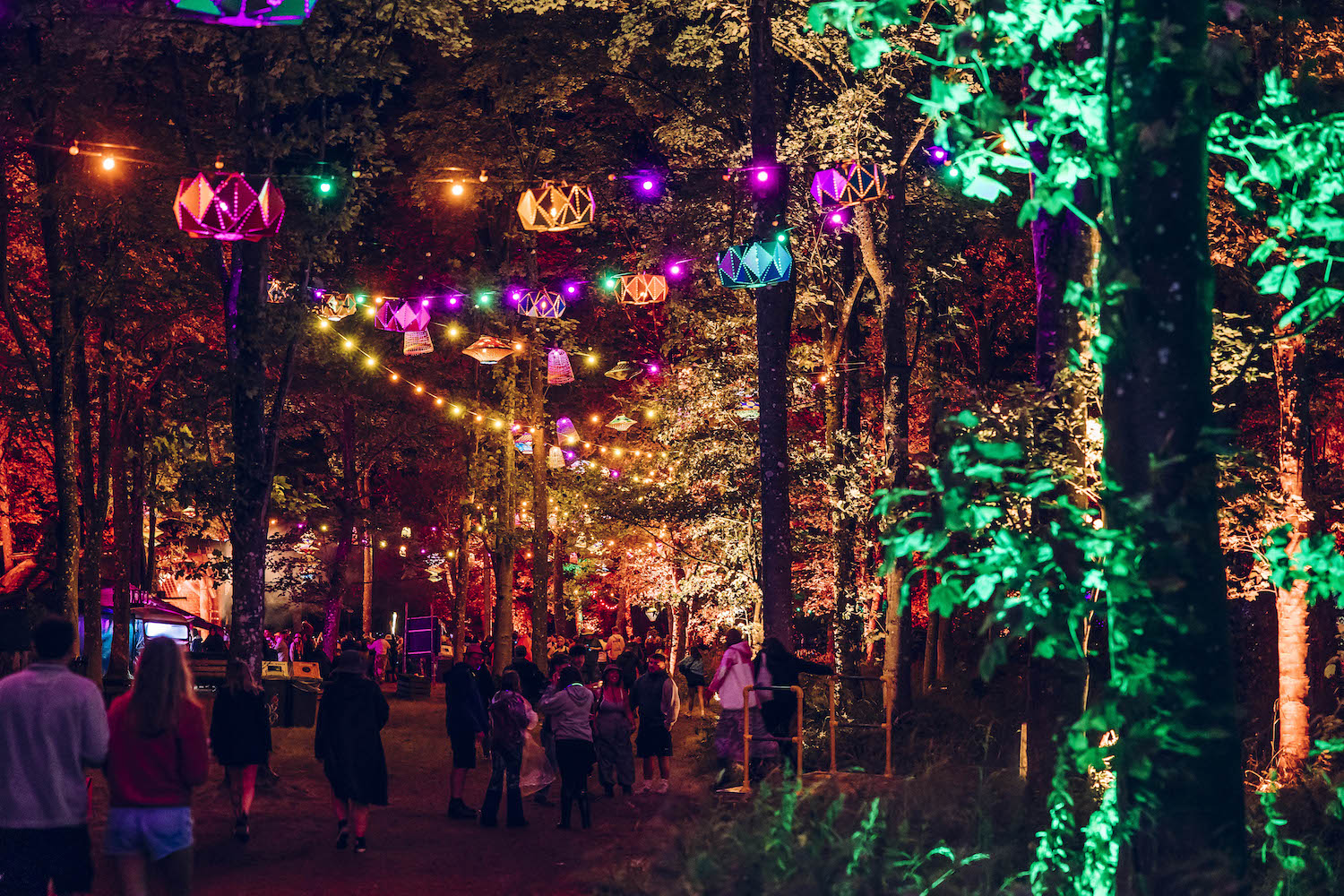
“This year we spent a lot of time talking about getting an extra 10% out of everything, and we really delivered. It wasn’t like there were new areas or new stages, or necessarily new offerings, but everything that we did have there was just that bit better. For example, we’ve had Lost Eden for 10 years, and that’s always been a beautiful late-night wonderland, but this year we really elevated it by having the world premiere of Firefly Forest: a stunning new overhead light installation with 20,000 lights suspended in the trees. That just took people’s breath away. By elevating everything across the site it made it the perfect show.”
Says Gee, “They don’t sit on the laurels; every single year that I’ve worked with them on Kendal Calling they have found something to focus on and improve. A lot of that is about customer experience. They have got the music right, the venue right, the setup right, and they’ve invested loads in the decor and art side; making the sight look amazing.”
“I’m excited to develop the immersive art side of the event more,” says Smith. “There’s still a lot of new things that we can do. We’ve really stepped it up this year but we’re not batting at the level we would like. Often what people remember most about a festival is something that has taken them by surprise, so our focus is on giving people fresh experiences and creating those memories.”