

 Christopher Barrett
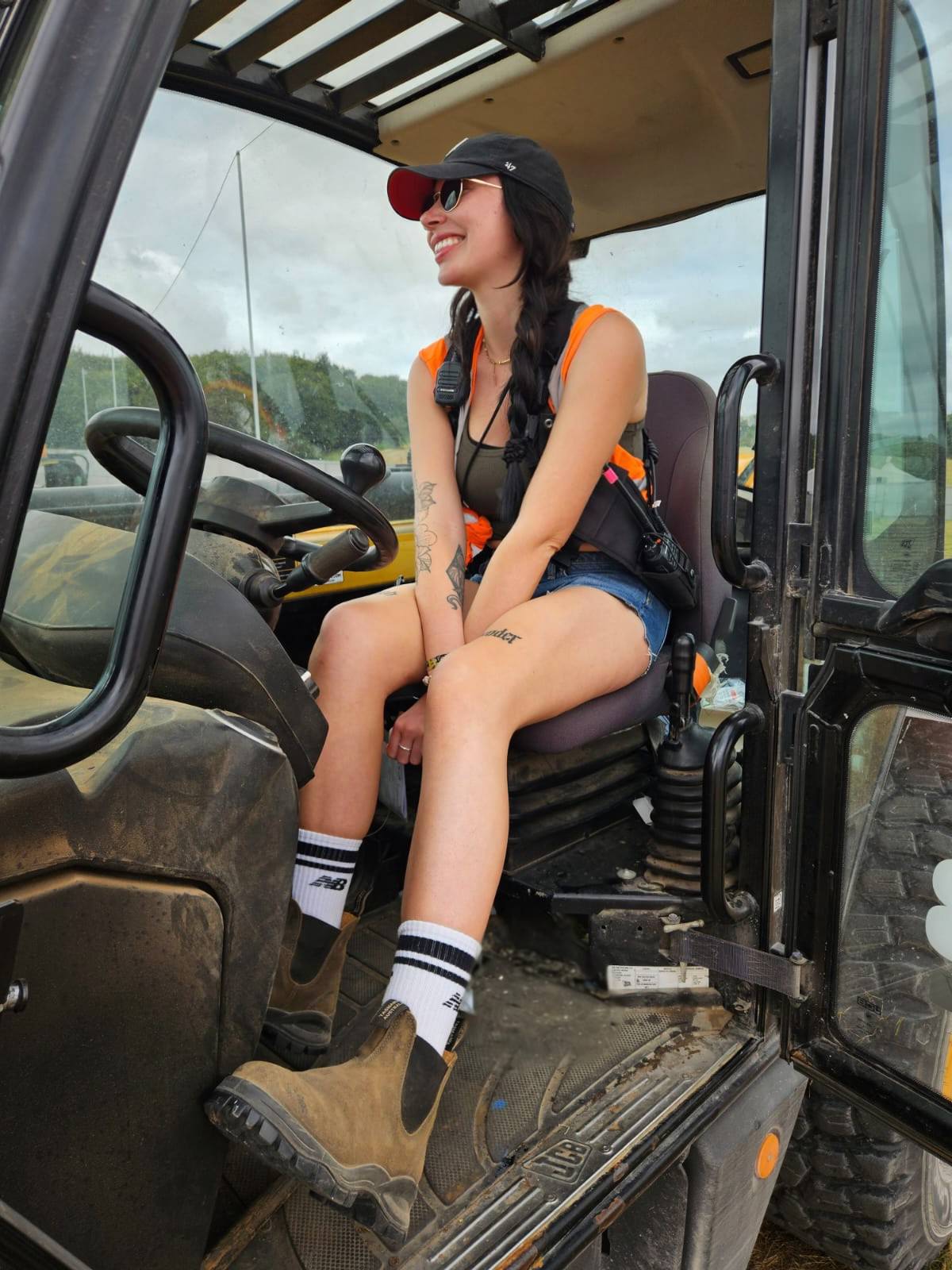
For Boomtown Fair head of production Lana Elworthy, joining the team at the festival was something of a homecoming – it was the first festival she attended and the impression it left went beyond mere memories. Here, she outlines her career path and flags the key people and moments along the way.
 What was the first major live event that you attended, and did it have a lasting impact?
I grew up on the coast of South West Wales, a beautiful place, though not exactly a hub for major live events. My family didn’t really have the means for travel or big ticketed shows, so those experiences came later on for me. Early on, my memories are of Brecon Jazz Festival, agricultural shows, Celtic Blue Rock, and the odd hippy free party as a teenager.
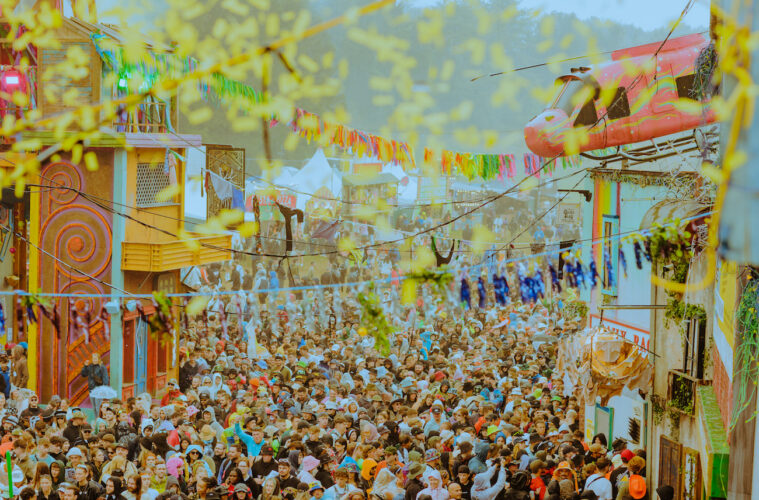
So, funnily enough, the first ‘proper’ festival I ever went to was Boomtown in 2011, and it had a huge impact on me. Back then it was a fraction of the size it is now, but already this bizarre, beautiful, immersive world. After that I went back every year, and at 18 even ended up with a very questionable drunk tattoo on my shoulder that said BOOM Town. Luke, my director, still doesn’t know about it (although he’d probably love it if he did). It’s been lasered off now, to the disappointment of my friends who thought it was hilarious, particularly when I started working at Boomtown.
What led to your first role in festival production?
Like a lot of us I started out volunteering whenever I had spare time. Then I moved into small coordination roles, working with amazing crews and saying yes to everything. Freelancing different roles gave me the chance to figure out what I wanted to do, learn on the job and build relationships. I moved to London and then I was offered a full-time production role, which I ended up choosing over an artist liaison manager offer from a major London club. I knew greenfield production was where I wanted to be, so despite the lower salary it was the right choice. I do sometimes think about how different my life would be if I’d taken the other route.
Who or what has played the biggest part in supporting your career progression or inspiring you?
Rebecca Fitzgerald, creative production manager at Team Love, was one of the first people in production to really look out for me, so she’s always the first person I think of. She gave me early paid opportunities and kept putting my name forward, which was a massive compliment when I was still finding my feet. Since then, I’ve been inspired by loads of people, especially women who’ve managed to push into leadership roles in what is still a pretty male dominated industry. Seeing them do it made me feel like, okay, maybe I can too.
I’ve also been really lucky, not many 29-year-olds get given the kind of trust I have. Landing at Boomtown with Luke Mitchell and Chris Rutherford backing me to lead their production meant a lot, and I work hard every year to not let them down. And I try to pass that on, giving people the same chance to prove themselves that I was once given, no matter their class, age or gender.
What made you want to join the Boomtown team?
Boomtown is totally unique. I’d initially come as a punter, then a volunteer, then working on one of the build teams. I knew the site like a second home, so when the opportunity came to step into Head of Production it felt like part natural progression, part huge leap of faith. At the time I was living in London but I’d lived in Bristol for eight years before that, and with Boomtown being based there it felt like a bit of a homecoming too. It was the kind of challenge I’d been working towards so I had to go for it.
Boomtown is renowned for its immersive production aesthetic. How complex is it compared to other events you have worked on?
It’s unmatched. Most festivals are about stages and infrastructure. At Boomtown we’e building a city, complete with districts, characters, storylines, architecture and design details. There are hundreds of moving parts, thousands of ideas, and more than enough chaos to keep everyone on their toes. The scale and ambition here are on another level, which is driven by the passion of everyone who works with us to make the best show ever. Beneath all the exciting stuff though, at the very core of it, is still a mountain of documents and spreadsheets. The boring but essential bits (which I love).
What was the high point of this year’s festival for you?
Finishing the set build a day early was a real high point. For the first time I actually got to watch the opening of the city with a few of our core team. Seeing that rush of people flood in together was great. Normally I’m buried somewhere fixing a last minute problem so being able to witness that moment felt like a milestone. The other standout was seeing the first lighting test on our new stage The Lions Gate. We’d spent over a year agonising over drawings and details and to watch it finally come alive in front of us was great. There were onions in the air that night, but thankfully it was dark.
If you could change one thing about the events industry overnight, what would it be?
I’d change how festivals are valued. For example, film is treated as part of the UKs cultural fabric and gets billions in recognition, support, tax relief, the lot. Festivals generate over a billion a year and are still often overlooked. From the outside it can look like we just pop up in a field overnight but the reality is years of planning, massive crews and complex infrastructure. If festivals had the same cultural weight as film, both in government support and public perception, it would transform the industry and allow us to properly support the people who make it happen, through better pay, conditions and long term security.
What is your favourite way to unwind?
Walking, anywhere. It’s the best way to clear my head. I always forget how little music I get to listen to when I’m on site for months because I’m constantly juggling radios and phone calls. So getting my headphones on again and going for a long walk feels like pure relief.