

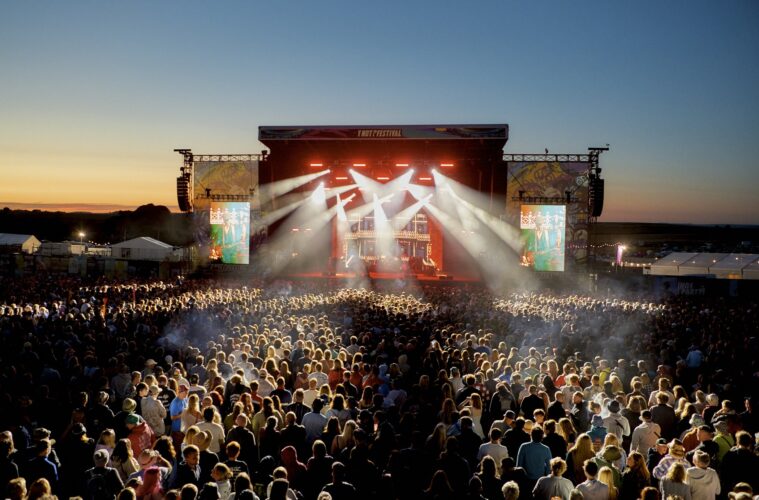
 Christopher Barrett
From The Great Escape to Superstruct via Vision Nine and From The Fields, Y Not Festival director Kevin Moore charts his career path and outlines who and what has inspired and influenced him along the way.
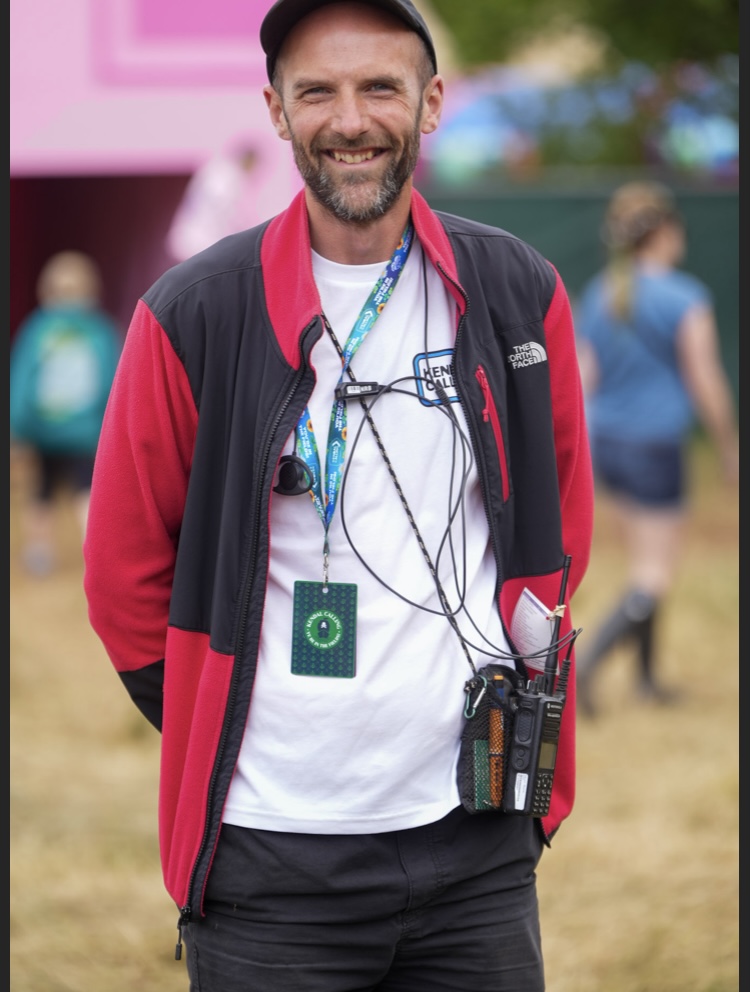
Kevin Moore
Did you always have an ambition to get involved in the live music industry?
Yes, it was always the plan. I was brought up in Preston in the north-west and had an early love for live music. I would get the train over to Manchester two or three times a week to watch bands. When I finished my A-levels I thought if I go to Manchester University, I’ll be able to see live bands there. I went thinking I might become a music journalist, then realised I couldn’t write very well, and found myself getting involved in student radio. I worked at XFM Manchester for about a year before it folded and during that time I got to know a few people putting on club nights around the city and thought I’d give it a go.
I really enjoyed the thrill of delivering a really good club night, and got used to the horrible hollow feeling when you put on a night and no one turns up. From there I met more people putting on club nights, then people putting on live bands, and got into that. I met a couple of people who used to run a festival in Manchester called In The City, which was the precursor to The Great Escape. I worked there for a couple of years. I’d been to festivals as a punter, but that was my first experience working on one, and I fell in love with the dynamism of the festival timeline and creating an event that thousands of people attend. Soon after, I saw a job at The Great Escape, applied, and was very fortunate to get it.
You began working on The Great Escape in 2012. How formative was that experience?
There are two things I particularly enjoyed about my time at the Great Escape. Firstly, the sheer volume of bands in the city; when I was there it involved around 40 venues and 400 bands. Seeing live music in every corner of the city was inspiring. Adam [Ryan], who booked it then does now, has such a brilliant ear; there are very few duff bands at The Great Escape. To be part of that facet of an artist’s journey and help them to get the next level was great.
The Great Escape also helped me gain an understanding of the international music ecosystem, and the brilliant work the music export offices who take the best talent from their countries and give them a chance at wider success. I didn’t appreciate the level of sophistication in that process, and being the point of contact with those export offices was a big part of my role. It’s fulfilling when you see those bands push through in the UK or US market and think, I had a small part to play in that.
What was the first greenfield festival you worked on, and what’s your abiding memory of that experience?
When I was at The Great Escape it was independently owned by MAMA, whose other shows at the time were Wilderness, Lovebox, Global Gathering, Citadel and Somersault. We’d finish working on The Great Escape in May and then lend support on the other greenfield shows, doing all sorts of jobs. I used to run the guest list at Lovebox, which was eye-opening as there was always a very lively door. All the people you meet on the door, hearing their stories and getting a real understanding of the type of people live music attract, I found it exhilarating.
At Wilderness I was responsible for the outdoor pursuits. At the time we had fly fishing, there was a boating lake, we did wild medicine walks. The site was vast, and while it was a great challenge working on an event of such scale, I enjoyed looking after some of the smaller moments. People went to Wilderness for the bands and the banquets, but a key thing I’ve kept with me since, is that it’s often the smaller moments that make people’s experiences at festivals unique.
At Y Not this year we had a céilidh band in our on-site pub across the weekend, and seeing 100 or 150 people getting involved – parents with kids, first-time festivalgoers, older couples – you think; ‘they’ll remember this for the rest of their lives’. They might forget who they saw on the main stage, but they’ll never forget that.
How has your first year as director of Y Not Festival been?
Brilliant. Y Not was a well established show, but operationally it had a few challenges, and issues with weather in 2017 and 2023. Post-Covid it was one of the shows that struggled with its bounce-back — bluedot, another show I worked on, struggled too and unfortunately never quite made it back after 2023. Y Not held on, and the team really developed the operational delivery and shored it up. So, the brief this year was to continue that operational excellence but lay on top of it continued development of audience experience, creatively, aesthetically and operationally.
We were fortunate to have a positive on-sale off the back of 2025. Nathan Harrison, who books the show, put together a fantastic lineup that was received really well, and selling out by the end of February was completely unknown territory for Y Not and it’s never happened on any show I’ve worked on. The challenge then was making sure all those people had the best possible time, so they buy again. Now we’re in the same position, if not better, for 2027. We’re 19,000 tickets in the bag, which is phenomenal.
Who or what has played the biggest role in supporting your career?
I’ve learned something from every boss I’ve had. Recently, Mandy Johnson at Superstruct has taught me a huge amount about how to structure, develop, grow and control a show. Right back at The Great Escape, Kat Morris was my first boss and she taught me to enjoy the challenge of the overall festival offering. If you have that, the problems look after themselves, because you don’t get bogged down in the minutiae. Andrew Topham at Vision Nine was another influence. He was very pragmatic about how you grow a show, but he never lost sight of the customer experience.
What’s the first career highlight that comes to mind?
I’ll take it back to when I started out. The first time we had a sold-out club night: the Yeah Yeah Yeahs played Manchester Academy and we did the unofficial after-party at a local club called Retro Bar. We were about a year into our club night career, career being a loose term, and it was the first night that fully sold out. We made a couple of hundred quid each, which felt like millions at the time. That thrill of everyone coming down, having a great time, everything just working. I’ve never forgotten that feeling. It’s part of what makes live events so addictive. No matter how challenging a show is to deliver, knowing people are out there having a great time is the thing I try to channel.
If you could change one thing about the events industry overnight, what would it be?
Being able to book the weather! For a more serious answer: if you’d asked me a few years ago it would have been greater transparency. I was fortunate to be an AIF member for a number of years, and now I’m within Superstruct, a large collection of festivals. Joining Superstruct was the first time I’d been somewhere with transparency about how each show was performing, which really helped you understand how your show was benchmarking. Before that it was all smoke and mirrors and you’d think, ‘are we doing the right thing or not?’ As soon as you talk to other people, it either reassures you or pushes you to try something different. So, it’s not a call for huge change, more a continuation of honesty between shows, because we need a successful festival marketplace for everybody. Competition is good, but I’m a bigger fan of friendly rivalry than anything more prickly.
What’s your favourite way to unwind?
I’m a tennis player, and there’s a bit of therapy in hitting a ball really hard if you’ve had a tough day. I also still really enjoy going to watch live music and the theatre. Even though I’ve worked in events for a good while, I can still get lost in a really good show and don’t start looking at the lighting fixtures or thinking about their ingress and egress models. That’s important: we put on these brilliant shows for people to enjoy, but we shouldn’t forget how important it is to go and enjoy live music and culture ourselves, because otherwise you get too far from your audience.