

 Christopher Barrett
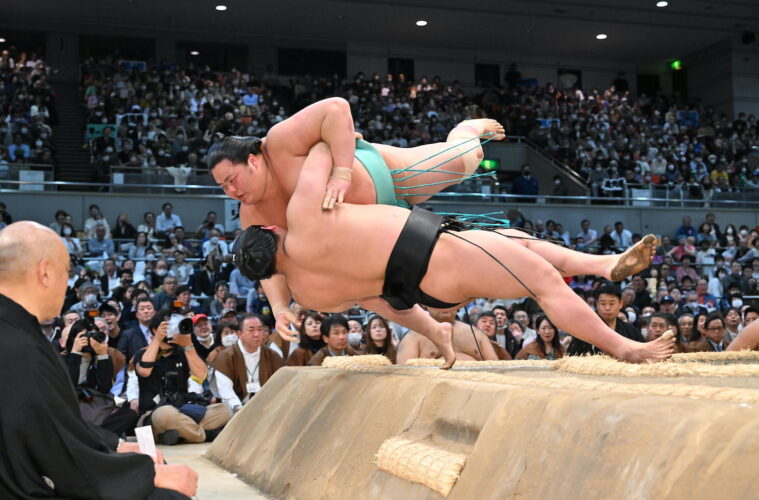
The Grand Sumo Tournament kicks off today, 15 October, at the Royal Albert Hall, marking only the second time it has been staged outside Japan.
The Royal Albert Hall (RAH) is the only venue outside Japan to have previously hosted the tournament in the sport’s 1,500-year history, with the London venue having last staged it back in 1991.
The historic five-day ‘basho’ will run at the RAH until 19 October. In a filmed interview (below) during the event’s build, the venue’s director of programming Matthew Todd discusses the challenges involved in staging the tournament while honouring the sacred traditions of the deeply ritualistic sport.
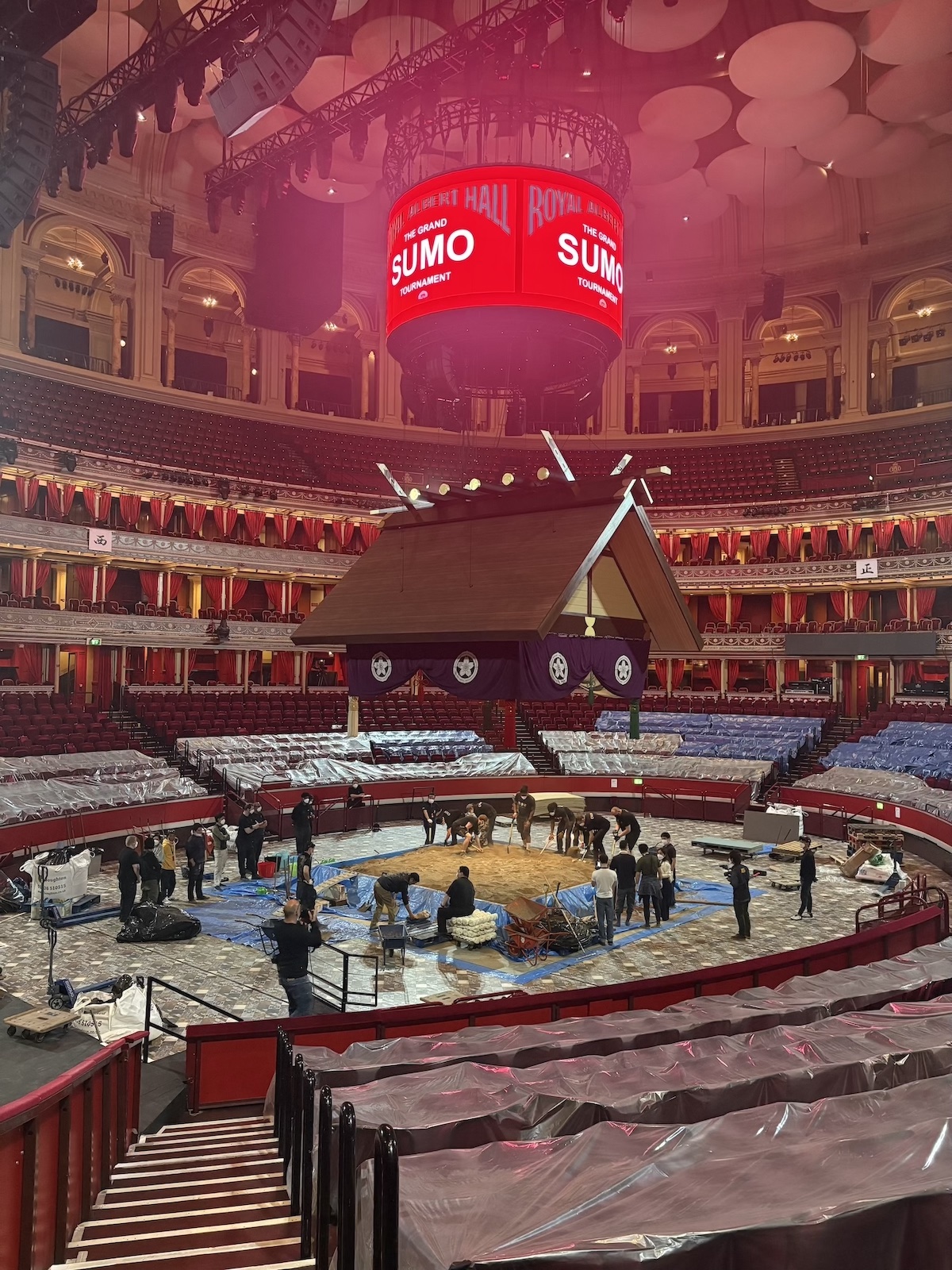 Each event will feature a dohyo-iri, ring entrance ceremony, and approximately 20 bouts of Sumo wrestling. Preparations began with the building and rigging of the traditional Yakata roof (above), preparing the Tawara rice straw bales and the building of the dohyo (ring) involving around 10 tonnes of locally sourced clay and soil.
“One of the unique characteristics of Sumo is just how close up those ringside seats can feel. You get a real sense of the sport, of the physicality involved, of the sweat and the ritual that takes place by being in such close proximity,” says Todd. “Unlike a boxing ring, we don’t have ropes. One of the exciting factors is the extent to which the wrestlers can fall out; they literally have to push each other out of the ring. The front row cushions can be in the firing line of that, which adds another degree of jeopardy and real thrill to the occasion.”
An in-depth report on the remarkable production, involving interviews with RAH’s event operations manager Alexandra Isaacs and technical production supervisor Gerard McCorry will follow the event.