

 Christopher Barrett
Soundcrash Music founder and Live Nation senior promoter Rob Waller has spent the last few years bringing large scale outdoor live shows, featuring major headline talent, to rarely used venues in regional locations off the beaten touring track. He reveals the strategy behind building successful show series in unexpected places.
With two decades of experience curating, producing and promoting concerts, tours, and festivals internationally, Rob Waller has long been one of the industry’s most prolific promoters. The founder of Soundcrash Music, known for producing more than 300 shows annually across London, Waller has also been behind the launch of several festivals including Soundwave Croatia, Nova Batida in Lisbon, Paradise Island Festival in Thailand, and The Funk & Soul Weekender in the UK.
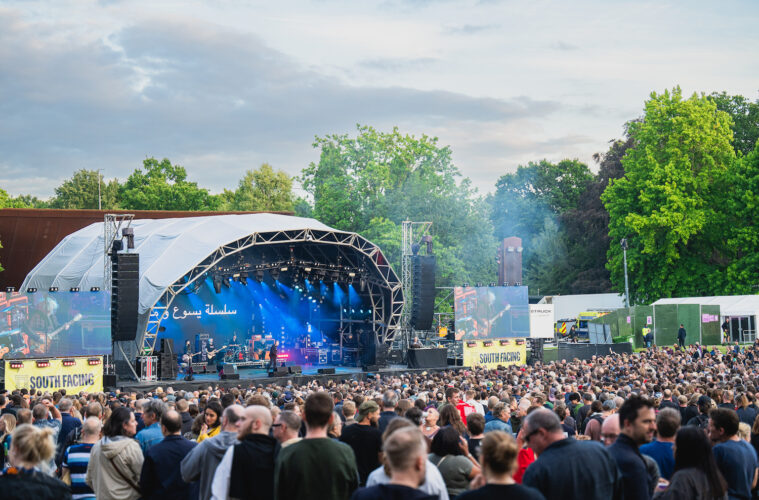
Soundcrash was acquired by Live Nation in 2018, and since then Waller has led the development of major outdoor concert series including Margate Summer Series, South Facing at Crystal Palace Bowl, and Cardiff Bay Series, along the way booking acts such as Queens of the Stone Age, Grace Jones, and The Chemical Brothers.
Waller launched the Hitchin Priory Summer Series last year, four 8,000-capacity concerts at a historic estate featuring artists including Nile Rodgers & Chic, Jess Glynne, and Razorlight. This year, he has launched the Colchester Castle Summer Series; a new 12,000-capacity event kicking off on 14 August with a string of shows featuring artists such as Smashing Pumpkins, Madness and James.
The promoter is now working on around 60 event days per year, ranging in capacity from 6000 to 15,000, and there are plans to build on that in 2026.
 What’s behind your decision to focus on bringing single-day live show series to regions up and down the UK that have, perhaps, been previously overlooked?
It has been a natural, organic progression, but there was a bit of a leap with Covid, after which we saw a transition of people travelling less from the regions to cities such as London, Manchester or Glasgow for the big shows. We tested the concept in 2021, with a couple of different sites, and then we saw that build into a much bigger picture right across the country. It does feel like there has been a sea change in the last five years, and the business is growing every year. You now look at a map of the UK, and there’s not many gaps.
“We’re putting a mini festival experience in front of people, and delivering it much closer to home.”
Do you see this as additional business to camping festivals or does it cannibalise that market?
I think it’s a bit of both. There are people who would attend both and still go for that camping experience, but there are quite large parts of the demographics that just don’t have the luxury of having that opportunity to go camping for three days. They might be parents with childcare issue to consider or they might be students who cannot afford that. There’s various different pockets of people who might not actually go for that big money weekend camping ticket. There’s definitely an older demographic and a younger audience that don’t want to do a camping weekend festival. We’re putting a mini festival experience in front of people, and delivering it much closer to home.
So, how many of these event days are you now promoting per year?
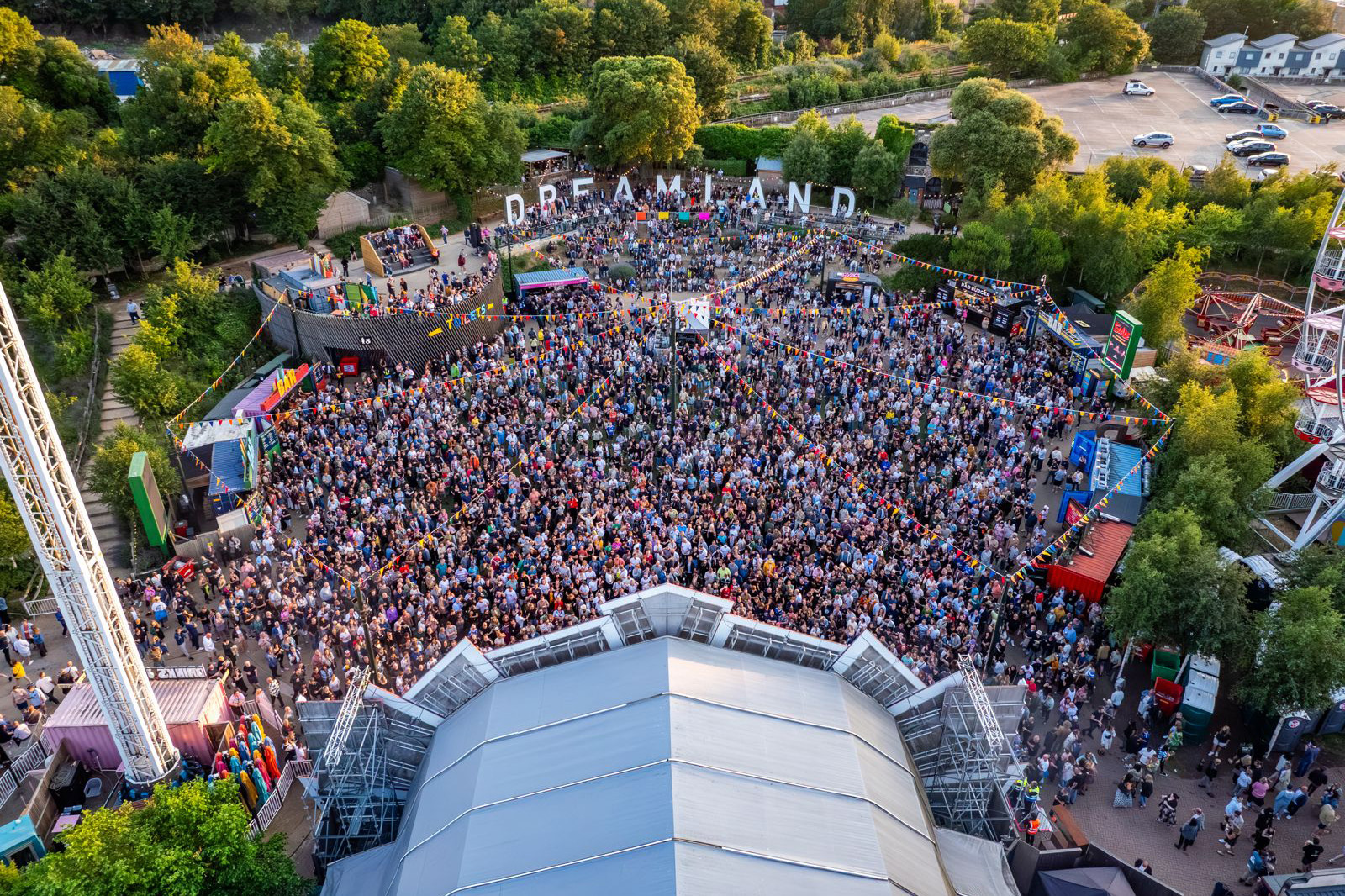
Around sixty. We developed the Margate Summer Series in 2021 and that’s grown and grown. We are doing South Facing, where there’s 12 shows, which has grown to become a bit of an institution in a very busy London marketplace. We do the shows in Hertfordshire in a beautiful Grade 1 listed manor house and we just started up in Essex in Colchester Castle, which is an absolutely stunning place. There’s a great music history in Colchester with acts including Blur coming from there. We are delivering a really good offering in a beautiful place and that is working really well, we are doing good numbers this year. It’s really all about hitting up an audience that might be just that bit too far out to be constantly going into the nearest big city like London.
With production costs having risen so sharply in recent years, is using the same infrastructure for multiple shows enabling you to make the finances add up?
We did see a really big bump in price straight after Covid, but things definitely have levelled out a bit now and the volume of events out there has helped. The minimum number of shows we can do is four to really make it stack up, and then you’re talking 7,000 to 8000 as a minimum capacity.
When it comes to production management, is it primarily in-house or outsourced?
We mostly outsource to companies such as Method and APL Event. We were doing Cardiff Bay for five years with APL and they have come in to do Colchester. We generally like to go out to tender and go with the best quality option. We’ve got a certain standard we need to meet in terms of delivering the experience, but then obviously we’ve got to make it stack up our end as well.
There has been a move toward major touring acts playing more shows at less venues on tour, and with regional grassroots venues closing the touring map looks to be shrinking. It appears you are bucking that trend?
Back in the day there was a lot more music scenes in regional spots, such as Coventry’s music scene with ska and reggae. There’s been different dance scenes and indie scenes dotted around the UK. That’s probably become a bit more centralised over the last 20 years, and these shows seem like a bounce back from that, and it’s been very welcomed by local councils, and welcomed especially by audiences. We’re finding bubbles of local bands that really want to support, so it is benefitting the grassroots. It seems like a complete positive all round impact.
Is there a focus primarily on heritage headline acts?
The first year in Colchester, we’ve gone very indie/mod, because we knew there was the Blur legacy, just to test a new market to see how that would work. It is horses for courses; for South Facing you’ll see that there’s a focus on Afrobeat, raga, reggae, and less legacy acts, and in Margate we’ve had Bicep and Maribou State. Part of the job in each new site is identifying the audience and what people want, and then there is a bit of testing the water. If there’s a legacy headliner, we like to bring in some new local talent behind them.
Do you have details of the economic impact these shows are having in regions that have previously not benefited from concerts of this scale?
It’s been incredibly positive. The local councils are seeing the knock-on effect across hotels, restaurants; the entertainment hospitality spend has been boosted, but there is also the extra benefit of the profile of the area being raised and, in some instances there has even been talk of rising house prices. Generally, we are met with councils that are incredibly supportive. It gives a place that might not have been in the spotlight, a really decent piece of cultural attention. That side has been incredibly positive, we’ve just been met with very helpful people who want to make the best of it.
So you’ve enjoyed sustained growth with shows around the UK, what’s the plan from here?
We’d like to try one or two new sites for next year. We have had an incredibly good success rate. Of the seven sites that we’ve done, five have been in profit in year one. It’s identifying other parts of the country that we haven’t really tested out yet. Also, a bit of consolidation in the ones that we know are working, with some slight capacity increases. We are expecting some steady growth for the next two to three years.