


 Christopher Barrett
After 15 years of steady growth, this summer saw electronic music event promoter Krankbrother reach a new high with a 30,000-capacity show at Gunnersbury Park. Access meets the independent promoters’ production & operations director Ash Walker to find out what’s behind its success.
Over the past 15 years, Krankbrother has grown from staging small indoor events to major outdoor festivals in London, including a 30,000-capacity show headlined by Keinemusik at a previously unused part of Gunnersbury Park in June, followed by a six-day, 10,000-capacity, event series at Finsbury Park with headliners including Ben Böhmer and Honey Dijon in August.
Krankbrother first began building a faithful following with its Shoreditch Street Parties featuring the likes of Ben UFO and Bonobo. Ash Walker attributes the company’s success story to its commitment to delivering that loyal community of ticket buyers with experiences that combine high production values with the latest and greatest underground talent. Managing production and logistics in-house, the promoter is now focused on international expansion and portfolio diversification.
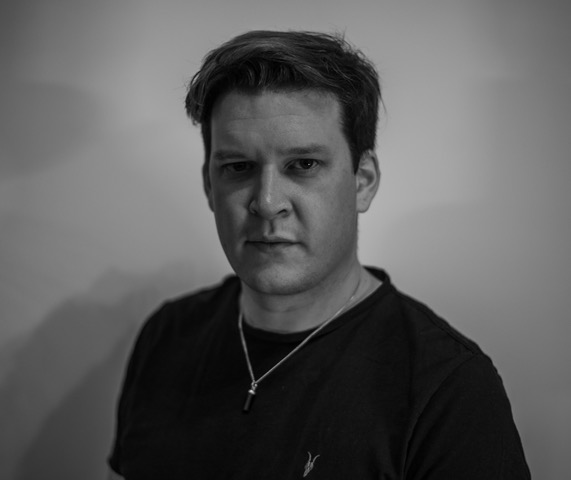
Ash Walker
When did Krankbrother start focusing on major outdoor events?
Over the last eight years, since I joined the company, we’ve really increased our outdoor events portfolio. We started doing annual street parties about 15 years ago in Shoreditch, which involved shutting entire streets, building the show in a day, putting on a rave, and essentially being out by the end of the day. In 2018 we moved to Finsbury Park, which was our first major outdoor site, and that has grown from a 3,000-capacity two-day event to a six-day 10,000-cap per day event; all still very much focused on underground electronic music, and all still delivered by a fiercely independent promoter. Our 30,000-cap show at Gunnersbury Park sold out in a matter of hours. It was a real spectacle and the jewel in our crown.
“Our 30,000-cap show at Gunnersbury Park sold out in a matter of hours.”
How have you gone about building the community of ticket buyers who have helped drive Krankbrother’s growth?
It is the quality of the delivery of our shows. We aim to deliver a premium experience as a standard, so if you walk into any one of our sites it looks and feels great. Our focus on the F&B side means there’s hardly any queuing, and from an aesthetic standpoint there are many creative features that we’ve invested lots of money into, and that means fabricating and owning elements as opposed to hiring.
Can you give me an example of key infrastructure you have created in-house?
One of the main things is our custom fabricated stage roof, which is an identifiable unique piece. The quality of the event delivery is underpinned by things like the stage structure and the very coherent creative approach across the site, which has helped us build a community of like-minded people who are after good quality experiences. That’s been a key element of our success.
What drove you to fabricate your own stage and what advantages has it brought?
There were two things. The first reason is cost. I was spending a lot of money each year on hiring a structure that looked okay, and then the money was gone, but if I spent three years of that money on fabricating our own structure it makes way more sense financially in the longer term. Secondly, it meant we had a unique piece that nobody else could use on their festival site, and that has more capability than a lot of the other roofs that we see out there. It’s got a clear roof and it’s a huge black steel structure that while being big doesn’t meet the eye in an obtrusive way. You can almost make it disappear or make it obvious depending on the desired aesthetic. The primary goal was for it to hold a lot of weight in the roof, so we fly both of our front of house PAs off of the front corners of the roof, which makes the whole thing look really unique. The weight capacity of that roof far exceeds any stock we might be offered, which has been amazingly beneficial for us, because we’ve been able to fly screens and all sorts of lighting fixtures. It’s a cantilever structure, so there’s no upright legs right in front of you, and it looks like it’s floating. I get so many enquiries about hiring it out.

Is there an ambition to expand your reach beyond London?
In many ways what we do currently has a very London-centric audience but there are plans to go further afield, both domestically and internationally. We are looking into delivering other genres of music, and in different areas of the UK and Europe. We are not necessarily focused on growing the size of the events, because we feel that we have found a sweet spot with a 10,000 capacity, but we are focused on expanding the show portfolio. Over the next two years, we’ll see a lot of new and exciting things coming out of Krankbrother.
You oversee production, does that involve working with a third-party agency?
We don’t tend to go for a production agency but for a lot of our custom fabrications, and other assets, we tend to use a couple of contractors. For example, the stage roof structure that we built involved a principal designer which was Design Craft. While they were the principal designer, we still directly contracted each individual contractor to deliver on elements such as the metal cutting and the welding. We like to retain a lot of that control in-house because that enables us to get the creative outcome we want.
How big is the core Krankbrother team?
We staff up from the beginning of the year, I’ll pull in my site manager, production manager, and build out the whole team from our office in Farringdon, and then we deliver internally. The majority of our team are on a freelance contract from the beginning of each year for nine months. There’s around 20 of us that delivered our shows, and we come back down to a skeleton crew of six of us for the remainder of the year.
“We try and stay in our lane with the more credible, slightly more underground, talent.”
What challenges and advantages are there to being an independent promoter?
The challenges are extremely apparent, and we must be very dynamic to counteract a lot of them. It’s massively challenging from an infrastructure availability point of view, but the main challenge is that larger promoters can afford to pay the fees to the artists that get them talking to them instead of us. We’ve lost a lot of talent to the likes of AEG and Live Nation because of that. It’s not necessarily the competition of ticket versus ticket, it’s about the availability of the talent. We try and stay in our lane with the more credible, slightly more underground, talent. But major promoters are picking up on the high ticket, slightly underground, calibre of talent and that’s really putting our programming at risk. Having said that, we still have some very good relationships with management companies, agencies and artists who will choose to take that slightly lower fee and slightly better event. We’re literally five doors down from Live Nation, I used to work there.
When it comes to suppliers, have you built up long-lasting relationships or are you always on the lookout for something new?
We have quite a low supplier turnover. A lot of our suppliers have stayed with us. One Circle Events do our bars, RSH Audio has been with us since we started, and Dan Leake from Intent Productions has been with us since we started doing outdoor shows: he’s been incredible. A lot of our suppliers are invested in the journey of a small, independent, promoter who is doing things in the right way.
Gen Z are said to favour authenticity, sustainability, and purpose-driven experiences, while being less interested in eating meat and drinking alcohol. How are you catering to that demographic?
We are seeing audiences who are more health conscious, they drink less alcohol, and therefore we take a very considered approach to how our menus are written and the products on offer on our bars. That means a lot more non-alcoholic products, making CBD drinks available, and our food offering caters for all dietary requirements. That’s also something we control in-house. We book our traders and suppliers directly and have someone in-house whose sole job is to look after the food and beverage delivery for our customers. That benefits us and the customer experience, but also benefits the trader because they’re getting a much better cut of the revenue than they would have got through a third party. What’s really interesting in our area of electronic music events is the sub genres presented on each of the six days of the Finsbury Park run, which means the audiences for each show are entirely different demographics. What we know about them characteristically and from a data point of view enables us to engineer what the event experience is going to be like for that day and for that particular demographic.
How much of a focus is there on environmental sustainability and engaging local residents groups?
We take ecology extremely seriously on all of our sites. In Finsbury Park there are groups including Friends of Finsbury Park and Haringey Tree Protectors who keep a very close eye on us. If they had their way there wouldn’t be shows in that part of the park but in a really valid and meaningful way they have made us consider our ecological impact on the site far more than we used to, to the point where we have a dedicated person on site who makes sure we’re not putting anything near any of the tree root systems or disturbing any potential nesting areas, and so on.
What does the future hold for Krankbrother, are you set on remaining independent?
We have been approached several times, but we will never sell. In terms of new events, there isn’t anything I can talk about just yet, but there are several exciting new projects that will be happening throughout the course of 2026 and 2027.
This article is included in the latest edition of Access All Areas magazine, available here.