

 Max Steventon
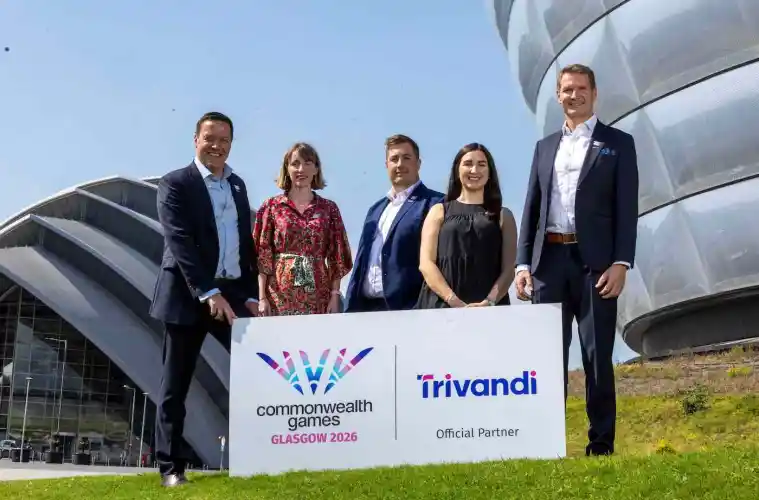
After Australia’s Victoria withdrew from hosting the 2026 Commonwealth Games, Glasgow stepped in to deliver a scaled-back edition using existing venues and working to a compressed timeline. Supporting the organisers behind the scenes has been Trivandi, the Games’ official event delivery partner it was tasked with helping deliver a new model for major sporting events.
The Australian state’s decision to withdraw created one of the biggest challenges facing the Commonwealth Games in its history. Host cities traditionally spend years preparing for the event, developing venues, recruiting teams and building the operational structures needed to deliver a global sporting competition.
Glasgow, however, inherited the responsibility with a significantly shorter timeframe and had to rethink the traditional Games model. Existing venues became central to the approach, allowing organisers to focus resources on operational delivery rather than large-scale construction.
For the Games event delivery partner Trivandi and its CEO James Bulley, who has worked across major sporting events around the world, the situation demonstrated the importance of adaptability within the events industry.
“When we set up the business in 2013, just after the 2021 Olympic Games, our mission was to share the knowledge of what it took to deliver the Games, train local people to do what we do, do it sustainably and do it better each time,” he says.
Trivandi’s experience across more than 300 events provided the company with a bank of operational knowledge that Bulley says proved key to helping shape the way the Commonwealth Games in Glasgow has been delivered.
He says the producing the Glasgow games has shown that it is possible to stage a large scale event more cost effectively and more efficiently: “You can do it in a shorter time period, although that brings pressures, and ideally you would want a little bit more time.”
That shortened timeframe has influenced every part of the delivery process, from workforce recruitment and venue planning through to supplier coordination.
Building a Games around existing venues
One of the defining features of Glasgow 2026 is the decision to use existing venues rather than develop a major construction programme.
The approach reflects a wider shift across the events industry, with host cities increasingly looking for ways to deliver major events without the financial and environmental impact associated with building large numbers of new facilities.
For Trivandi, that has meant focusing on ensuring existing venues can operate at the required level for an international sporting event, with temporary infrastructure and operational requirements carefully planned.
“We’re effectively the embedded delivery partner, so we sit within the organising committee, but our main responsibility is the venue management, venue operations and venue delivery,” Bulley says.
“That includes from the earliest stages of designing the venue, all the overlay requirements, and then procuring the overlay equipment and doing the installation and making sure the venue is set up.”
The company’s role covers the full venue lifecycle, from initial design decisions through to the operational teams working during competition.
Overlay has been a particularly important part of the delivery process, with temporary structures, equipment and systems required to transform existing venues into Games-ready environments. Bulley says involving Trivandi early in the design process helps ensure venues are planned with delivery in mind, rather than creating solutions that later prove difficult or expensive to implement.
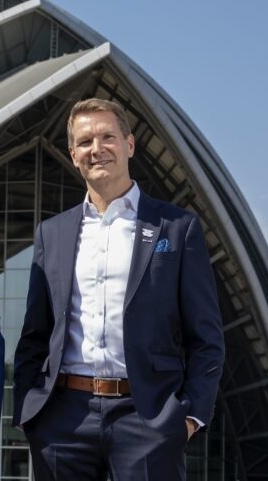
James Bulley, CEO and Co-founder of Trivandi
What an embedded delivery partner means in practice
Rather than operating as a traditional supplier brought in to deliver a specific service, Trivandi has worked as part of the organising committee throughout the planning process.
The model is designed to remove the separation that can sometimes exist between event strategy and operational delivery, ensuring those responsible for executing the Games are involved in key decisions from the beginning.
Bulley describes this as addressing what he calls the “strategy delivery gap”.
“What often happens in these major events is that you have an upfront vision and a mission and a set of objectives, the strategy in effect, and quite often those don’t get translated when you get to the pointy end of delivery,” he says.
He argues that traditional contractor relationships can sometimes create competing priorities, with suppliers focused on their own objectives while organisers are focused on the wider event vision.
“One of the things that we brought very strongly as a lesson we’ve learned from previous Games is rather than having a contractor client relationship, having a true partnership.”
By embedding Trivandi within the organising committee, decisions can be made collectively, with the company sharing responsibility for challenges rather than simply delivering against a brief.
“By us being right in, embedded within the organising company, sitting side by side with them, living and owning the same problems, solving the same problems together, and actually owning the objectives and the outcomes, you get much better solutions.”
Creating a workforce legacy in Scotland
Beyond the sporting competition itself, one of the major ambitions of Glasgow 2026 has been ensuring the Games create opportunities for local people.
Trivandi has recruited around 250 staff to support venue delivery, covering roles including security, hospitality, catering, cleaning and waste, medical operations and event stewarding.
The company committed to recruiting 60% of those staff from Scotland, with opportunities created for students, people who are unemployed and those looking to move into the events industry.
“We’ve worked hard to bring in local people from Scotland, from Glasgow, to be part of the event,” Bulley says.
“That’s enabled us to reach out to students, to people who are unemployed, to people who are looking at different career progressions and career paths and bring them on board as part of our team.”
For Trivandi, the aim is not simply to fill roles during the Games but to create a pipeline of future events professionals.
Glasgow already has a strong events ecosystem, with a mature hospitality, tourism and venue sector, and Bulley believes the experience gained through the Games can help people progress into future opportunities.
“They will be working across things from security, hospitality, catering, cleaning and waste, medical, operations, event stewarding and so on,” he says. “That gives them a segue into other jobs after the event in event operations, but also gives them the experience to then go on and work at other events.”
The role of volunteers in delivering a home Games
Alongside the paid workforce, more than 3,000 volunteers have been recruited to support Glasgow 2026.
Volunteers are often one of the most visible parts of a major sporting event, helping shape the experience for spectators, athletes and visitors. Bulley says the volunteer programme has been another important part of building a local connection with the Games.
“They’ve been drawn again locally from within Scotland,” he says. “Again, as part of the programme, we’ve given each of those volunteers training as part of their roles and the jobs that they’re doing here as well.”
The volunteers include students, people changing careers and retired people looking to contribute to the event. For Bulley, the value extends beyond the Games themselves, giving people experience that can support future opportunities.
“Many of them will then use that on their CVs. Many of them are students. Some of them are people who are even retired who are here as volunteers, which is lovely to see.”
Sustainability beyond environmental targets
Sustainability has become a central issue for major events, but Bulley says Trivandi’s approach focuses on more than environmental impact.
For the company, sustainability is also about creating knowledge, skills and capability within the host city. “For us, sustainability is not flying loads of people in with international expertise to do it,” he says. “It’s training local people to do what we do.”
The company’s approach reflects a wider shift within the events industry, where legacy is increasingly measured through skills development and long-term economic impact rather than simply infrastructure.
“The human legacy is, I suppose, the number one,” Bulley says. Alongside workforce development, Trivandi has also focused on making the operational delivery of the Games more efficient.
Improving efficiency through collaboration
Major sporting events involve multiple departments working simultaneously, from security and transport through to spectator services and city operations.
Bulley says one of the challenges with traditional event structures is that different functional areas can sometimes operate separately, creating duplication and inefficiency.
“What you often find, because these are so big and complex, they don’t always integrate and coordinate and work together,” he says.
The embedded delivery model has allowed Trivandi to act as an integrator across different areas, ensuring suppliers, organisers and operational teams are aligned. Part of that role involves understanding where responsibilities overlap, how decisions are made and how problems are escalated during Games time.
“Everybody knows their role to do it, whether it’s transport or security or city operations or one of the other sponsors or suppliers,” Bulley says. “When it comes to the point at which you’re in those final months, what you need to do is make sure that is all fully integrated.”
Bringing the Games into Glasgow itself
While much of the delivery work takes place behind the scenes, Bulley says one of the most noticeable aspects of Glasgow 2026 has been the way the Games have become part of the city.
Unlike previous major sporting events, there is no traditional athlete village, meaning competitors are staying in hotels across Glasgow and interacting more directly with the city. “It’s lovely to see them spilling out around the hotels,” Bulley says.
The presence of athletes, teams and officials has helped create a city-wide atmosphere, with restaurants, bars and public spaces becoming part of the wider Games environment.
“The look of the Games is very much a city-wide feel,” he says. “So that’s really nice that the city is actually feeling like a proper Games city.”
Could Glasgow provide a blueprint for future events?
As cities continue to question the cost and complexity of hosting major sporting events, Glasgow 2026 will be closely watched by the wider events industry.
The Games provide a test of whether a more streamlined approach – using existing infrastructure, developing local talent and embedding delivery expertise earlier – can become a model for future hosts.
For Bulley, the value of the Games will be measured not only by what happens during competition but by what remains afterwards.
“One great thing about a Games is it spotlights a city,” he says. “Glasgow will have got a lot of additional headlines and seeing the King and the Prime Minister here for the opening will spotlight Glasgow, not just in the UK, but internationally.”
For Trivandi, the legacy will be the knowledge and experience created through delivering the event, both within Scotland and across the wider events industry.
As major events continue to evolve, Glasgow 2026 could prove an important example of how the sector approaches delivery