

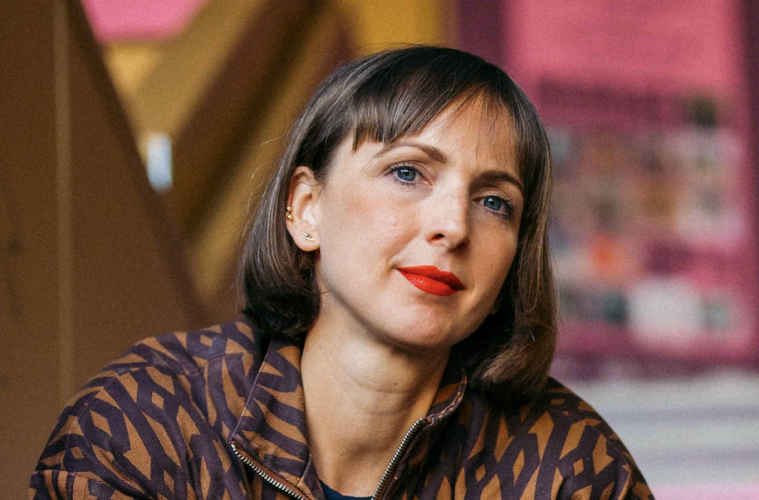
 Christopher Barrett
Ahead of her opening Eurosonic Noorderslag (ESNS) on 14 January alongside the Queen of the Netherlands, ESNS director Anna van Nunen outlines what’s in store for the event’s 30,000 festivalgoers and 4,000 industry delegates.
Running from 14-17 January in venues across the northern Netherlands city of Groningen, ESNS will see more than 300 acts perform as part of the festival while industry leaders debate the big issues at the conference.
With its Europe Calling manifesto, the 40th anniversary edition of ESNS will work to encourage and celebrate a shared cultural movement across the continent. The event, which also hosts awards ceremonies including the Music Moves Europe Awards and the European Festival Awards, is attended by representatives from hundreds of festivals across Europe and has long played a key role in supporting its grassroots talent.
Since its beginnings in 1986, among the many acts to have benefitted from early-stage performances at ESNS include Stromae, Christine and the Queens, Fontaines D.C.,The XX and Robyn.
For Anna van Nunen, it’s her second year in charge having been appointed as MD in May 2024. She previously worked as a commercial director at Greener Power Solutions, and was part of the team at Dutch festival Into The Great Wide Open.

Photo: Siese Veenstra
You will open the 40th anniversary edition of ESNS alongside Queen Maxima of the Netherlands. That’s a nice, high-profile, endorsement. How important is that to you, and in terms of the profile of the event?
Really important. Everyone in the Netherlands loves our queen. Our royal family is very much into culture, they endorse and support it, and see pop music as an integral part of that. With the Queen coming to Groningen to open ESNS 2026 with us, it underlines that we are an important part of this cultural world, and that pop music is also an art form; a very well distributed form of art, a very accessible form of art, but it has meaning and importance.
“It’s where the magic happens.”
You took on the role of ESNS managing director in March 2024. What’s your vision for the event and has it led to any changes?
At the core, the mission of ESNS remains the same as when it started; to encourage Europeans to listen to their own music and not to be reliant on headliners from the US. For me, it has been a matter of making sure we are still focused on that mission and haven’t lost track along the way. We are taking a more artist-centred approach. We want to provide a head start for European artists, and often ESNS is where artists play their very first showcase. We have long had around 4,000 delegates visit ESNS but we are now very focused on making sure the right delegates are in the room for the artists. That’s why, we’ve changed the Wednesday schedule and moved everything towards the Oosterpoort, so that everything’s under one roof and all the delegates can start networking and see more shows from the outset in the same venue. Oosterpoort is the networking hub, it’s where the magic happens, so we are making sure the new artists are provided with the right opportunities there from the start.
This year, we have added something new to the conference side too, with a dedicated agency space that agencies can rent for a couple of hours to do their meetings. All the time slots have been booked. That underlines the relevance of ESNS, because without these agencies, we can’t kick start the careers of the artists.
In the current industry climate, with major players controlling increasingly significant chunks of the market, is ESNS playing a more important role than ever to support grassroots European talent?
The revenue from music is higher than ever, yet we see that it’s not equally distributed and not everyone benefits. It’s usually not the smaller shows and artists that are really benefitting from that, it’s the major acts.
I think we will always remain independent. We do work with a lot of major organisations, as well as independents. I think that’s our role. We are equally proud of an artist touring some smaller stages at festivals as we are of headliners such as Dua Lipa; they can exist next to each other but they should all be given a fair chance. For that, we need an ecosystem with both independent and major operators. I’m a little worried about where we’re heading as an industry, and this is also one of the topics that you see a lot across our conference. For example, we will have Tamás Kádár from Sziget festival talking about how they bought it back from Superstruct. We will also see Helen Smith of IMPALA talking about the acquisition of Downtown by Universal, and why they think it is unfair. It all has to do with the shifting paradigms.
“It all has to do with the shifting paradigms.”
Are there any other key themes or topics across the conference this year?
The theme of the conference is Europe Calling. Having presented pop music in Europe for 40 years, we are focusing on presenting ourselves as one European market. We have a set of speakers that come from different spaces that have a link with music, but are not necessarily part of the music ecosystem. For instance, we have the director general of the European Broadcasting Union who will have a keynote on the future of media in Europe. Another one that I’d like to point out is a Dutch speaker, Marlene Stikker. She will talk about big tech and the influence of China and United States, and how that impacts the music ecosystem in Europe, and how we can be independent. We’re taking an approach to the conference that not only focuses on the music industry, but also looks from outside in, with a focus on unity in Europe.
You previously worked as a commercial director at Greener Power Solutions, how much of a focus on sustainability is there at ESNS?
We have an important role in the ecosystem, when it comes to sustainability, because we are connected to 130 big festivals in Europe via our European Talent Exchange network. ESNS sustainability coordinator Rob van Wegen is part of our conference team, so he is curating sessions and focusing mostly on the live industry.
One of the ESNS projects that I love very much is our Solidarity Sustainability Tax. It’s a voluntary payment for delegates of €15, which raises around €30,000 per year. We distribute that to our network of artists to help them cover the extra costs of making sustainable choices when touring, such as using an electric van or train transport.
With ESNS regularly attracting around 30,000 festivalgoers to shows across the city, as well as the 4,000 industry delegates, how much of an economic impact has it had on Groningen since it was launched 40 years ago?
We’ve just completed some research on that.The economic value for the city is around €7 million and more than €30 million for the region. These numbers are a lot higher than seven years ago, which was the last time that we researched it. The impact then for the city was €4.4m. I think the rise is a result of the increased visibility of the ESNS brand, and because people now tend to stay more nights in the city. As an organisation, we book 6,000 hotel room nights per year in the city, but the total amount of nights booked is five times that. The value of our bookings alone is almost €1million.