

 Christopher Barrett
The Scottish Event Campus’ 40th anniversary in 2025 was far from the only reason to celebrate, with it having attracted 2 million visitors and contributed no less than £557m to Scotland’s economy. Here, CEO Dominic McKay and CCO Debbie McWilliams outline their plans to build on that success by futureproofing the facilities.
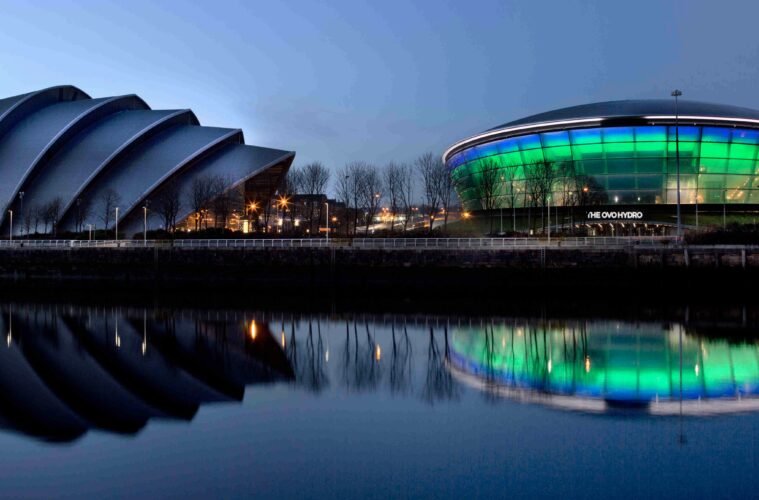
The Scottish Event Campus (SEC) has come a long way since it was opened in September 1985 as Scotland’s first dedicated events and exhibitions space. Since then, the campus has hosted countless landmark events from the Commonwealth Games to COP26 and a range of other key global gatherings. The SEC has grown considerably, and now comprises the 14,300-capacity OVO Hydro arena, SEC Centre and the SEC Armadillo.
On the back of 40 years of evolution and remarkable events at the SEC, Dominic McKay, who was appointed CEO early last year, says the focus is now on protecting and expanding the core business: “We’ve got an incredible business we can develop, and we’re doing that in an environment in which it is thriving, whether it’s our exhibitions, conferences or live events. We have a broad campus with plenty of space around us, so we are exploring how we can curate that space effectively to make sure that we’re planning for the fans of the future.”
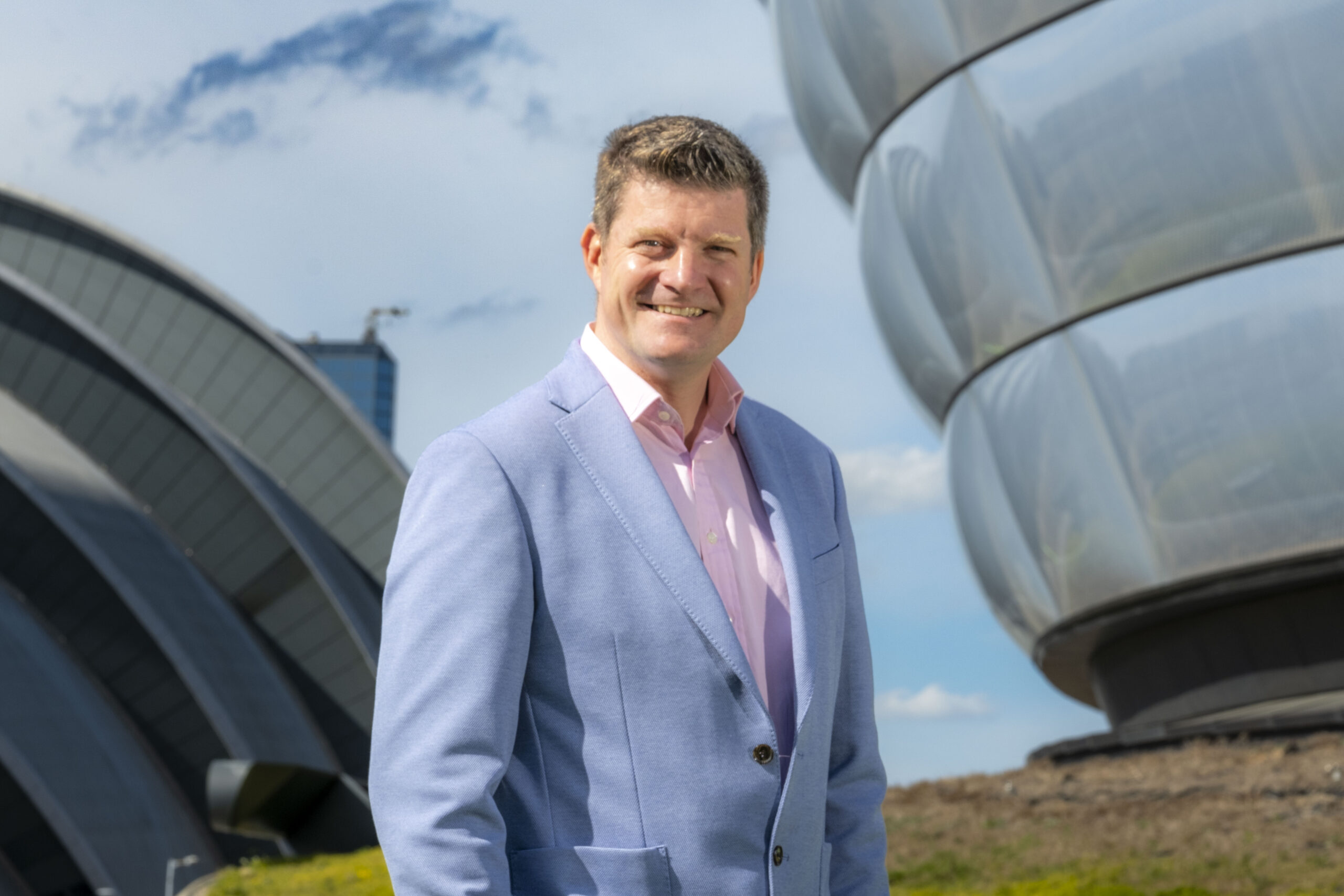
Dominic McKay
In the 2024/25 financial year, the SEC achieved an operating profit of £4.1m, with live entertainment playing a huge part with a 30% year-on-year rise in turnover to £15.6m. Understandably proud of the SEC’s remarkable £557 million economic contribution, McKay says it is not only having a hugely positive impact across various elements of the supply chain and the broader economy, but it’s sustaining almost 6,000 jobs.
“Whatever we do, we want to protect that, while refreshing our strategy,” he says. “As part of that focus Debbie and I have been traveling the world visiting venues. Like magpies, we return with key takeaways and ideas about how we might pivot to bring new content elements through the campus. A great example is immersive content. With Tutankhamun: The Immersive Exhibition last year we had 130,000 people through the door in14 weeks. That gave us enormous confidence in that content stream, and we are also seeing success with content strands driven in popularity on social media, such as podcasts, that are increasingly making an impact at the SEC.”
McKay says that at the heart of the SEC team’s strategy is the drive to provide first-class experiences for fans, promoters, artists and clients: “That’s a high benchmark but we need to retain the level and breadth of business that Debbie and her team have worked so hard to secure in recent years.”
“It’s great to have something take over the entire campus for a long period.”
Debbie McWilliams (pictured) has worked at the SEC since 1989. Over the years she has been closely involved in the evolution of the wider campus. The Hydro opened in 2013, and McWilliams was instrumental in driving business at the arena to the point where it hosted more than 150 events last year. Forthcoming shows include Gorillaz, Richard Ashcroft, Tame Impala, Paul Simon, David Byrne and Olivia Dean.
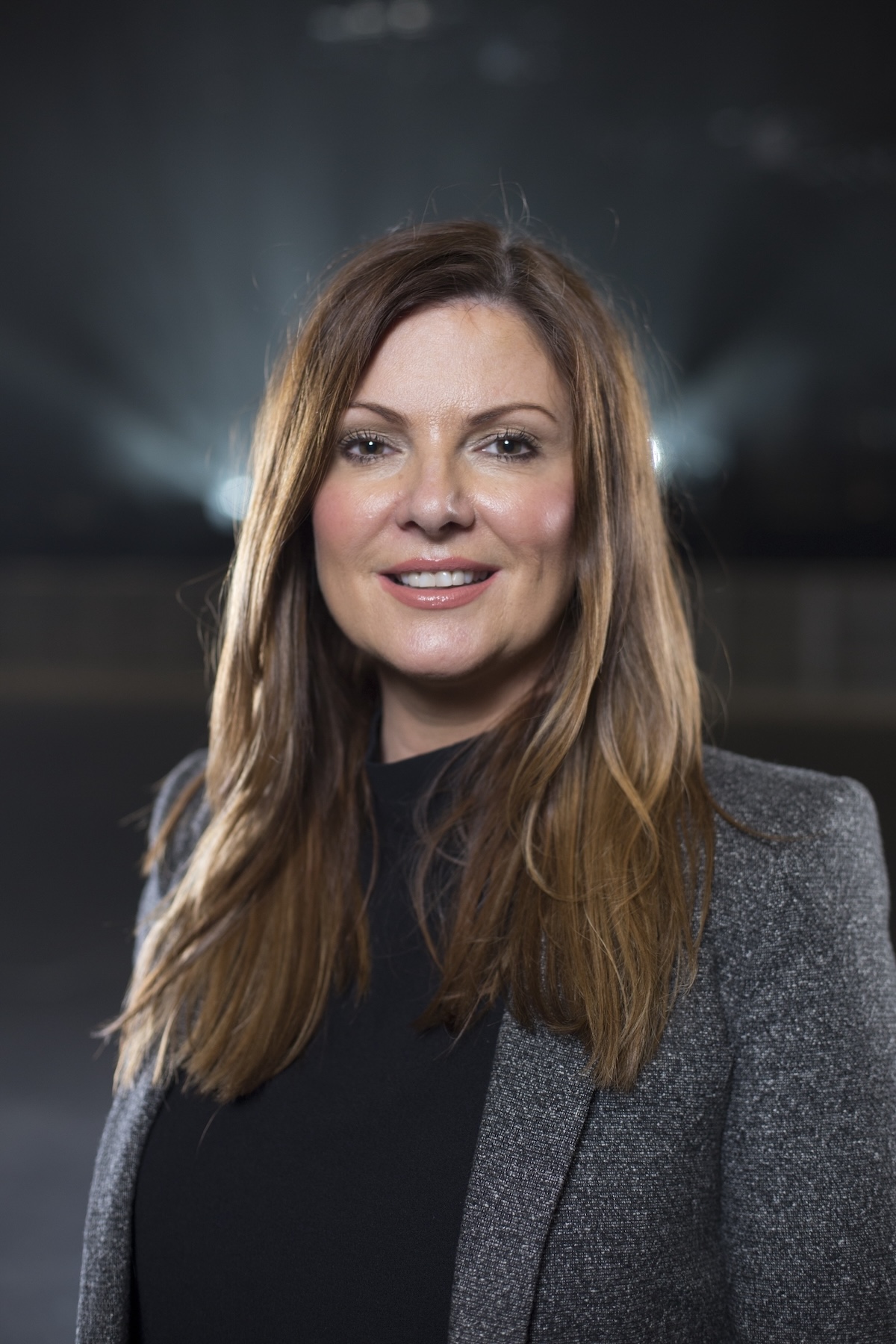
Debbie McWilliams
“The demand for tenancy, specifically in the Hydro, has been unbelievable,” says McWilliams. “Glasgow is such a strong market, a real music city, and the SEC has become renowned globally as an events destination. It’s quite an achievement that a market as small as Glasgow is not only keeping up with the global pace, but in some areas leading the field.
“In the UK, the Hydro is the most influential arena behind only London’s The O2, and we are aspiring to improve on that. Not only was the Hydro the world’s first Greener Arena, which we’ve consistently renewed while also improving our grading, but in terms of the volume of events we deliver and the number of attendees; the influence is incredible. That is not only confirmed by our UK peers, but also by arena operators in key territories worldwide. The level of service, the facilities, and the atmospheric experience that is created at the Hydro is a real USP for both the arena and Glasgow.”
While there is no shortage of confidence in the offering at the SEC, its management is quick to emphasise that no one is resting on their laurels, with a lot of time being spent exploring how to future-proof the facilities. Last year, the SEC saw the largest investment since the opening of the Hydro in 2013. The £4 million SEConnect project has resulted in a major upgrade to the IT infrastructure, including enhanced and more secure wireless coverage. According to McKay, the event campus is now better equipped than ever to enhance the event experience with the ability to cater to events requiring 10 times the technological demands of large-scale events such as COP26, which it hosted in 2021.
Other upgrades include the installation of an Evolv security screening system outside the arena, resulting in improved entry speed and efficiency. Meanwhile, some 11 retail outlets have been refurbished to increase service speed and flow, while accessible seating has been enhanced with improved sightlines and charging points. An in-seat food and beverage service is also being rolled out.
“If we want to protect those 2 million visitors that we enjoy welcoming every single year, we must make sure that we’re delivering for them,” says McKay. “A key focus is making sure there’s great experiences for visitors pre and post show, so we’re exploring how we can curate the entire campus to encourage people to congregate. As part of that we have created a fan zone on the periphery of the Hydro and we will begin to make food, beverage, and merchandise available there.”
Among the many major events to come through the SEC in 2026 will be the Commonwealth Games, with its three venues collectively hosting several sports this summer, including netball at the Hydro, boxing at the SEC Centre and weightlifting at the Armadillo.
“What is really exciting about the Commonwealth Games is the role Glasgow will play in creating a blueprint for the future of the event; it is a very different Games this year,” says McWilliams. “The Commonwealth Games in Glasgow was a huge success story in 2014 and to have the opportunity again, to stage a different Games, and play a critical part in the future success of it, is an exciting opportunity. It’s great to have something take over the entire campus for a long period, and see it host people from all over the world.”
“Our ambition and the drive is to make sure that the next 40 years is as exciting as the last 40 years,” says McKay. “The future is looking bright, this year is shaping up to be our busiest yet. We’d like to thank the industry for entrusting us, particularly the diverse mix of organisations that we work with who are a critical to our success.”