

 Christopher Barrett
Ahead of Polygon Live’s groundbreaking summer show series that will see artists such as Jon Hopkins, Tinariwen and Nitin Sawhney deliver outdoor performances using an immersive 360° sound system in London’s Crystal Palace Park, its CEO Nico Elliot tells AAA why he believes the technology is the future for live music.
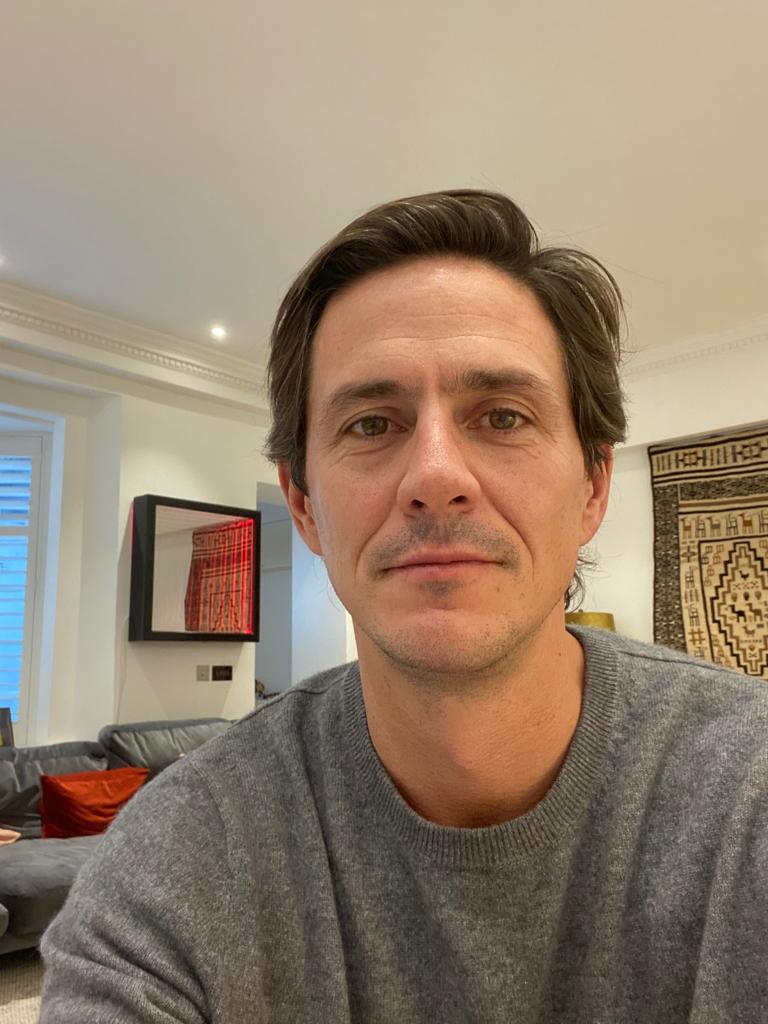 Elliot (pictured) says Polygon provides the world’s most immersive live sound experience, and having witnessed the 14.1.5 L-ISA sound installation at Amsterdam’s The Other Side nightclub, in collaboration with L-Acoustics, it’s hard to argue with that assertion – it’s certainly the most immersive audio experience we have experienced.
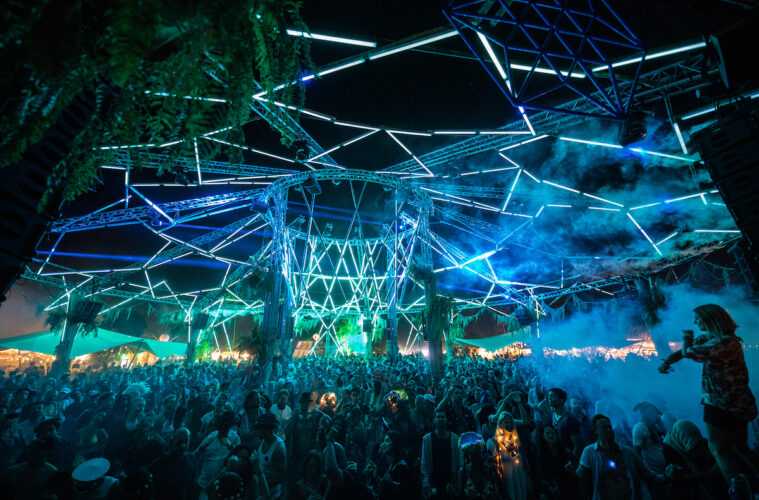
The technology is not new, Polygon has enjoyed success with its 360-degree sound system at the 25,000-capacity Wonderfruit festival in Thailand since 2017, but the company is now preparing to bring it to the UK. In May, Polygon will stage a four-day, 5,000-capacity, outdoor concert series in London’s Crystal Palace featuring an array of live music genres delivered in 360-degree spatial audio.
Not content to focus on creating an immersive audio experience, Polygon has also been working on the integration of scent and haptic technologies to further enhance the sensory experience. While challenges to its wider rollout remain, including cost and logistics, recent developments have made the technology more affordable and accessible for festivals. In an increasingly competitive market, Elliot is convinced the use of the technology will help festivals differentiate themselves and attract more attendees.
Why did you chose The Other Side club at the Amsterdam Dance Event to showcase this technology?
We’ve been working with L-Acoustics since 2017 with L‐ISA Studio 3D audio processing software. This is one of the very few nightclubs on the planet that deploys L‐ISA in a 360-degree configuration, which is how we use it. They also have it at a size that allows us to do what we want to with the music, which is put a high concentration of elements of a track all the way around you. It is different to how a lot of immersive music is deployed. Usually, it’s heavily weighted at the front with just some peripheral noises moving around to the side and behind.
You have installed the system at Thailand’s Wonderfruit festival for years, what is your plan to roll it our further?
That’s what we’re focused on all the time currently; to get it into as many locations as possible, ideally outdoor venues because that’s where it really comes to life. We are speaking to a lot of festivals around the world to deploy it and we’re doing our own event in Crystal Palace in May.
Tell me more about the Crystal Palace shows.
They will be in Crystal Palace Park, South London, on the Italian terraces. It’s a lovely spot on the top of Crystal Palace Park, a great big flat piece of land with a backdrop of Roman-style ruins. We will have a 5,000-capacity set up in a tent and run shows for four nights from 2-5 May. There will be a variety of genres; one day will be more dance focused, another more pop, and for the other we are exploring dub and reggae.
So, the plan is to move beyond dance music and use the 360 audio system for live band performances?
We’ve done a lot of electronic music, that obviously lends itself to spatial audio because you don’t necessarily have a band in front of you and so it’s easy to position things in the round and move them. I think to have a band in front of you and have the audio suddenly moving around you, that’s really when this starts challenging people, gets really exciting, interesting and different.
How else are you working to enhance the immersive experience?
We’ve been working on scent dispersion with a fluid mechanics engineer to build a piping structure that fits around the dome, so we can pump scents through. It’s quite complicated, with outdoor locations particularly as the wind is a factor but we’re making good progress, and I think the scent aspect is really powerful. Haptics is also something we’re excited about. We’re testing haptic jackets out and other haptic wearables that could be introduced. We’re also exploring how we can integrate eating or drinking into the experience; so you can have food that’s paired with audio.
Are you looking at working with agencies on brand launches and b2b events?
Absolutely. It can enhance a brand launch, a corporate or a b2b event; there’s so many different formats we can create to suit those different environments and opportunities.
At a time when many festivals have been struggling financially, do you expect many operators to invest in spatial audio?
Putting all this together is costly and so injecting it into existing festivals is challenging for obvious reasons. It’s a tough sell, but with the challenging environment in the ticket selling market it feels like festivals are required to differentiate themselves more and have something different to attract additional ticket buyers. So now feels like a good moment to expand and we’re getting a lot of interest. We’ve developed new deployment options that are more achievable and cost effective for festivals. We recently did a scaled back set up in Singapore for Formula One, we were on top of Marina Bay Sands, and there were numerous constraints and challenges involved in the project that forced us to be creative, and the result was a smaller system that sounded amazing.
To appreciate the impact of 360-degree spatial audio you really have to experience it first-hand, which must make it a challenging sell?
When we do it in London, hopefully people will come, experience it and get excited about it. I’m confident that we’ll get there because it’s such an exciting listening experience. One of our greatest challenges has been trying to sell this by talking about it. People have heard Dolby Atmos, they’ve heard binaural sound, but when you’ve got an L-ISA sound installation with a lot of big speakers in a setting outside, it’s really something new, and a very powerful experience.