

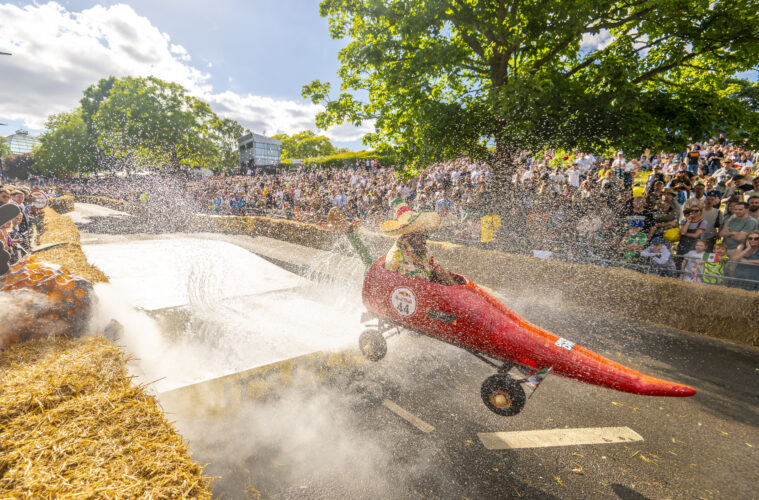
 Joe Gallop
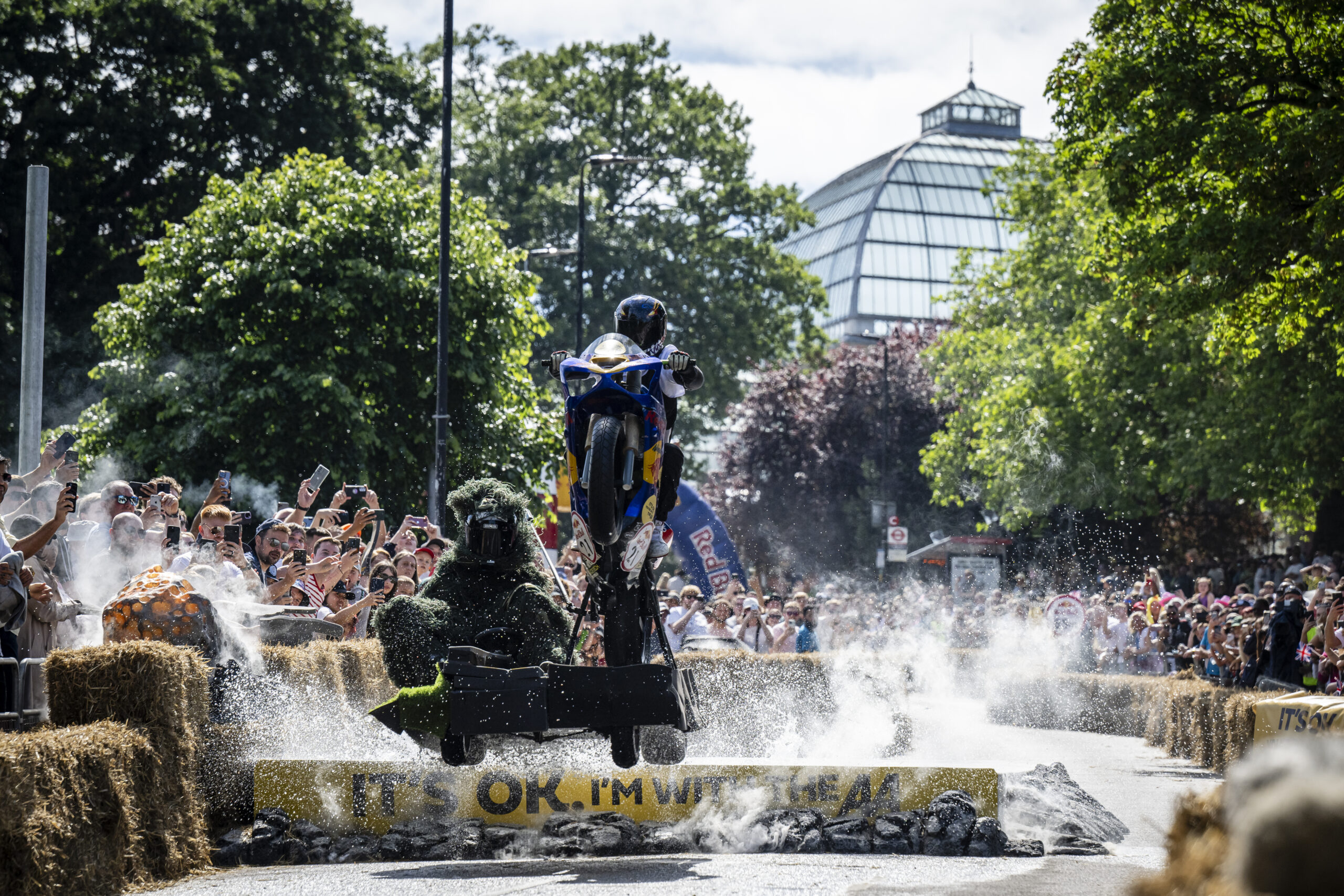
On 24 June, London’s Alexandra Palace transformed into a vibrant playground for creativity and competition as the Red Bull Soapbox Race made its return. The event, known for its quirky, homemade soapbox cars, drew 16,000 spectators and 59 vehicles to the historic venue.
This year, the race not only scaled up in terms of participants and complexity but also introduced some innovative features. AAA spoke to Ops People event operations coordinator Bethan Bloomfield, who is responsible for overseeing technical production, site management and logistics, to gain insight into what makes this event tick.
This year marked a significant expansion in the event’s scope. Beyond the typical soapbox race, the sold-out event introduced a new element: a social opinion leaders race featuring five teams of influencers. “It was live-streamed on YouTube, which added a new dynamic to the event,” says Bloomfield. “The influencers brought their own audiences, which helped broaden the reach of the race.”
Organising an event of this magnitude at Ally Pally, with its steep hill and expansive grounds, posed significant logistical challenges. Bloomfield’s team was responsible for technical production, site management, logistics and signage, while Red Bull’s event operations director JP Robinson managed overall operations.
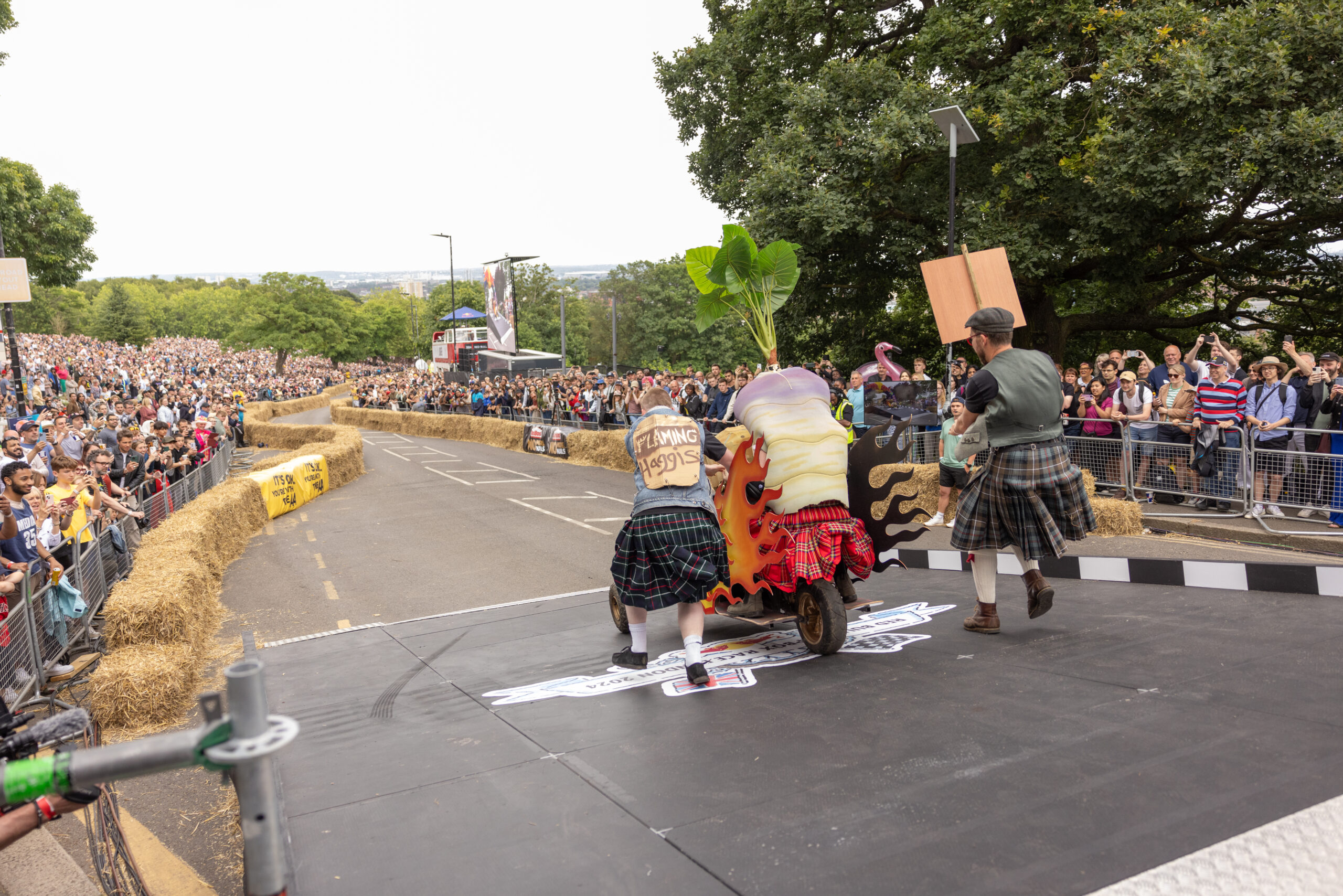
Will Douglas / Red Bull Content Pool
“Alexandra Palace is a very militant build and break,” explains Bloomfield. “We started on-site on the Monday, and everything was done in phases. It’s not a typical venue where you can access everything at once—each area opened up gradually throughout the week. By Thursday, the track was fully closed, and we could start building the ramps, PA systems and other infrastructure.”
The construction was a race against time. “Thursday is always an intense day,” says Bloomfield. “Everything needs to be perfectly timed—structures go up, power is installed, then the screens and PA systems. We have a very tight timeline because rehearsals start on Friday and the live show is on Saturday.”
After the race wrapped up on Saturday evening, the team immediately began dismantling the site. “We only had a day and a half to break everything down, so it was all very military-style—everyone had to work in sync. It was intense, but we’ve done it enough times to know how to execute it efficiently,” Bloomfield adds.
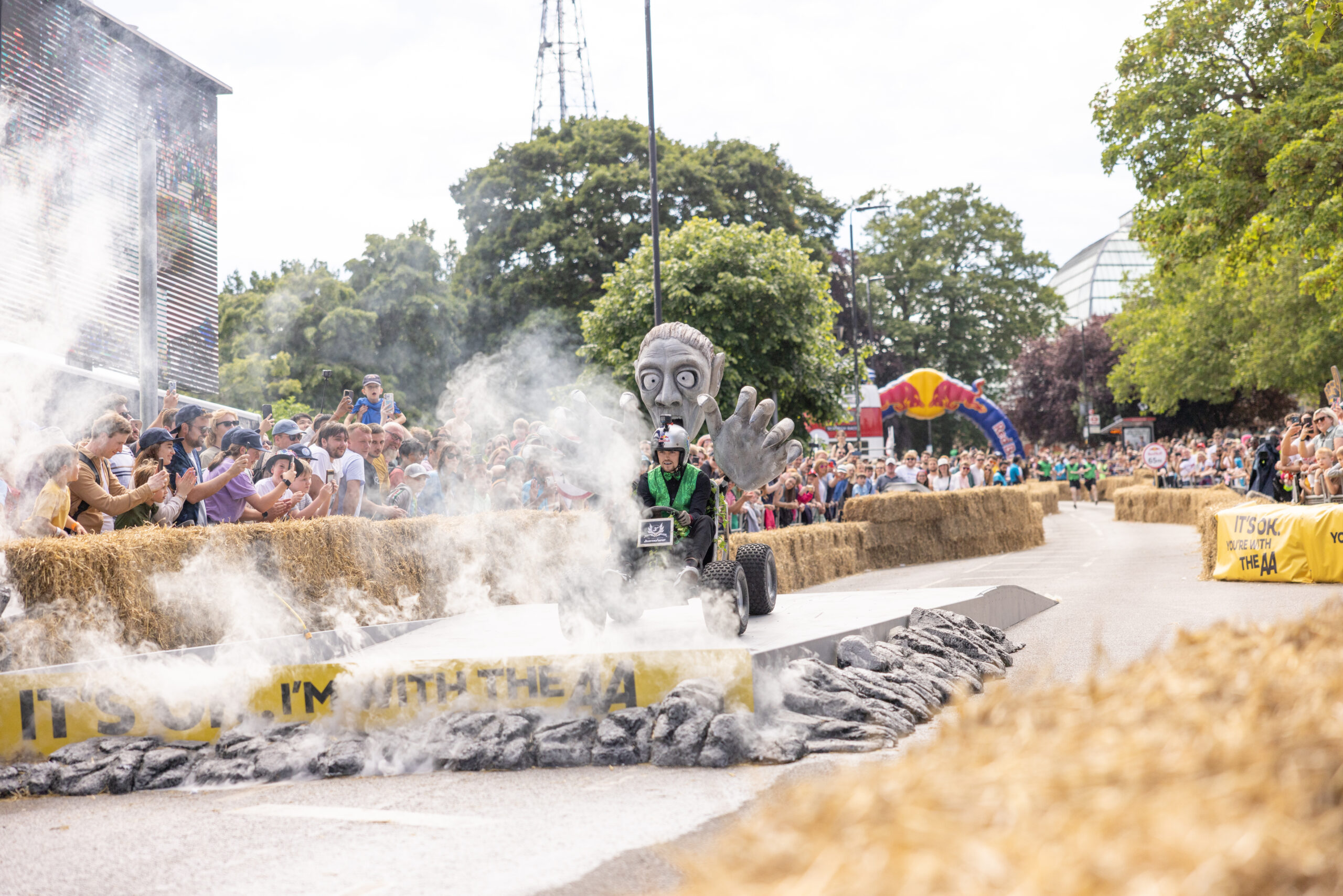
Will Douglas / Red Bull Content Pool
With tens of thousands of people on-site and vehicles racing down steep inclines, safety was a top priority. “We had strict crowd capacity calculations and emergency access routes in place,” says Bloomfield. “There were walkways throughout the site, and if an ambulance needed to get through, we had contingency plans to ensure quick access.”
The event also made strides toward sustainability. “This year, we ran the whole site on HVO and hybrids, which was a big step forward,” says Bloomfield, “All our suppliers had to submit sustainability documentation, covering everything from staff travel to the trucks they used. We also used compost toilets and flat-back toilets to reduce the number of trucks coming to the site.”
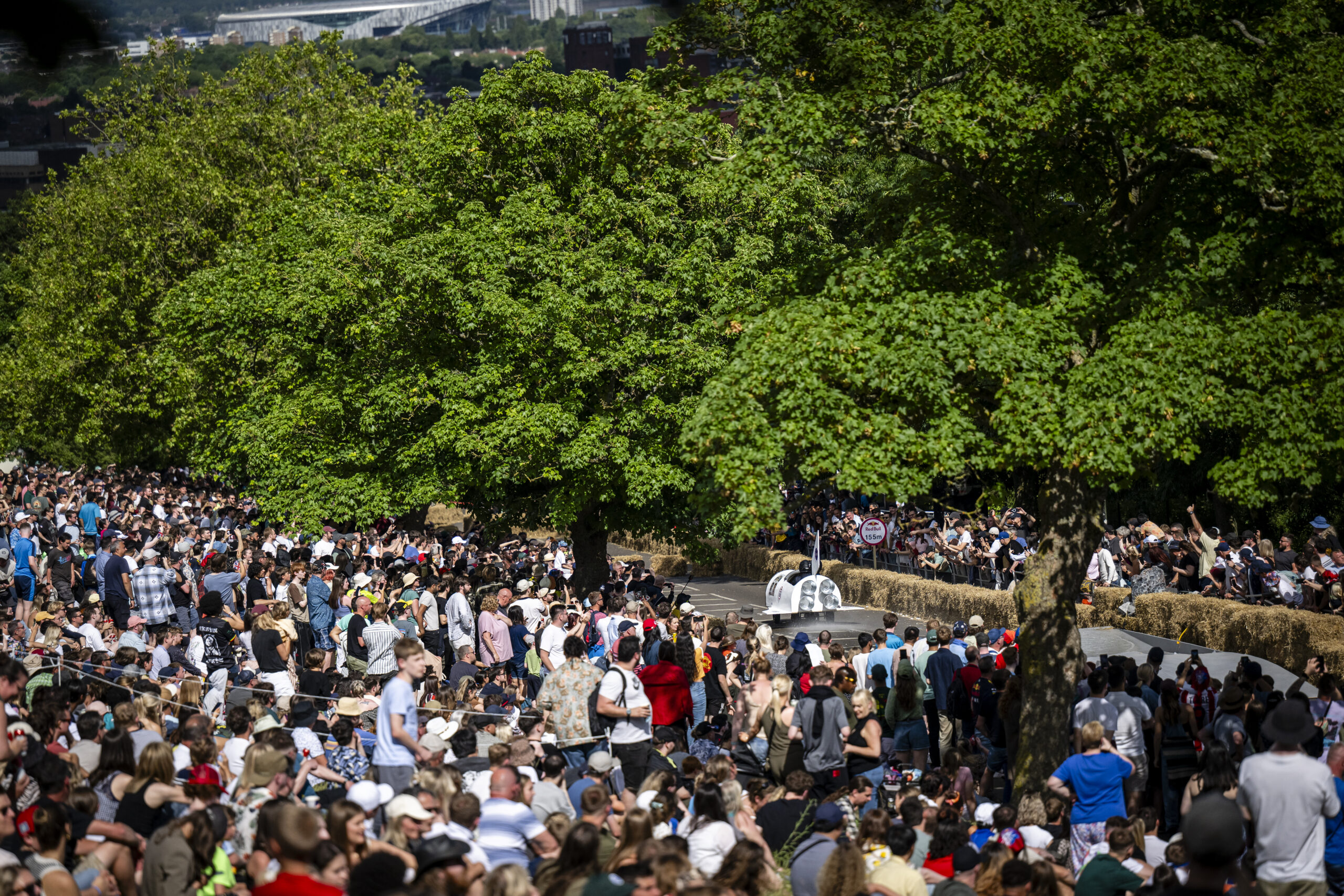
Mark Roe / Red Bull Content Pool
What truly sets the Red Bull Soapbox Race apart is its creativity and community spirit. Teams crafted soapboxes in all shapes and sizes—from a giant cup of tea to a double-decker bus.
“The soapboxes are so quirky,” Bloomfield says. “One year, we had a soapbox shaped like a severed foot. The creativity is just off the charts. The show teams add another layer, doing little dances at the top of the ramp before sending the soapboxes down the track. It’s all very theatrical.”
For Bloomfield, the event is a rewarding experience from start to finish. “I love that we’re involved from the very beginning, from site planning to execution,” she says. “Seeing the site come to life, watching families enjoy the event—it makes all the hard work worth it. Standing at the bottom of the hill, looking up at the start ramp, and seeing everyone having a great time, that’s what it’s all about.”
Mark Roe / Red Bull Content Pool