

 Christopher Barrett
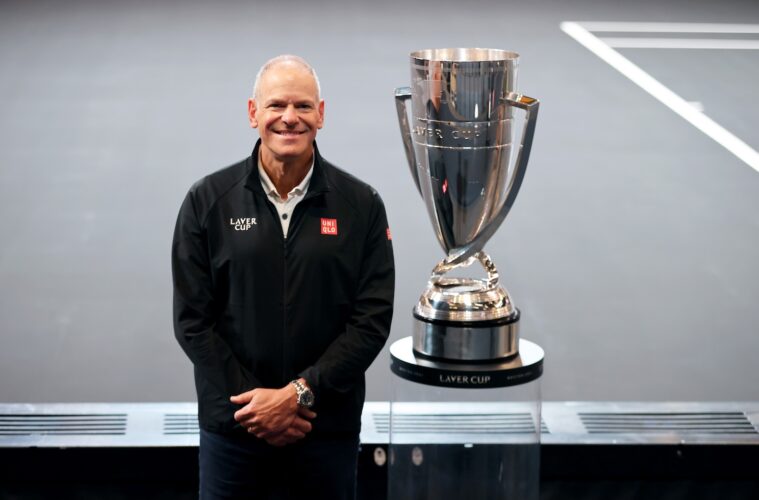
Involving a complex in-arena production that takes 450 crew members nine days to build, the Laver Cup and its famous black court will return to The O2 arena in September. The tournament’s CEO Steve Zacks talks us through the complexity of the event, and its multi-faceted evolution since it was last staged in London.
Named in honour of Australian tennis legend Rod Laver, the Laver Cup pits six of the best men’s players from Europe against six of their counterparts from the rest of the world over three days of team competition.
Since its debut in Prague in 2017, the Laver Cup has been staged in cities across Europe and North America including London in 2022. It has not returned to any of them until now, with the tournament back at The O2 arena from 25-27 September.
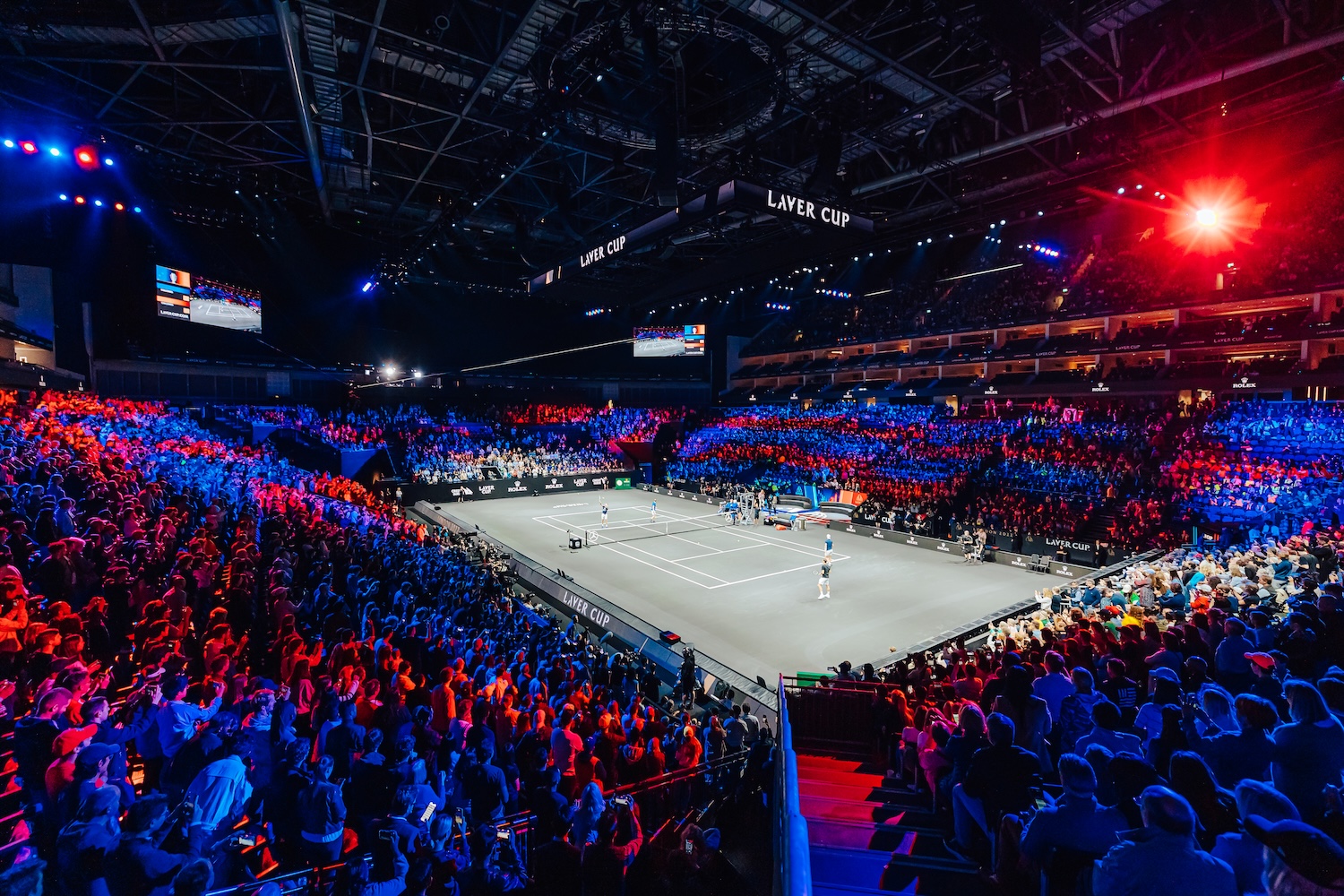
Illustrating the complexity of the event delivery, some 20 production trucks will arrive at the West London venue ahead of the nine-day build. The rigging and truss installed for the event, including lighting, audio and LED, will be one of the largest in-arena productions at The O2. The tennis is played on a dramatic black court that will be constructed within The O2, and the production will also involve more than 2,000 LED panels spanning 1400m2, a bespoke LED ribbon around the court and more than 380 moving lights installed around the arena.
Here, Steve Zacks outlines why the event’s production and delivery is now focused on far more than framing the on-court action.
This September you are bringing the Laver Cup back to London, the first city in the event’s nine-year history to stage it twice. Why The O2 and why London again?
The O2 arena is one of the world’s great entertainment venues. When we first staged it there, in 2022, it had hosted the ATP World Tour finals for many years. When that left, AEG really wanted another professional tennis tournament at its arena and so it was great opportunity for us.
When selecting locations, we have the players, fans, sponsors and broadcasters to consider, as well as the host city deal. There are so many aspects to take into account, and to find those sweet spots where everything is right is rare. That’s the case with The O2 arena, and why we picked it the first time. We were very successful there; it was an epic event being Roger Federer’s final professional competitive match. Team World won for the first time. We set a record in merchandise sales, and we sold out every seat.
Do you know what the economic impact of bringing the event back to London will be?
We do an impact study after every event, in terms of all the money spent by people coming to the city on the likes of their hotel rooms, travel and restaurants.
Is the event production handled in-house?
We have a little over 20 people who work full time, year-round, on the Laver Cup. When we started out, Tennis Australia came on as partners. They have incredible experience in event production and broadcast, and we have used their people on those elements of the Laver Cup; which enabled us to ramp up from being a brand-new event to being best in class in both those areas right away.
How has Laver Cup’s production evolved since it was last staged in London?
In the earliest years of the Laver Cup, we were learning what really resonated with the players, the fans, and broadcasters. We made some great decisions off the bat. Obviously, the black court is unique – we picked it so it would stand out as different from everything else, and it really fits with our premium presentation. Other key decisions included putting the team benches adjacent to the court and having all the players out there during the tournament. That has become one of the signature elements of the Laver Cup.
We also invested heavily in the digital boards all the way around the court, the lights and overall production, the level of which has since influenced other tournaments.
In terms of the evolution, the event has become much more sponsor driven. It’s attracted new brands, many of which are new to tennis. We’ve really grown our fan zone and a lot of our sponsors create activations there.
You’ll also see much more focus on the bench activity, which is something people really love. We have provided access to listening devices in the stadium so fans can hear what the players are saying on the benches. We also have additional streams that are available to fans so they can watch either bench while they’re at home. There is huge demand for behind-the-scenes action, so there’s been a lot of focus on creating that content – giving fans access to things that they can’t see or hear from their seat. Some of that is exclusively available to our sponsors as something they can provide to their guests as added value.
Why is the build nine days long?
It’s like a puzzle in terms of how everything is loaded in and then constructed. We’re going into a building that’s primarily a concert arena, and we’re turning it into a tennis venue.
We bring in and build our own stands, we transform the back-of-house to make it ideal for the player experience and we bring in our own courts. We have two identical courts that are stored all year long in Hungary. It’s a wooden surface court, consisting of 460 plates that collectively weigh 25 tonnes. We bring that in and assemble it there along with everything from the lights to the scoreboard. We completely transform the arena bowl, hospitality areas and back-of-house. We try and create a consistent environment, and experience, even though we’re travelling to a new location each year. There’s no question, The O2 is a fantastic arena with great amenities, but we do a lot of work to make it look like the Laver Cup everywhere we go.
Back of house that means redoing the locker rooms and setting up gyms – all the things that the tennis players need to compete. The event starts on the Friday, but the players arrive on Tuesday and they want to practice, so we have to be ready to go on Tuesday, even as some of the back of house things are still being built. We set up our second court adjacent to the arena bowl in a dedicated space that we transform into a practice area.
What aspects of the Laver Cup’s return to London are you most looking forward to?
There are great memories from the last time we were there. The O2 is one of the world’s truly special venues, and London is a great city. AEG and The O2; you can’t get much better than that – we know we are going to feel very comfortable there, everything’s high quality and it’ll be a great event.
KEY EVENT SUPPLIERS
Designwerk – overlay
Fortis Services – security
Always Express – transportation logistics and storage
This article features in the summer edition of Access All Areas magazine – read it here.