

 Christopher Barrett
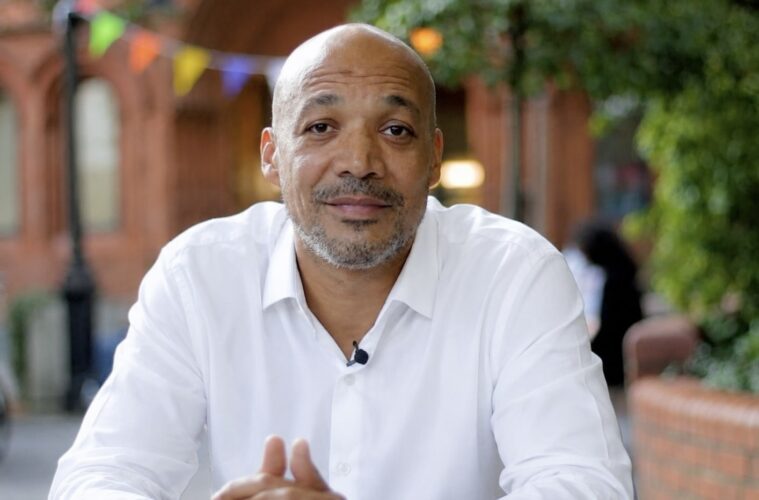
On the back of the 60th anniversary edition of Notting Hill Carnival, its CEO Matthew Phillip outlines what changes in funding and responsibilities meant for the organisation of the event, and why it is vital the carnival remains free to attend.
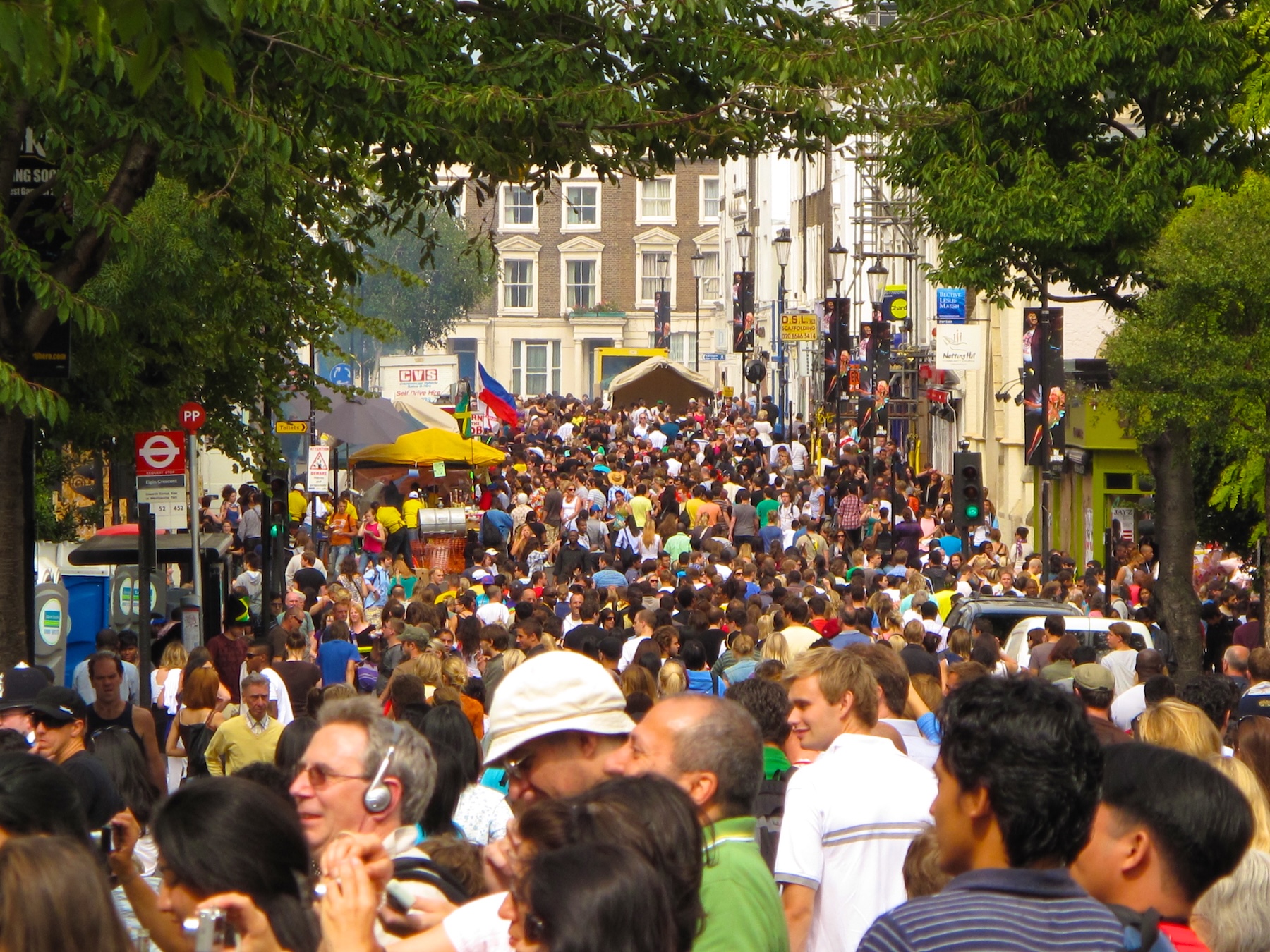
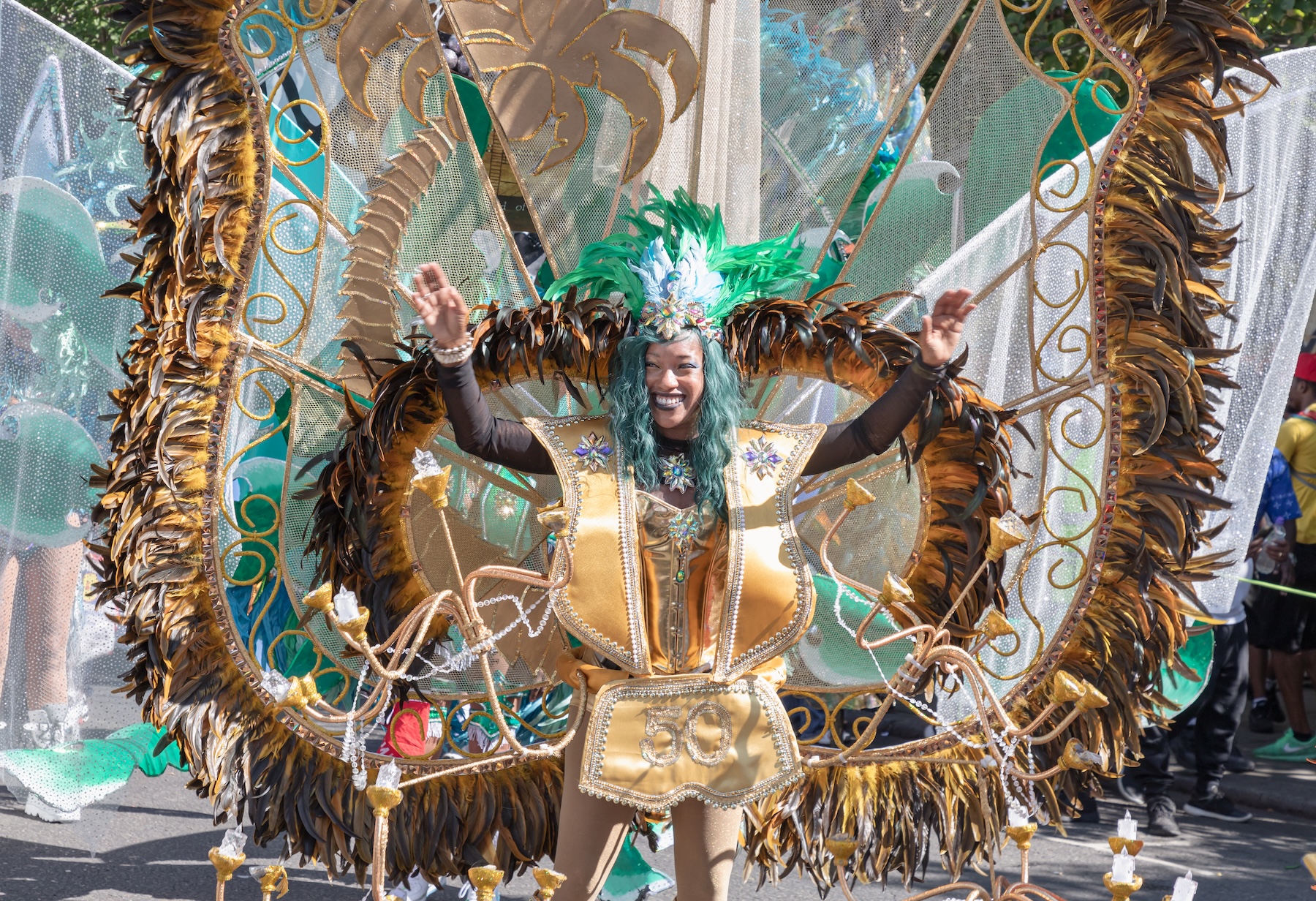
This year’s Notting Hill Carnival (NHC), which ran from 29-30 August, marked the event’s 60th anniversary. An explosion of spectacular costumes and pumping rhythms against a backdrop of colourful Caribbean culture and cuisine, Notting Hill Carnival attracts around 2 million people each year and contributes an estimated £400 million to the economy.
The seeds that would later flourish and grow into the world’s second-largest street Carnival were first laid back in 1959. Racial tensions were high at the time in Notting Hill after riots, sparked by racially motivated attacks by white youths, had broken out in the neighbourhood the previous year.
With far-right groups, including the White Defence League and Oswald Mosley’s Union Movement, increasingly active in the area, Trinidadian human rights activist Claudia Jones organised the Caribbean Carnival in St Pancras Town Hall in January 1959. Her aim was to celebrate Caribbean culture and strengthen community spirit.
The murder of aspiring lawyer Kelso Cochrane in May 1959, in what is widely believed to have been a racially motivated attack, saw more than a thousand mourners take to the streets to pay their respects. It also led to a drive to improve race relations, with the Government launching a public inquiry.
In 1966, local resident and social worker Rhaune Laslett launched the first festival to take place on the streets of Notting Hill, which would later evolve into the Notting Hill Carnival.
“We felt that although West Indians, Africans, Irish and many other nationalities all live in a very congested area, there is very little communication between us. If we can infect them with a desire to participate, then this can only have good results,” Laslett is reported to have said of the motivation behind the launch of the 1966 event, which was primarily organised for local children.
To this day NHC remains a community-led event, albeit one that has built a global audience that grew to more than 7 million when digital activity was stepped up during the Covid-19 shutdown. It remains firmly rooted in Caribbean culture, and while the Windrush-generation influence remains strong, its organisers have always moved with the times.
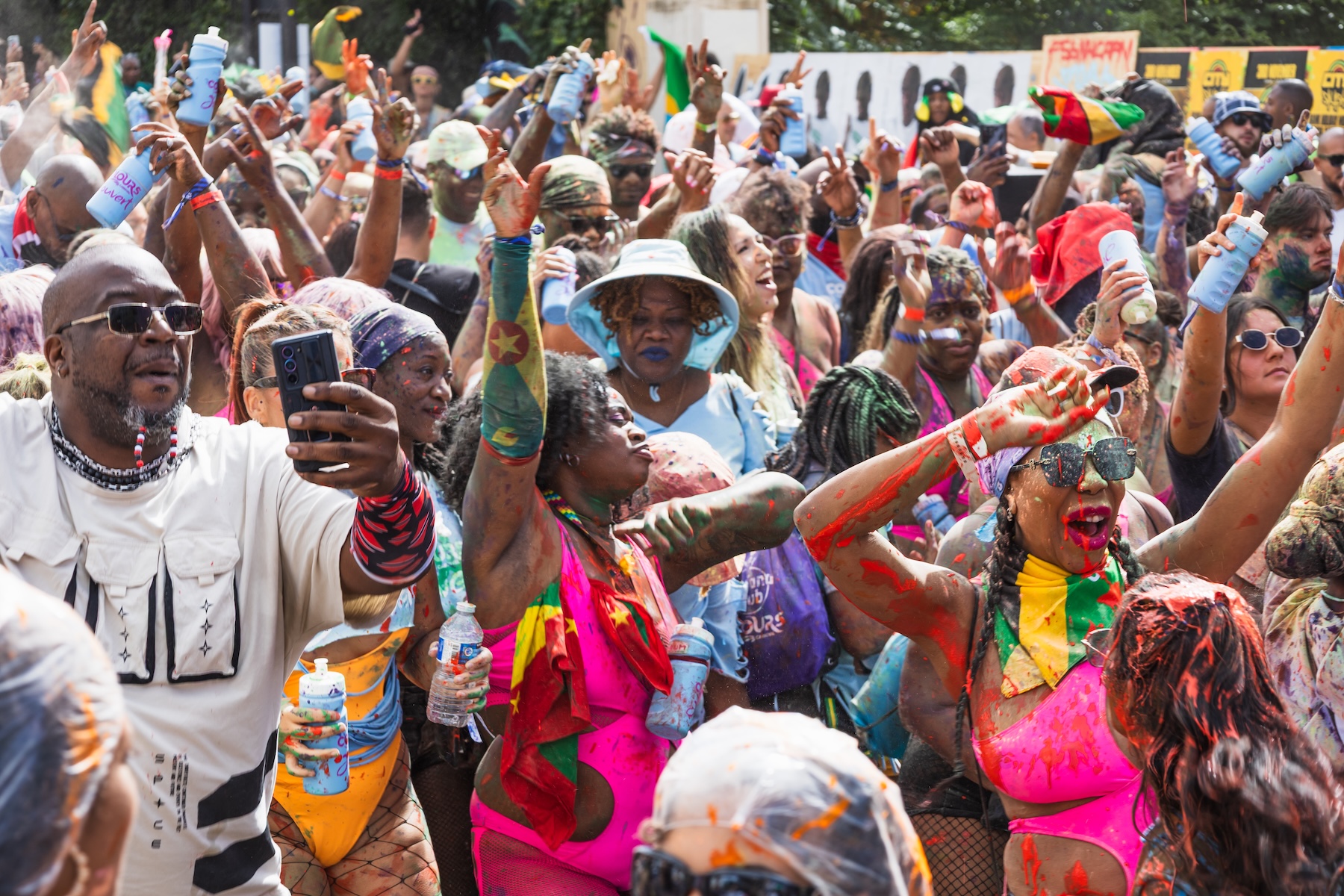
In 1973, then NHC organiser Leslie Palmer MBE introduced multiple static sound systems, a feature for which the event has become world-famous. The Carnival saw the first live performance stages introduced by Wilf Walker in 1979. Among the first acts to perform were Aswad and Eddy Grant, and since then NHC has seen an array of stars take to its stages, including Jay-Z, Lil’ Kim, Busta Rhymes, Stormzy and Craig David.
The event has also been established as a launch pad for emerging acts, with the Wilf Walker Community Stage launched in 2018 to showcase young talent predominantly from the local community.
A diamond pleaser
Like many who work on it, current NHC CEO Matthew Phillip has been closely involved with the event throughout his life. He made his NHC debut aged two, in a pushchair, and can recall attending regularly during his childhood donning flamboyant costumes and even driving floats.
Phillip’s father was a co-founder of one of the oldest and most popular Mas bands in London; the Mangrove Masquerade Band – Mas being short for masquerade. The steel band has been a prominent feature of NHC for more than four decades.
“We have proven now what we can do given the right resources.”
The beating heart of NHC is The Tabernacle in the centre of Notting Hill. The Romanesque former church has acted as the event’s HQ since Phillip took over the running of it in 2018. As well as being central to the event’s planning, it is a creative hub that hosts everything from costume creators to band rehearsals.
When it comes to the team of people responsible for bringing Carnival to life every August bank holiday weekend, Phillip says the diverse group mirrors the event itself – a mixture of people from all walks of life: “Carnival brings people together, not just over the weekend but in a professional capacity. There are people like our assistant director for Notting Hill Carnival Anthea Hudson, who you could call a Carnival baby. She grew up in Mas Camps and around steel bands. Her grandmother was integral to making the costumes for early carnivals. But it takes so many people from different backgrounds to make sure that it happens in a coordinated way.”
While there have been suggestions that ticketing NHC would provide logistical benefits, Phillip emphasised that the lack of a ticket price remains vital to maintaining the event’s inclusivity and diversity.
“Just reaching 60 years, I think, is a monumental achievement,” he says. “Carnival is a magical place that you can come and explore for free. It’s always been about inclusion and bringing people together and one of the main reasons it has been able to do that is because there’s no cost of admission. People can come, bring their own packed lunch, and immerse themselves in what I would describe as pure joy. I’ve never seen an event space that has so much diversity. Yes, it’s rooted in Caribbean culture but its arms are wide open and that is reflected in who attends Carnival; people come from all over the world.”
To mark the anniversary, the NHC team developed a series of partnerships and helped create satellite events including the Steel Scenes festival at the Southbank Centre that not only celebrated Carnival’s birthday but also 75 years of steel bands in the UK.
Multimedia venue complex Outernet London marked the anniversary by displaying photographs from Ian Watts’ archive of Notting Hill Carnival in an installation using Outernet’s vast wrap-around screens at The Now Building. It featured images spanning Watts’ documentation of Carnival from the 1970s to the present day.
Remarkable figures
While one of the latest reports suggests NHC generates around £400m to the local economy, in order to get firm figures the event’s organisers are currently involved in an ongoing study that is being overseen by Mariana Mazzucato, an economics professor at University College London.
“There have been a lot of numbers thrown out there in terms of Carnival’s economic impact, but we are six months into a two-year project to define it. Financially, I know Carnival definitely puts back in a lot more than it receives in terms of funding but for me that’s not the big win. I think what we often fail to discuss is the social and wellbeing impact that Carnival has on communities.”
In March, The Mayor of London Sadiq Khan announced an additional £4.66 million in funding to support this year’s NHC, added to the £946,300 already committed by City Hall. The Mayor said the funding was intended to help Carnival’s organisers implement enhanced safety and crowd management measures.
“What we often fail to discuss is the social and wellbeing impact that Carnival has on communities.”
While NHC’s CEO says the additional funding was welcome, it was used to cover the additional responsibilities of taking over road closures and infrastructure management
which had previously been handled by the Metropolitan Police. It meant the NHC team taking on the role of overseeing barriers and infrastructure for an area covering around eight square miles.
“We had less than half of that level of funding last year, but we handled a lot more in-house this year,” says Phillip. “It was a big challenge for us this year because we took on so much more. One of the big pieces was all of the road closures because it’s a massive piece and there’s a lot of moving parts around closing off so many roads but also being able to facilitate access for residents. In the end it worked really well.”
While the total attendance of the event often reaches around 2 million across the three days, at any one time the audience peaks at approximately 300,000, says Phillip. As with any event of such enormous scale, security is a complex undertaking.
The event’s CEO says this year’s NHC saw the deployment of nearly 3,500 stewards from six companies including Mackenzie Arnold, Patriots Security, Embassy Solutions and Vespasian Security, alongside the internal Notting Hill Carnival stewarding programme.
“It’s not a small number of stewards, and this year we realigned and sectorised their positioning so that there was no overlap anywhere. That worked really well,” says Phillip. “When it comes to the core NHC stewards they are based at key entry points to facilitate the sound systems and bands coming in, and then a big contingent of that is for our judging zone area to facilitate that.”
Overseeing the Control Room for NHC was Controlled Events MD Rob Walley. Phillip says that the complexity of the security operation and the team involved have grown significantly in recent years: “For us, as organisers, it started with me and two or three other people around the table, surrounded by agencies. Now internally, for Notting Hill Carnival, we had around 60 people in the space, and then supporting agencies such as the London Fire Brigade, London Ambulance Service, St John Ambulance, the police and two local authorities. It takes a lot of people to coordinate and manage Carnival safely.”
A sound system
Phillip says that enhanced security measures at this year’s event included improved connectivity across radios and CCTV coverage, which was enabled by Pylon One.
“Pylon One created a fantastic system for us. I can’t sing their praises high enough. We had really good coverage across the footprint with zero dropouts,” he says.
Phillip says the improved connectivity and CCTV, together with investment in drones allowed for better operational control and the ability to prevent congestion before it occurred.
“Operating drones in London for events is challenging because obviously you can’t fly drones over crowds of people. Luckily for us, there were open spaces near the areas that we needed to get eyes on, which is where we were able to launch them. That was a key achievement for us; having that solid connectivity, being able to see the site from a central command point and communicate to our teams on the ground.
“That gave us much more operational control on the individual components to work and coordinate and almost show call the parade to make sure that we were not getting congestion at points where previously we’ve seen it happen.
“When it comes to communicating and managing crowds, the reassurance piece is a vital tool for us. If you’re on a Tube and you get stuck in a tunnel, there’s a massive difference between being stuck there with no messaging and being told it will only be a few minutes.
“At Carnival, if every 30 seconds you are given a message explaining why you are being stopped, how long you are likely to be stopped for and what the next steps are, it is very reassuring.
“Following on from having the additional cameras, connectivity, and comms with all the bands and sound systems, having a big resource in terms of a student contingent to be able to support that and react was really helpful.”
Following this year’s NHC, the Metropolitan Police said the event had “passed largely without incident” and that the atmosphere was “overwhelmingly positive and celebratory”.
Phillip says the findings of the NHC’s customer engagement outreach at this year’s event support the Met’s findings, with data from 1,500 surveyed attendees showing that 66% felt very safe and 83% were confident they would have a great time.
“I think Carnival, for us, has seen a massive transition in the last two years in terms of what we’ve achieved. We’ve always known that we needed to do more but never had the financial resources to be able to do it. We have proven now what we can do given the right resources.”
This article features in the autumn edition of Access All Areas magazine – available here.