

 Christopher Barrett
With Massive Attack and Air poised to take to the stage today, 6 June, in London’s Victoria Park for the first of five LIDO show days, key members of the team outline the challenges involved in creating its groundbreaking environmental credentials.
AEG Presents’ new 35,000-capacity LIDO Festival is billed as London and the global promoter’s most sustainable festival to date. LIDO’s main stage will be powered by the Grid Faeries x Ecotricity 1 MW battery that, in an industry first, will be connected to the grid and charged by renewable energy.
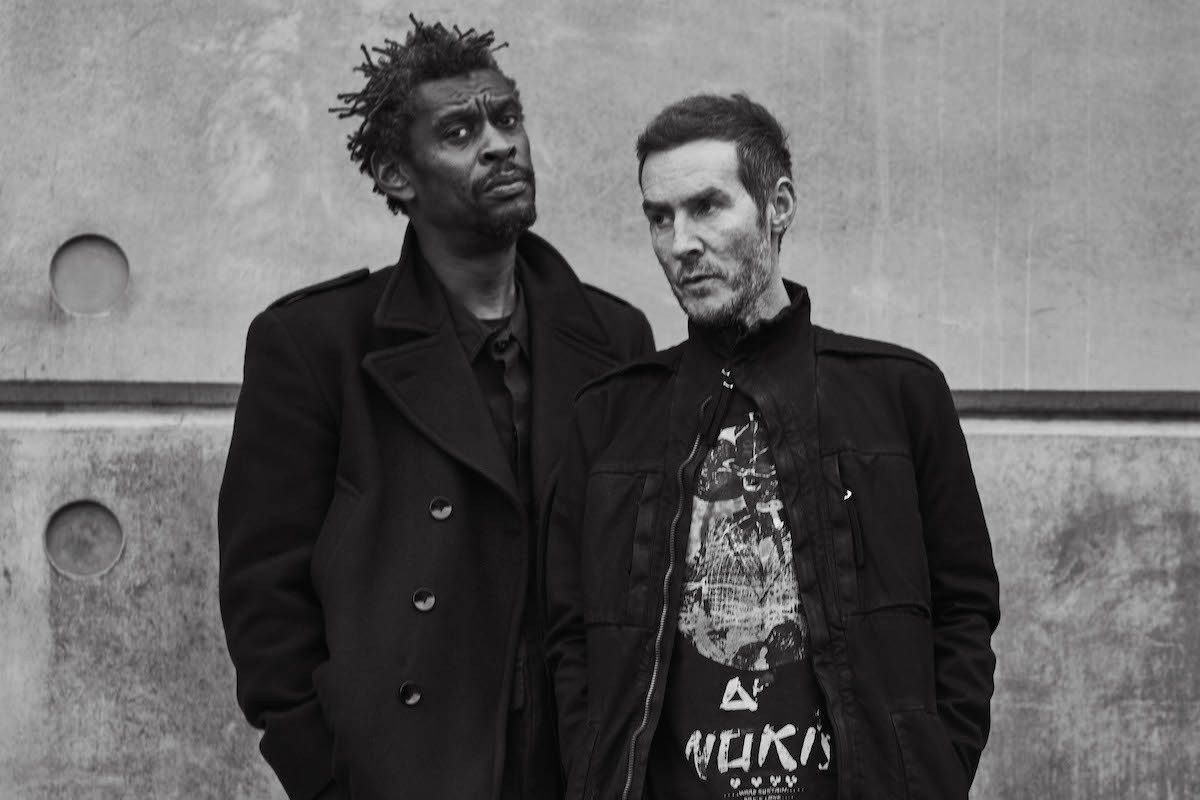
Massive Attack’s LIDO day will be entirely meat-free, with all food vendors solely offering plant-based or vegetarian options. Along with Bristol’s trip-hop pioneers (pictured), the two-weekend festival will also see headline performances by Jamie xx (7 June), Charli XCX (14 June), London Grammar (15 June) and Outbreak Fest (13 June). Meanwhile, behind the scenes, a crack team of sustainability experts including A Greener Future CEO Claire O’Neill, Ecotricity founder Dale Vince OBE and AEG Europe sustainability director Sam Booth will be busy putting months of preparation into practice.
Booth says LIDO is a significant step in AEG’s sustainability strategy, showcasing new technologies and pushing boundaries in environmental practices to make the event the greenest outdoor show AEG has ever staged.
“LIDO is the result of us realising it makes business sense to create an event brand that stands out in the sustainability space,” he says. “We have really embraced new technologies and pushed the boundaries, which is easier to do on a new show than an existing event. It is very much part of our focus on the future and where we want to be as a company in terms of sustainability.”
A key focus is using the Grid Faeries x Ecotricity 1 MW battery to power the main stage, while also connecting to the grid to tap into renewable energy. The expected results are a 50% reduction in generator capacity and HVO (Hydrotreated Vegetable Oil) fuel usage leading to a reduction of 48 tonnes of CO2e emissions compared to traditional diesel-powered festival.
“It is not only a statement about the future direction of live music but a practical one too.”
“I don’t know of any event that has used the grid connection and battery power combo on this scale so that’s been the big thing,” says Booth. “It’s taken a lot of coordination with the partnerships team and with the ops team to make sure everyone’s comfortable with it.”

Sam Booth
As part of the move to reduce HVO usage, Booth says green hydrogen is being used to power one of the areas: “We are trailing it to make sure we are happy with how it works, and that it is cost effective. Power ultimately touches everyone at the festival so that has been the biggest test and the aspect that we’re most happy with, because once you can start proving that you can do it here then you can roll that out pretty quickly to other event sites.”
The Grid Faeries x Ecotricity 1 MW battrery was used to power stages at WOMAD, Glastonbury and Massive Attack’s Act 1.5 event at Bristol’s Clifton Downs last summer, but both Vince and O’Neill say they are delighted to be able to use it with grid connectivity for LIDO, not least as the battery is needed to power the main stage for all five-days of the show series.
O’Neill says that while it is usually difficult dealing with a DNO [Distribution Network Operator] because of their scale, she hopes their work at LIDO with UK Power Networks (which maintains the electricity networks across London, the South East and East of England) will have long-term benefits.
“It’s been really great to work with UK Power Networks to get batteries connected to the grid in London for these shows. We hope it is going to be the start of it becoming a normality going forwards,” she says.
 While today’s event will be meet-free, for all other LIDO dates all vendors will offer vegetarian choices, and at least 20% of them will sell only plant-based food. Booth says that all food items will have an “eco label” outlining the carbon footprint involved. Other key measures visible to fans, production crew and staff will be a ban on single-use plastic, with plastic cups absent from all main bars. Instead, recyclable cans will be used along with compostable serveware. Backstage, reusable crockery will be used for crew catering, while surplus food will be donated to local charities.
There has also been a focus on reducing waste and increasing recycling rates, with a target of 60% of waste recycled in LIDO’s first year. Waste will be segregating using back-of-house teams to ensure it is fit for recycling.
The promoter has partnered with A Greener Future, which will assess the sustainability measures taken at LIDO before providing a carbon analysis of the event.
Booth says, “Jim [King] and his team have done an amazing job of building sustainability into the DNA of the festival, it’s very much at the core of LIDO and is designed to result in an improved festival experience for fans.”
Says King, “It is not only a statement about the future direction of live music but a practical one too. We want our fans to have a great time, which is only enhanced by these sustainability measures. It reduces the carbon footprint of the shows significantly, but it also speeds up bar service, produces less litter around the site, reduces noise and air pollution from generators and much more. This is about striving for the best in every aspect of the festival for the fans, the artists and the communities where we operate.”