

 Christopher Barrett
Jim King got his first taste of promoting events while still at school. Since then, he has risen to the pinnacle of the festival industry, overseeing a series of world-class events. We explore his career path to the top, and his vision for the future.
In June 1994, Jim King graduated from Liverpool’s John Moores University, returned to London and set about painting garage doors for Enfield Council. Fortunately, for him and the live music industry, King’s focus on exterior emulsion didn’t last.
By August 1994 King had secured his first full-time job in the live music industry, within the burgeoning dance music empire Cream. Over the following three decades, he became firmly established as one of Europe’s foremost festival promoters.
As European festivals CEO at AEG Presents, King currently oversees the development and execution of London’s 65,000-capacity BST Hyde Park and All Points East (cap. 50,000), Bristol’s Forwards festival (35,000), Rock en Seine (40,000) in Paris and the newly launched LIDO (35,000) in London’s Victoria Park.
Having transitioned from working on club shows to festivals at Cream, with the launch of Creamfields, King really found his calling. Before joining AEG, he was behind the launch of major landmark events including RockNess and Bestival, and in 2004 King founded event production agency Loud Sound, aka LS Events.
Firmly established at AEG, King emerged from the industry’s pandemic paralysis with immense confidence, expanding the BST Hyde Park event series by 50% from six to nine shows. Now, on the back of a challenging time for many festival operators, he is building on the success of the 10-day All Points East series at Victoria Park with the launch of the LIDO festival at the same location.
With a focus on promoting sustainability and supporting grassroots talent, LIDO is set to include headline performances by acts such as Jamie xx, London Grammar, Charli XCX, and Massive Attack, with the latter’s show powered entirely by renewable energy batteries.
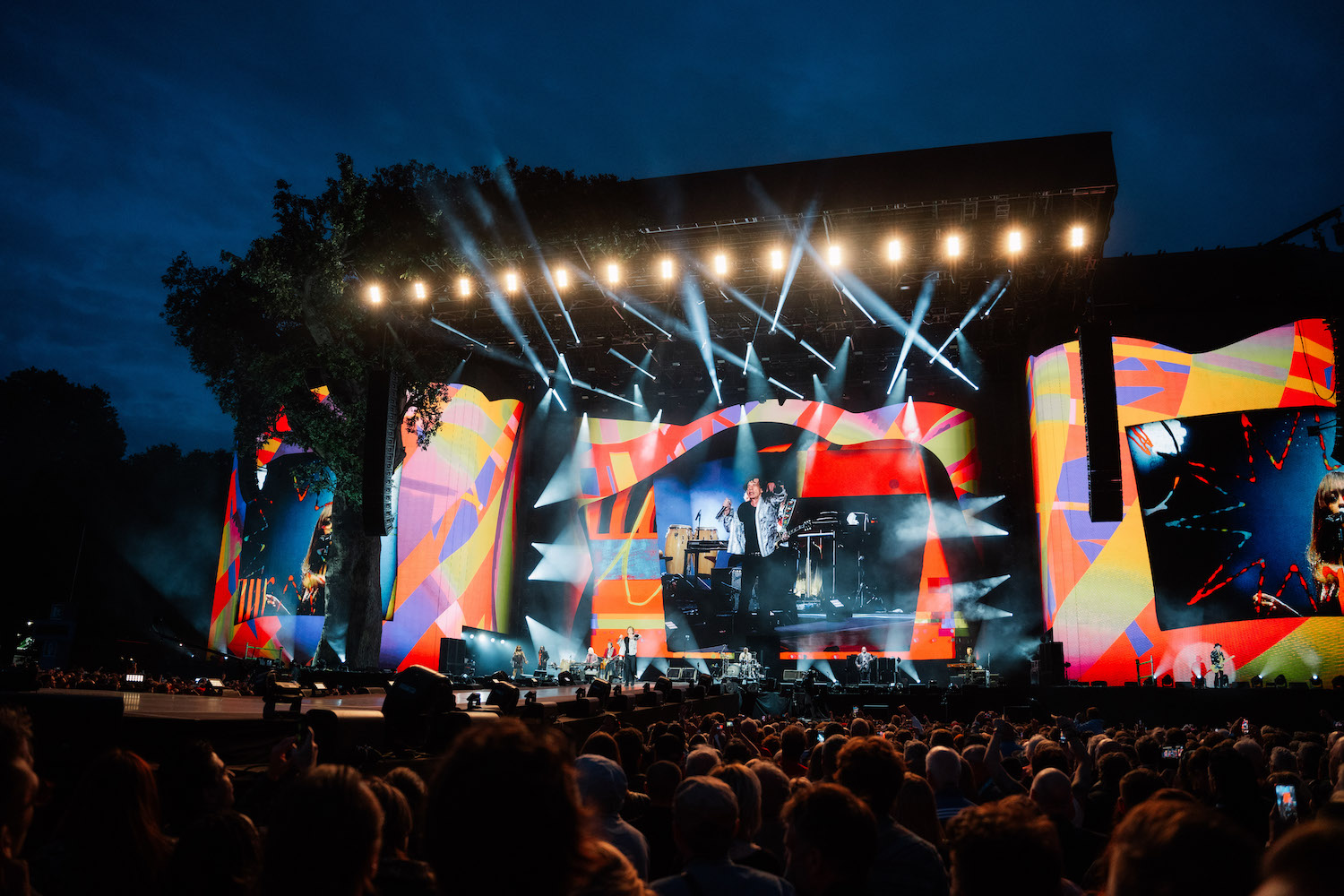
BST Hyde Park
The boy who would be king
Just a few months after a young Jim King arrived in Liverpool to begin a business studies degree, a visit to local independent record shop 3 Beat Records in 1990 proved life changing. While flicking through the vinyl, King met James Barton. The current chairman of festival giant Superstruct, back then Barton was a promoter and DJ and was soon to be immersed in the running of the Cream nightclub he had launched with Darren Hughes in 1992.
A friendship between the dance music fans was swiftly struck and in between his studies, King helped the Cream team by turning his hand to everything from building a membership database to organising the coaches.
Once he had graduated, and returned home from university, King found himself facing the tedium of painting doors for a living. Understandably, he was delighted to receive a phone call from Barton offering him a full-time job. “I put my paint brush down immediately, jumped in my car and drove straight back up to Liverpool,” he says.
With Barton managing Deconstruction Records in London, and needing to relocate to the capital, he thought King would be an ideal addition to the Cream team. “I felt strongly we needed to put somebody in at Cream who was smart, very organised and still liked a good Saturday night out but knew what it was like to go to the office on a Monday morning and help run a business,” says Barton.
“We all knew how to build brands and audiences, but we didn’t really know how to build out a real business operation on the back end. Jim built a solid foundation so we could move forward and grow the business and Cream brand.”
“We weren’t reckless or arrogant, but we were fearless.”
Cream may have proved the sweet spot enabling King to kick off his career in earnest, but his prowess for promoting shows dates right back to his schooldays. As a teenager, he had fallen in love with the dance music scene while attending Acid House parties, including Sin at London’s Astoria, alongside his brother. In 1989, between classes, King sold tickets for his first event, a mini ‘rave’ at the Palmers Green Athletic Social Club. The tickets were sold out within a week, and when the night was over, the budding promoter proudly laid out the takings on his mum’s kitchen table; some £400, all in coins. “I thought I was the richest person in the world,” he laughs.
King says that working at Cream often felt more like a lifestyle choice than a job: “Cream was very much something we were living as a friendship group, it didn’t feel like work. We all lived together; Darren Hughes and I shared a house with Paul Bleasdale, who was one of Cream’s DJs. It was an exciting time to be in Liverpool; the city was very much on the up in the cultural industries, and Cream was one of the shining lights, if not the shining light at that point.”
Initially a relatively small club with a capacity of around 600, it wasn’t long before the huge demand for Cream led to it being repeatedly expanded.
“Liverpool, at that time, was fairly run down,” says King. “Cream was in a city centre location, where there was a series of empty warehouses, and we occupied one of them. When we needed to grow, we literally just knocked a hole through the wall and grew into the next warehouse. We ended up occupying four.”
“We were doing £25,000 to £30,000 in revenue on a Saturday night, and it felt like millions at the time,” says Barton. “We were all in our 20s, all having the time of our lives, booking the biggest DJs in the world and building a great brand.”
“It was like the punk rock era revisited for electronic music.”
“Meeting James, Cream launching and then being a part of that journey was pivotal in so many ways,” says King. “It really made me who I am today. At 22 years old, I had this incredible opportunity to book artists and promote shows but also to run a company and really get into the details on how a business works.”
It wasn’t long before Cream outgrew the warehouses, and Liverpool. King played an integral role in it becoming an international brand, with Cream club nights across the UK and beyond. Having successfully tested the Balearic waters in 1994 with one-off events at Ibiza’s Space and Pacha nightclubs, a Cream residency was set up in 1995 at Ku Club, which later became Privilege. The following year Cream returned to the island for a weekly summer residency, this time at Amnesia. Along the way, King and the Cream team worked with many of the world’s top DJs, including Peter Tong, Carl Cox, Andrew Weatherall and Paul Oakenfold.
“It was a time of many successful stories in the wider electronic music community, and we were proud to play a part in it,” says King. “It felt like there were no rules. It was like the punk rock era revisited for electronic music. We weren’t reckless or arrogant, but we were certainly fearless, we had no fear of failure. We didn’t have much to lose; I was driving around in a Ford Fiesta running one of the biggest clubs in the world, while the likes of Junior Vasquez, Frankie Knuckles and David Morales flew in from New York to play.”
A field of their own
Among the key players involved in taking the Cream concept out into the open air was John Reynolds, one of Ireland’s most influential music promoters. At the back end of 1997, Reynolds introduced Barton to Mean Fiddler’s Vince Power and Melvin Benn, the then promoters of dance music festival Tribal Gathering. At the time, Reynolds was operating the Pod nightclub and venue, and would later go on to launch the Electric Picnic festival.
“Tribal Gathering wasn’t due to take place in 1998, so the Mean Fiddler had a gap and John suggested they talk to us,” says King. “One of the reasons why James [Barton] is so successful is that he has great timing and makes great decisions, this was another of those moments. He came back from the meeting and announced, ‘We’re doing a music festival’, and Creamfields was born.”
“I was captivated by the process of staging outdoor events.”
The first Creamfields took place at the Matterley Bowl in Winchester on 2 May 1998 with a lineup including Daft Punk. Cream oversaw the booking and marketing for the one-day event while Mean Fiddler produced and promoted it.
“It was a really great learning curve for me,” says King. “I’d been to Tribal Gathering, at that point we were agents for the likes of Graham Park and Roger Sanchez so I booked some of those artists into it. But when we did our own festival, it was a real eye opener. I’d run arena shows but not an outdoor show, so it was fascinating to see the difference between a production delivery and an infrastructure and production delivery, and the way in which your responsibility of producing the event changed significantly. We learned a lot, mostly through observation, because it was Melvin who ran it.”
Now at WME, artist agent David Levy had brought the likes of Paul Oakenfold, for his famous residency, to the Cream nightclub and he became closely involved in the launch of Creamfields.
Says King, “When we were working on the first Creamfields we went to see Barry Dickens at ITB because David [Levy] said, ‘You should have an agent who oversees the contract with Mean Fiddler, speak to Barry because Vince will listen to him, and if there’s a problem Barry will be able to sort it out’. Barry has been something of a mentor for me ever since and I work with him to this day – this year I am doing Neil Young at BST.”
Recalls Dickens, “Jim and James were new to festivals at the time but they had been hugely successful with Cream, had great contacts and worked very hard on bringing Creamfields to life. We helped them financially and did our best to assist with whatever they needed.”
With Darren Hughes having left Cream to set up Homelands at the Matterley Bowl, the decision was made to move Creamfields closer to home. In 1999 Creamfields was staged at the old Liverpool Airfield, with Cream handling the production. Among the team of specialists hired to help were John Probyn, Paul Ludford and Sophie Ridley.
Remembers King, “We were responsible for running the show, and that was the huge difference from the previous year. I remember walking around the site with James on Saturday morning, looking at all the infrastructure, and having this feeling of immense pride and satisfaction that we had pulled it all together. Then the gates opened, and 35,000 people turned up. The next 12 hours were the most terrifying I’d ever experienced but by the end of it I’d caught the bug. I really loved the responsibility of pulling it together, the creativity involved in building something from scratch. I was captivated by the whole process of staging outdoor events and wanted to run the biggest shows in the world.”
Says Barton, “It was obvious that suddenly Jim knew, and we knew, what he was going to do for the rest of his life.”
Long established as one of the world’s leading dance event brands, over the years Creamfields has spawned countless spin-off events as far and wide as Chile and Abu Dhabi, Argentina and Hong Kong.
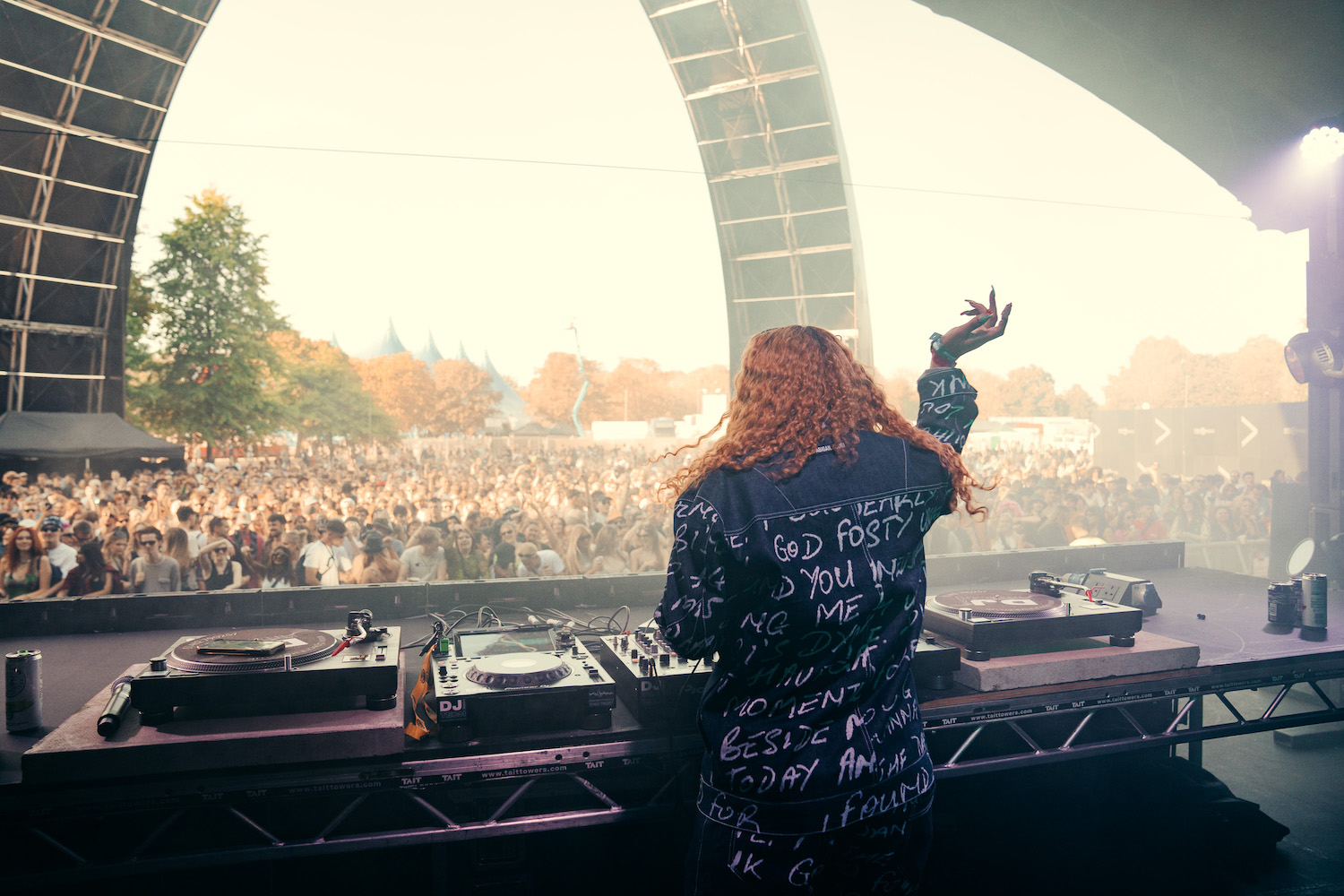
All Points East
Making Loud Sound
In 2004, King left Cream and founded event production agency Loud Sound. The company has come an awfully long way in the last two decades, with its 2021 rebrand to LS Events reflecting an expanded events portfolio that stretches well beyond live music.
LS Events has managed hundreds of major events over the years, including the Formula E season finale at ExCeL London, the four-day Champions League Festival in London, Operation London Bridge, and AEG Presents-promoted events including BST Hyde Park and All Points East.
“I needed to take a leap and go out on my own and Loud Sound came from this,” says King. “Starting from scratch, building a client base, taking on risk and promoting festivals with my own money is the biggest learning curve any promoter can have as it is different when it’s your money on the line. I have always found that promoters with that background always maintain a true value of money and risk, even when working from someone else.”
Loud Sound’s now co-CEO Dave Grindle first met King while working with him at Cream where he was handling its DJ agency and they would go on to work closely together on the company’s international expansion. By coincidence, they both left Cream around the same time, and King hired Grindle to work for Loud Sound.
“Jim’s got this incredible determination and natural enthusiasm coupled with an ability to build really strong relationships,” says Grindle. “People want to come on a journey with him, hence why I’m still here working with him 30 years later.
“There are never any half measures with Jim, his mindset is very much; go big or go home. He is always very focused on making sure everything is the best it possibly can be.”
With the relationship with Barton remaining very much intact, Grindle and King continued to produce Creamfields up until it was acquired by Live Nation. The festival is now overseen by James’ brother Scott.
“Loud Sound was originally set up for me to realise my ambition, which was to work with a range of clients on great projects that I really believed in,” says King.
DJ dreams
Numerous events, such as LED Festival and Field Day in London’s Victoria Park, followed. Among the many pivotal moments was a meeting with music journalist and artist manager Ben Turner. At the time, Turner was managing DJ Rob da Bank, aka Robert Gorham, who on the back of his success with the Sunday Best label and club night wanted to launch a festival.
“I’d been asked to produce other people’s festivals before then, but never really connected with what they wanted to do,” says King. “I met Ben and Rob in the pub opposite my flat. Rob sat down and pulled all these pieces of paper out of his bag and pockets and started rolling them out. He had drawn up his brilliant plans for Bestival on these pieces of paper.
“Rob, and [his wife] Josie, had loads of great ideas but they didn’t have the practical experience to turn them into an event format. They were unbelievably creative. I learned so much from finding ways to realise their creativity. For the first four years, Bestival was among the most creative and enjoyable events I’ve worked on.”
With Bestival launched successfully in 2004 on the Isle of Wight, two years later King would be working at the other end of the UK, in Scotland, bringing another DJ’s festival dreams to life. King’s involvement in RockNess, on the banks of Lock Ness, stemmed from a call from his former Creamfields compatriot David Levy, during which the agent asked him to meet his client Norman Cook, aka Fatboy Slim.
RockNess was launched in June 2006, with the first edition boasting a line up including Stanton Warriors, Scratch Perverts, Carl Cox and, of course, Fatboy Slim. The next edition saw the capacity expanded to 35,000, with a lineup featuring The Chemical Brothers and Daft Punk.
“RockNess was a crazy idea we had for Norman because we were, and still are, always looking for the ‘gag’ when it comes to keeping things fresh for Norman,” says Levy. “It quickly grew into an annual event, and we needed to bring Jim in to help. Back then it was a no-brainer to want him on board; he was one of the only outdoors operators who truly understood electronic music, and, sadly, he still is.”
In 2008 King sold his stake in the event to AEG, and started working for them as a consultant.
In time King left the team at Loud Sound to independently drive the business forward. “I realised that others in the company were the future of that business – sometimes you have got to let go to grow,” he explains. “The Loud Sound you see now is very much driven by its co-CEOs,” he says.
“I’d never had the benefit of access to that level of resource before.”
Parklife
King’s history of promoting shows in Hyde Park goes back well beyond the launch of BST in 2013. Working with Clear Channel, before it became Live Nation, King helped promote the first Wireless Festival in 2005 at the West London park. Working alongside Stuart Galbraith, who went on to launch Kilimanjaro Live, King co-promoted a Wireless show day featuring a lineup including Basement Jaxx and LCD Soundsystem.
King continued to work on Wireless at Hyde Park until 2007, but it wasn’t until 2012 that he had the chance to return there with a major event of his own.
“The reason I was so passionate about it was that I’d been to some amazing concerts in Hyde Park,” says King. “I had to bide my time until an opportunity arose, which wasn’t until 2012. We put together a very compelling proposal that reimagined what we felt events in Hyde Park should be.”
The seeds for BST Hyde Park were sown in 2012 at a pre-party for the Brit Awards, where King met AEG Presents chairman & CEO Jay Marciano for the first time.
“Jay had recently come over to run AEG Europe, and he asked me ‘what do you think we should be doing in London?’ It was a party, and I might have had a couple of drinks at that point, so I told him exactly what I thought. I said, ‘This is a big company, and big companies should be doing big things. The Hyde Park tender is coming up, we should be running great events there, like we do in California with Coachella.”
The next step was to present the idea officially, a meeting King will never forget.
He says, “I had a very simple deck loaded on the computer, I got to slide two and it crashed. Jay could see me repeatedly banging the forward button on the computer, and said ‘just pitch it to me’”.
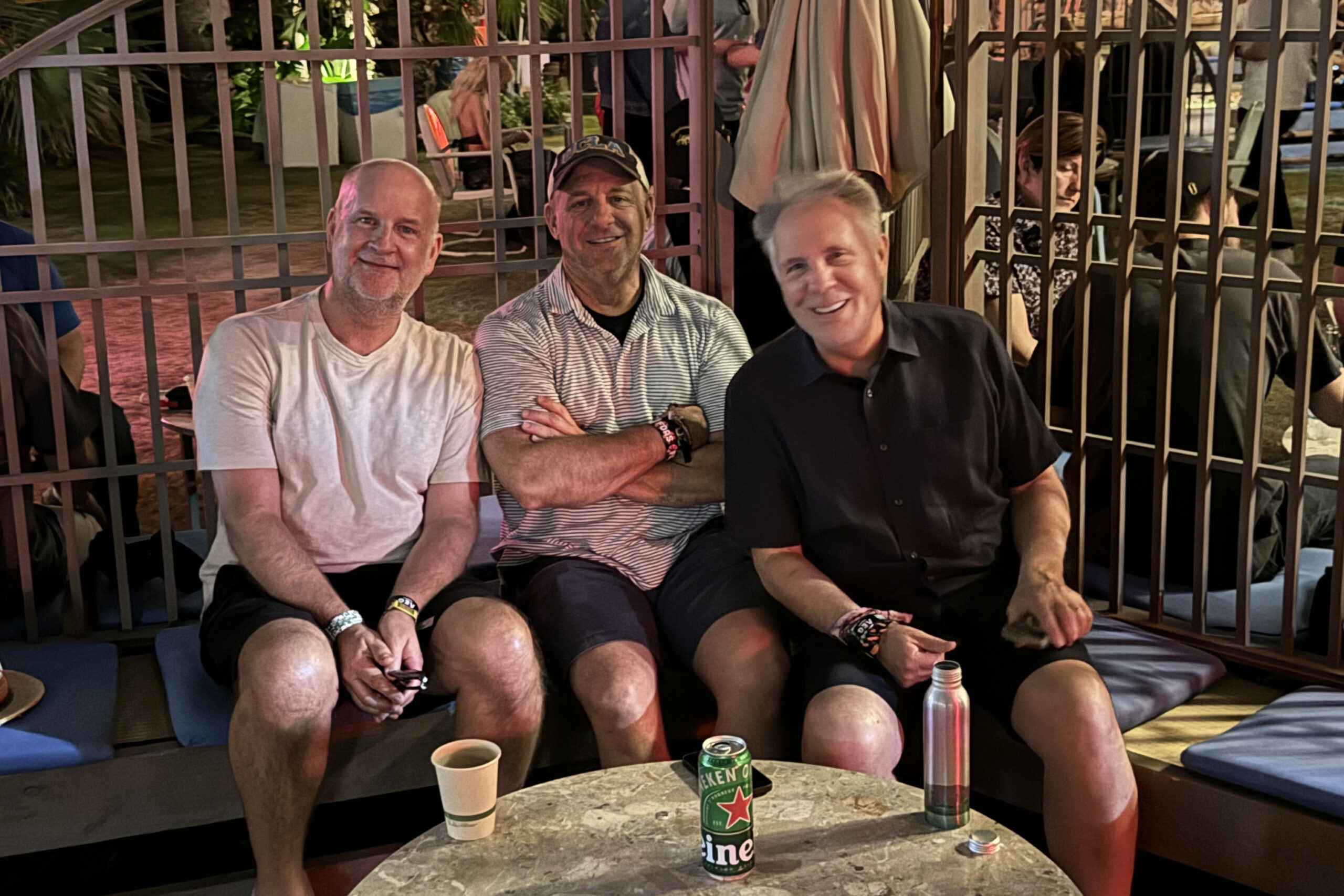
(L-R) Jim with AEG Presents EVP Shawn Trell and chairman Jay Marciano
Having run through the concept, including the Great Oak Stage hosting the biggest artists in the world, King got a second chance to present the idea more thoroughly with a working computer. It was greenlit, and during a series of meetings the concept was refined.
Says King, “We had five or six meetings to develop and improve the concept, after which Jay said, ‘This is one of the best things I’ve seen, and our company should be putting all of its resources behind it.’ That was a huge moment for me because I was still very much independent in mindset, and very much looking through that lens, but when a CEO of a company like AEG says they’re going to put all resources that are required behind a project, you then really see what big companies can do.
“AEG is unique in that it’s a big and well-resourced company, but it still retains a culture of thinking and looking through an independent lens. This naturally connects with me. To be entrepreneurial. Quality over quantity. To deliver the best.”
Says Marciano, “To see what it’s become since we had that first conversation is a testament to the vision and execution Jim brings to all the festivals he runs. It’s now a must-play for artists and a global destination for fans.”
“To be able to sit down with Es Devlin, one of the best set designers and creative minds in live event production, and take my rudimentary ideas for the Great Oak Stage and turn them into what you see now – that was remarkable,” reflects King. “I’d never had access to that level of resource or creative mind before. To have the backing of Jay, and the resources available to be able to execute to the level, which you saw BST come in as, was a defining moment for me. It gave me the confidence that anything is possible.”
Much of the infrastructure at BST Hyde Park, including the Great Oak Stage and bespoke scenery, was built by Star Live. King recalls working on early creatives with Star’s Roger Barrett in a Shanghai hotel bar: “I drew the entrance arches with Roger, we wanted people to be able to see them beautifully lit from all approaches surrounding Hyde Park and know that something important was happening there, and that when people walked through these huge arches it felt like they were entering another world; a massive exciting event.”
“I think BST has only just got started.”
Among the other key meetings King will never forget was pitching the event concept to Patrick Woodroffe, who has been the creative director for the Rolling Stones since 1989. Having successfully won him over, Woodroffe reported back to the band and the Stones played the first weekend of the inaugural BST Hyde Park.
“It was a no-brainer, as long as they could actually pull it off!,” says Woodroffe. “The relevance of playing Hyde Park after the band’s important show there in 1969, was clearly a big part of it all, but there was also the challenge of playing the weekend right after the band’s performance at Glastonbury, which was also an unknown. Could they sell the tickets? Would they have recovered from one huge show and be ready to play another? Would both events retain their own identity? In the end it worked out fine and both shows became an important part of their legacy.
“Jim had a pivotal role in the success of the BST show, in that he had the ultimate responsibility for producing the weekend, but he somehow did it in a way that belied the furious paddling that must have been going on beneath the surface.”
The Rolling Stones were also a prominent fixture at another landmark BST, with the band headlining along with acts such as Adele, Pearl Jam, Elton John and Duran Duran in 2022 – the first post-Covid edition. Expanded to three-weekends, the new-look event featured enhanced and new creative elements, along with a substantially bigger Great Oak Stage that enabled it to accommodate more stadium level-touring productions.
BST Hyde Park 2022 saw Star Live deliver the new Great Oak Stage, consisting of its Titan stage, a huge oak tree stage right, and a stunning wrap around screen.
Star Live also installed grandstand hospitality using its VISTA Starbox structure, and worked across numerous elements from accessible viewing platforms to the Rainbow stage.
Project director Gavin Scott has been leading the project for Star Live since 2022, and worked closely with Es Devlin again prior to the unveiling of the new look Oak Stage.
He says, “It is a much bigger stage, and initially the challenge was building a scaled oak tree that size that replicated a tree’s natural structural integrity, and then integrating all the technical production, the screens, audio and lighting, to make it blend in without impacting sightlines.”
Post-Covid, King says he never had any doubts about the decision to expand BST Hyde Park to nine shows once the Covid restrictions were lifted: “I always had great confidence coming out of Covid, across all of our festivals, but most strongly with BST. We wanted to uplift the event to come back as strong as possible. Fortunately, we have a strong network of suppliers. Including Capital, Vanguardia, Peppermint, Star, Proper and Spacial who have worked with me for over 20 years, and they always embrace the ideas and vision that I am seeking. London, for me, is the best live music city in the world, and BST is in the middle of it. You can walk to it, it has the most amazing production, incredible fan experiences and so why would people not want to come?”

The crowd cheers as they wait for Lana Del Ray to perform at BST Hyde Park 2023. Photo by Dave Hogan/Hogan Media/Shutterstock
“What Jim has done in Hyde Park, reimagining what an event could look like in that location, is a remarkable job. The event just screams quality,” says Barton.
One of the most powerful agents in the world, CAA’s Rob Light has been supportive of King’s work on BST Hyde Park since the early days.
“There are a lot of great stadiums, Wembley is certainly one of the iconic ones, but there is nothing like Hyde Park, being in the centre of an amazing city like London, walking to the venue from the tube – the beauty and magic of the city surrounding you, and an audience that is so excited to be there,” says Light. “I have been to so many magical shows in the park, it brings a very special energy – Carole King doing Tapestry start to finish for the first time ever, Michael Buble singing for 90 minutes straight in the pouring rain and crushing it, Stevie doing Songs in the Key of Life, Bon Jovi, the Eagles..
“I went to the Stones with Tom Cruise as my guest. Tom didn’t want to leave before the end and beat the traffic, so he stayed to the last note and walked home with 65,000 fans. Lana Del Rey mesmerising 65,000 people, Springsteen and McCartney, Streisand; I could go on and on. For many years Shania Twain would be in London for Wimbledon, and she would come to the shows with me, and I would say, ‘You need to headline here’. Last year she did and loved it. It just is a very, very, special place for music.”
AEG has the Hyde Park contract until 2027, and King says that his vision for the event stretches far beyond that: “I think BST has only just got started. There are great artists coming through. There are more stadium shows taking place than ever, and look at who’s headlining, nearly all of them are aged between 25 and 50. I still passionately believe that artists want to play the best shows. The promoter helping deliver that magical connection between the biggest artists in the world and their fans is everything. That’s why I do this.”
King has come a long way in the past 30 years but shows no sign of slowing down. He says that since AEG launched the European Festival division that he oversees, it has gone from promoting six festival days to more than 30, and the plan is to maintain that momentum.
“That growth will keep going, but it’s sustainable and targeted. We want all of our shows to stand for something and be coordinated with each other because there is strategic value in enabling them to be routed and booked collectively.”
“I look at the successes of Coachella since it started in 1999 and where it is now. I’d like all of our shows to be able to replicate the success and longevity of what Paul Tollett has achieved there. Similarly, I’m tremendously proud we started Creamfields back in 1998, and what Scott Barton, who used to work with me, is still delivering. These festivals have a long journey still left to run, and I feel that all of the events that we’re involved in are on the same trajectory.”
Taking the plunge
In 2018, with AEG Presents having won the tender for East London’s Victoria Park, All Points East (APE) was born. The award-winning, 10-day, 50,000-capacity, APE festival consists of six days of concerts, and four days of free activities for locals known as In The Neighbourhood. Among the headliners this year are Barry Can’t Swim, Raye and Chase & Status.
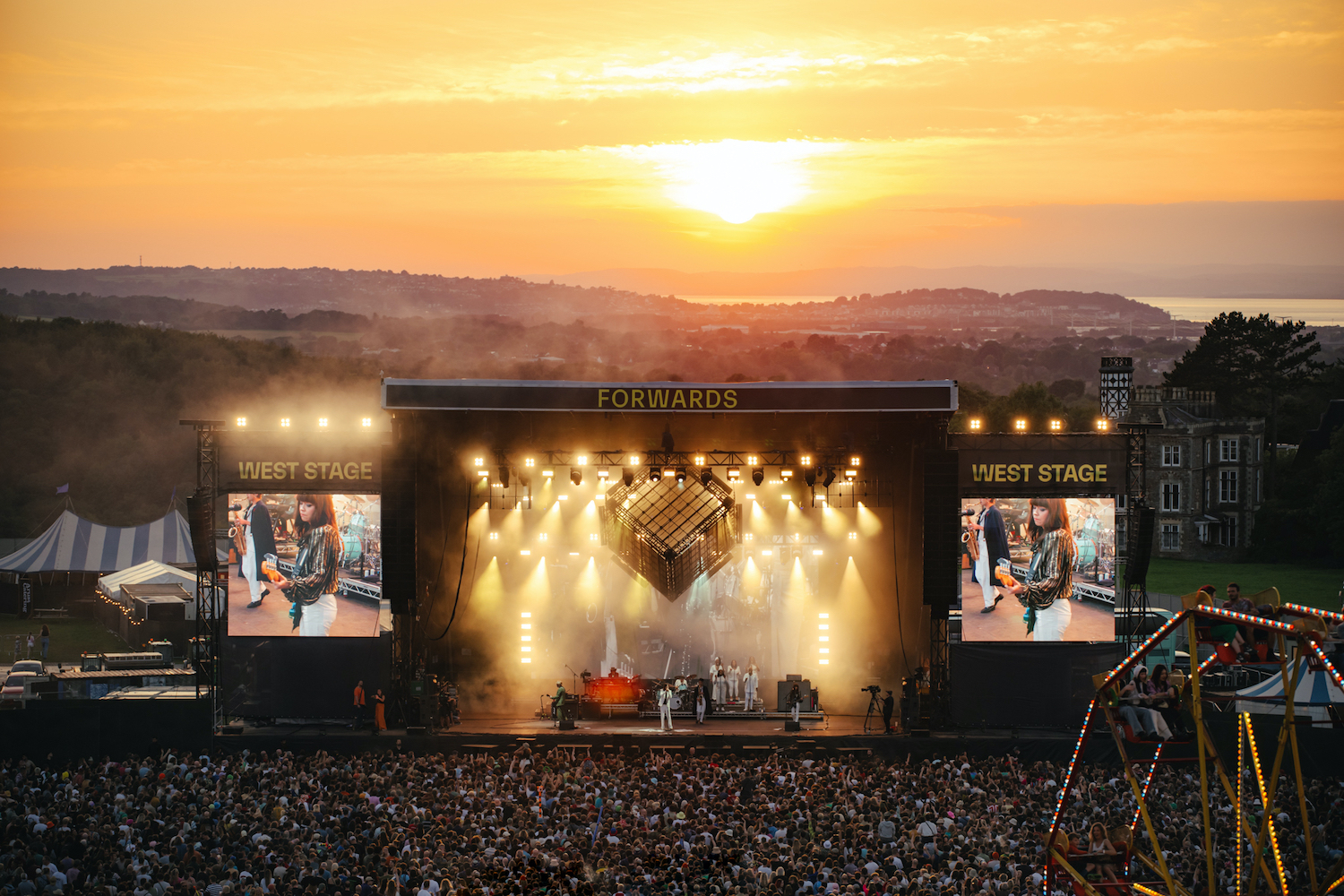
Four years later, King launched another new event, this time in Bristol. The promoter staged the inaugural Forwards festival (cap. 35,000) on 3-4 September 2022, having teamed up with Bristol-based Love Saves The Day festival promoter Team Love to work on the event. It took place on Clifton Downs with a lineup including Charli XCX and The Chemical Brothers.
“LIDO will be the most sustainable event we’ve run.”
Last year, Massive Attack played a landmark show there, with the band’s Act 1.5 event billed as the lowest carbon show of its size ever staged. It saw Ecotricity and the Grid Faeries power the event with a battery that replaced the use of 2,000 litres of diesel, saving 5,340kg of carbon emissions. That battery will be rolled out again at LIDO.
Having built a strong relationship with the local authority and community at Victoria Park, LIDO will feature carefully curated music line-ups alongside community-driven activities during the week.
King says a key focus around the planning and execution of the 35,000-capacity LIDO, which is named after Victoria Park’s historic Lido Field, is sustainability.
“We want to run the best possible festivals that we can and to do that we start by looking at it through the lens of the artists, the fans, and stakeholders. The local community is one of the most important stakeholders. Back in 2011, there was a lot of resistance from the community to the Hyde Park shows, and a great deal of problems with the licence, which we have turned around since taking it on. I learned in my very early days, with Creamfields, that you must build strong relationships with the community.
“Sustainability ties in with that focus – if we are more efficient and sustainable in the way we deliver events it means we can build quicker, we create less noise, and we create less impact on the green spaces and the communities around them.
“When we look at new sustainable event technologies and how we introduce them into our operations it’s about doing it for the right reason, not because it looks good on the press release but because it benefits fans, artists and the community, and builds a stronger business.
“LIDO is really the summation of many years of sustainability activity. It has been accelerated by the work we were invited to do with Massive Attack on the ACT 1.5 show. When the artist is driving it, it brings everyone else with them; us as the promoter and the producer, our partners, the local authority and the supply chain. Having the artist as the advocate, with a loud voice, really drives confidence from everyone.
“LIDO, with the coordination of sustainable technologies that exist and us packaging them up in a way that will deliver, will mean it is the most sustainable event we’ve ever run, and the most sustainable in the UK of its scale.”
Just the beginning
Despite having already significantly grown the reach of AEG Presents in Europe, King says he and the team are only getting warmed up, and there are plans to not only expand the current shows but to launch new festival brands.
Some 30-years since the newly graduated Jim King dropped his paintbrush and jumped in his car back to Liverpool to begin his first real job in the live music, it’s apparent he has lost none of his enthusiasm or ambition for the industry.
“Cream gave me the courage to go for it and be bold, but my time with AEG, has given me the belief that the most ambitious things are possible. I have a great team and unbelievable support from AEG’s leadership to realise these ambitions,” he says. “I’m focussed on building our festival footprint around all music genres and in support of AEG’s wider European expansion plans.”
For the full article see the Summer edition of Access All Areas here.