

 Christopher Barrett
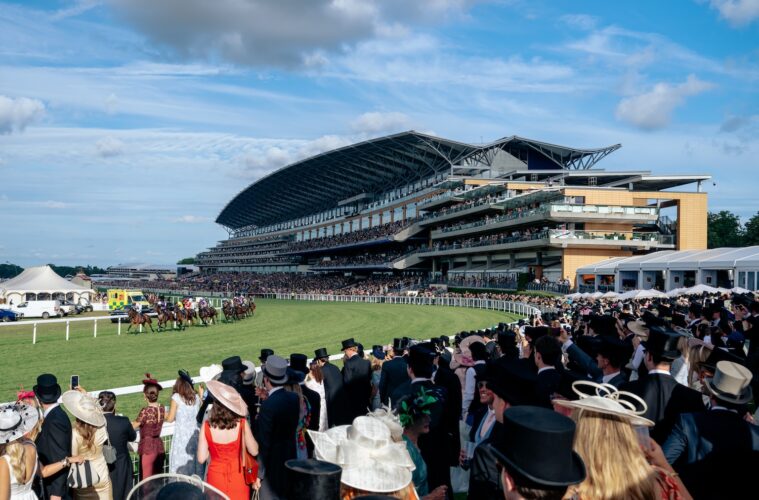
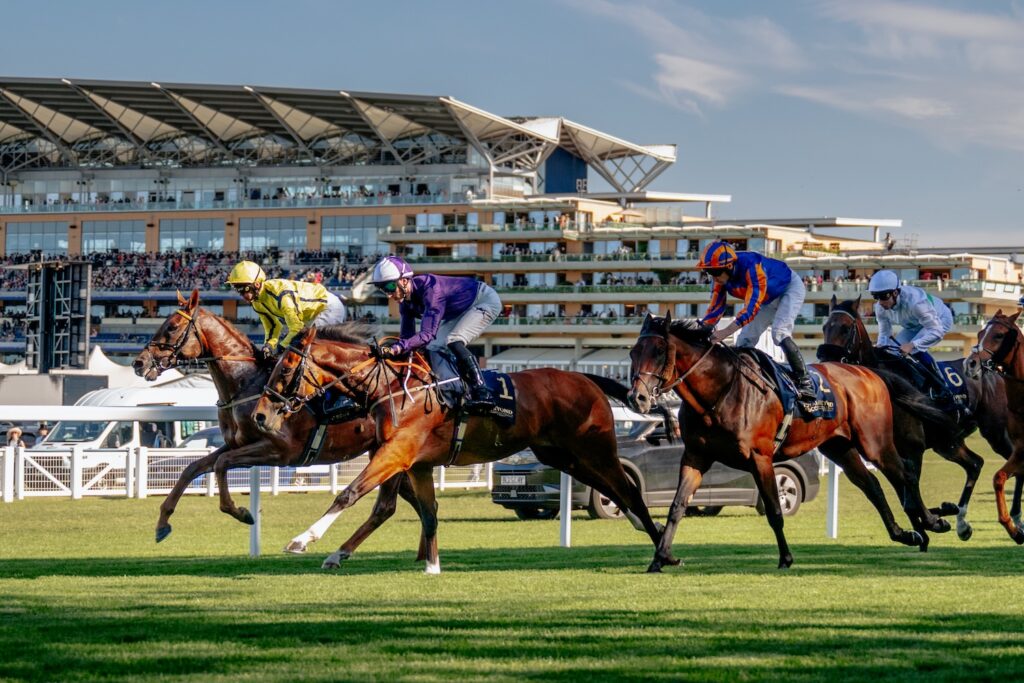
Founded in 1711 by Queen Anne, Ascot Racecourse has hosted Royal Ascot for more than 250 years but each year its production involves new ideas and concepts being brought to life. We explore the new elements that made a difference to the look and feel of this year’s edition.
While being steeped in history, Royal Ascot has been enhanced in recent years with new look features, viewing areas and brand activations that resonate with its attendees while remaining in line with the deep-rooted elegance of the event.
Typically, 300,000 racegoers attend the landmark flat racing meeting across its five days, while the event is broadcast in more than 200 territories to an audience of around 650 million. It is not just the attendees who dress to impress, the team at Ascot work year-around to ensure that the 179-acre site is transformed into one of the UK’s most beautifully presented summer events.
With some 219 temporary structures ranging from triple-deck hospitality venues to small bars, Royal Ascot is also one of the largest event builds in the UK.
Director of estate operations Sam Thompson joined Ascot Racecourse in 2022. To bring Royal Ascot to life his team works with more than 1,500 contractors on site. While decorating Royal Ascot’s four enclosures alone involves more than 3.5 miles of bunting and 20,000 biodegradable Union Jacks, to keep visitors comfortable some 130,000 pieces of furniture are hired in.
Thompson says the event build typically commences on 23 February and lasts 113 days, with everything completed the Friday before Royal Ascot commences – which this year ran from Tuesday 15 June to 19 June. Some 21 days after Royal Ascot, the site has been returned entirely to its original layout.
The latest major change to Royal Ascot was the opening of the Village Enclosure, which has been enhanced each year since it was first unveiled in 2019 to complement the Royal, Queen Anne and Windsor enclosures. The Village Enclosure is now used by around 10,000 visitors per day, and once the last horse has gone past the finish line, the area is transformed into an after-race party venue.

Sam Thompson
“We offer a variety of experiences; the Royal Enclosure is the classic top hat and tails environment, the Queen Anne is for the hardcore racegoers, and the Windsor is a much more casual offering for a very relaxed day out,” says Thompson. “We wanted a new enclosure offering a different atmosphere, so we created an area on the infield, on the other side of the track. The Village Enclosure has been developed significantly in recent years, with new venues, entertainment, and food & beverage offerings. It’s probably more akin to a festival than a racegoers’ event.”
The Village Enclosure’s evolution certainly appears to be hitting the right note, with a 13% year-on-year increase in guests at the 2026 event, with 70% of all guests in the 18-34 year-old age bracket.
“It’s probably more akin to a festival than a racegoers’ event.”
For Thompson and the team the inclusion of the Village Enclosure, and continually taking a fresh look at all elements of Royal Ascot’s presentation and delivery is key. “We try to offer new experiences, new environments, new charitable engagements every year. Royal Ascot is a very traditional event with remarkable heritage, so we’re not here to completely rip up the rule book but we understand that it’s our responsibility to keep on adapting.
“There’s more than 330 music performances throughout the week, and the food and beverage offering is world-renowned. We have over 32 Michelin stars for a variety of chefs on site. It’s always about offering something different, and the event being right for absolutely everyone.”
Ascot commercial director Tom Johnson oversees all commercial functions across the business as well as Ascot’s marketing operation. Central to his role working with commercial partners is finding a balance between embracing new ideas and activations with a respect for the permanent aspects of Royal Ascot that are synonymous with the event’s prestige and heritage. Among the many commercial at Royal Ascot this year were Moët & Chandon, Chapel Down, Silent Pool, Whispering Angel and Schweppes.
“The partnership programme is interesting because fundamentally Royal Ascot has a huge amount of heritage involved in it and it is important to remember that many of the aspects that make the event so special are the ones that haven’t changed,” he says.
“We work closely with partners and set clear guidelines as to what a brand experience should be. That’s developed in partnership rather than unilaterally by either side, which is critical because as well as protecting the brand and protecting the event experience, there’s also the audience flow to consider. It is such a big site, and there’s so many different elements to experience, so we must make sure the right partner is activated in the right place for their audience.
“We have three tiers of commercial partnership, from official partners through to official sponsors and then official suppliers; all of whom play key roles in bringing Royal Ascot to life. We make sure we work with partners who do it the right way. They are investing in that history and prestige when they work at Royal Ascot so are as much of a stakeholder in protecting it as we are.”
To bring that multi-faceted event offering to life each year, the team at Ascot Racecourse work with a cohort of some of the industry’s leading suppliers to transform the site. Among them this year were Power Electrics and Visions Group working on power, GL Events delivering the grandstand, and Arena Group and Neptunus among the lead temporary structure providers.
“Designing, producing and delivering these bespoke structures has been a really creative process.”
Royal Ascot benefitted from several new structures this year. Making its UK event debut was Neptunus’ vast circular Salacia structure. Originally created as a centrepiece for the 70,000-capacity Tomorrowland electronic music festival in Belgium, the Salacia was an eye-catching new addition to The Village Enclosure this year that offered a covered viewing area and a break from the sunshine.

Ben Keast
With a clear span of 30 metres, the Salacia was extended for Royal Ascot with a five-metre canopy fitted to allow graphic displays to be added. The roof was built at ground level and then hydraulically lifted into place, offering flexibility for heights up to 12 metres.
In total, Neptunus was involved in the provision of more than 5,000 square metres of temporary structures for Royal Ascot, while managing fit out of services including carpets, linings, lighting and power distribution.
Neptunus managing director Ben Keast says, “At Royal Ascot there’s two sides to the offering; the more traditional on one side of the racecourse and the festival atmosphere on the other side where they’re able to push the boundaries of creativity a little bit more. That’s why the Salacia structure has been introduced. They are pushing the boundaries of tradition and people’s expectations, while maintaining the feel of a premium event that always sells out.”
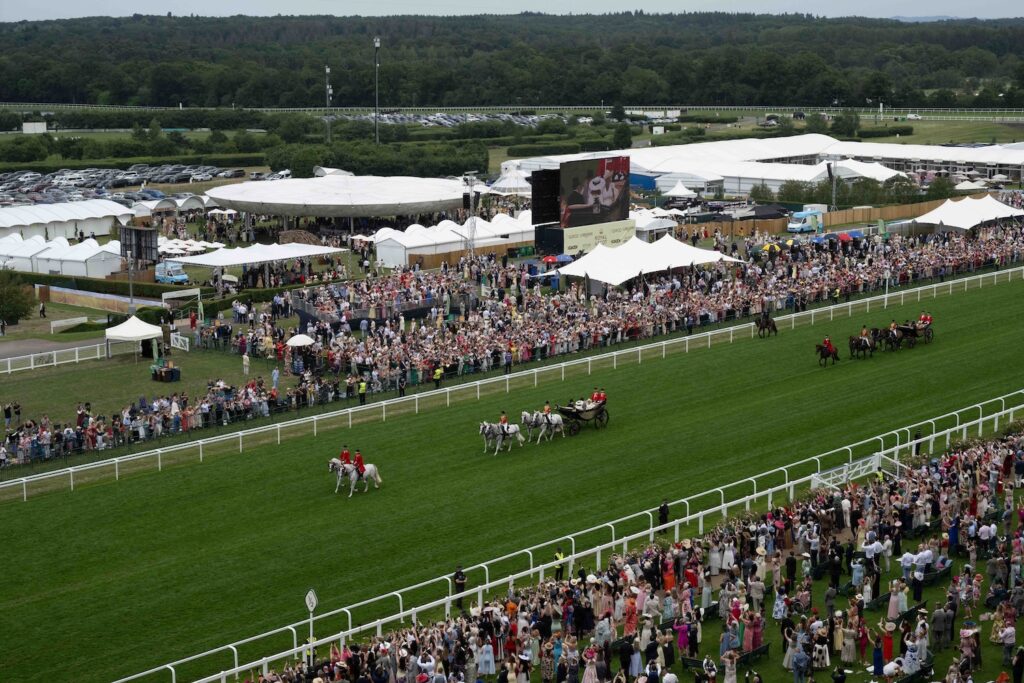
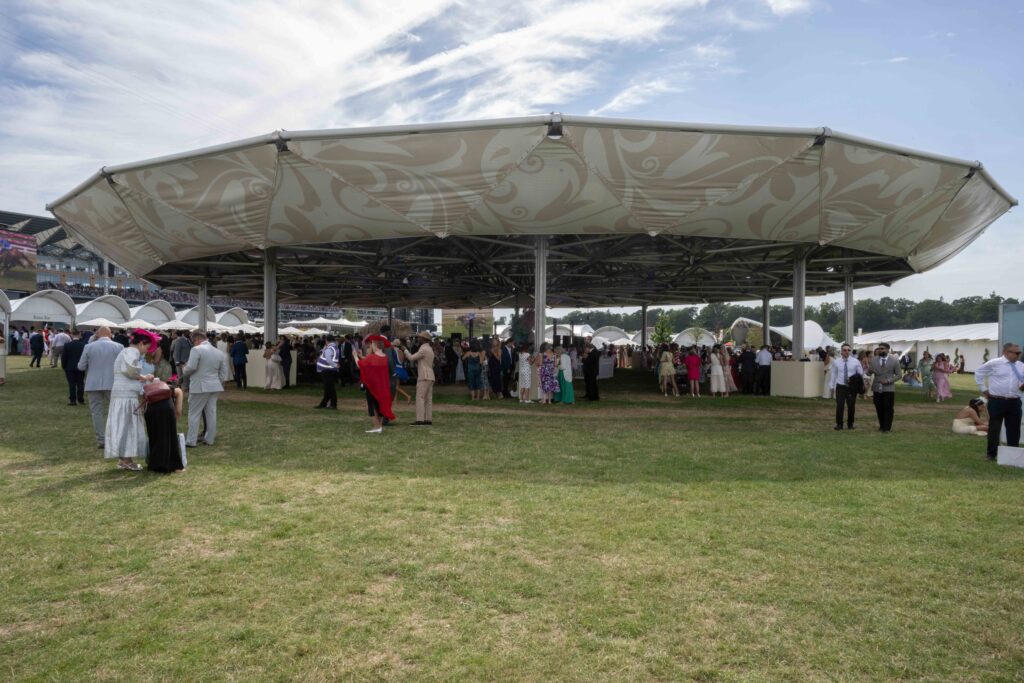
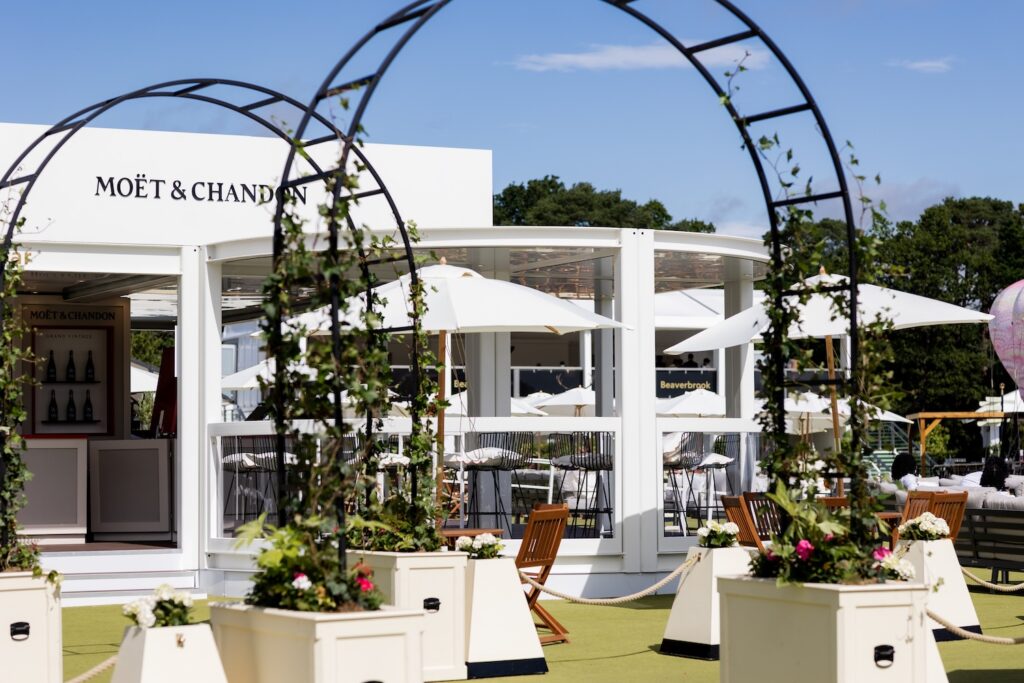
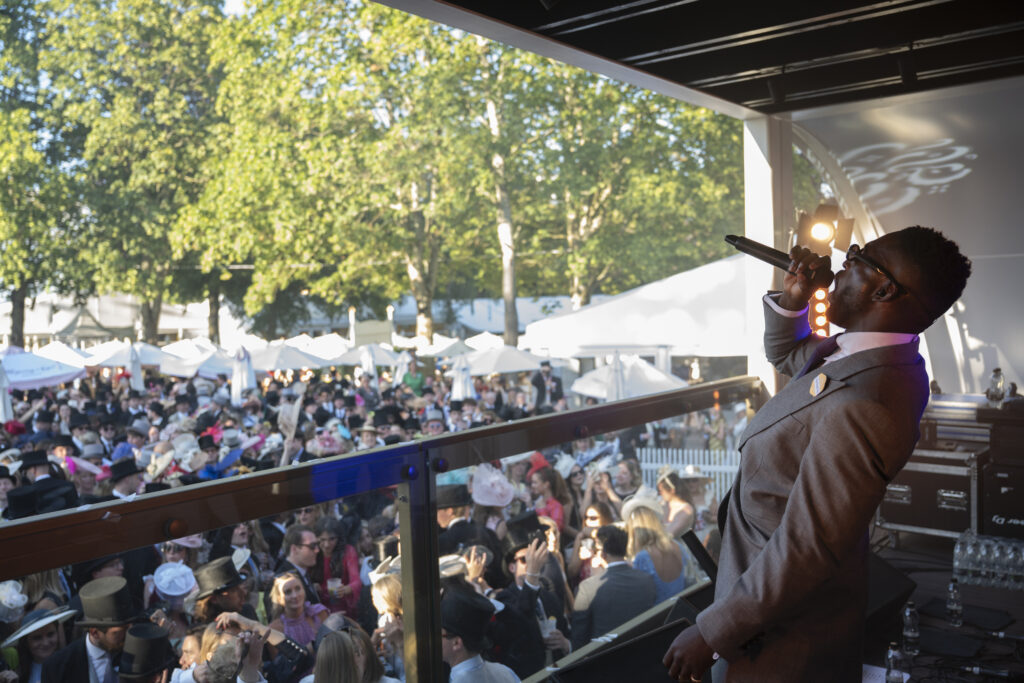
“The Village Enclosure is a greenfield site, where there is no infrastructure at all, so we build it all from scratch,” says Thompson. “We’ve been developing it around the kind of structures used to make it more vibrant. So we have been using more interesting structures, with curves. Neptunus has worked really well alongside us to produce that. In the centre we’ve had a dome for the last few years, with a live music act in it. That didn’t seem significant enough; we wanted something that was really eye-catching that we could be proud of, and that’s where the Salacia structure that was offered to us by Neptunus came in.”
That move to involve innovative structures that retain the premium feel of Royal Ascot while delivering a fresh and more modern event experience, saw Arena Group brought in to deliver a new look in the more traditional event spaces including the Royal and Queen Anne enclosures.
For Arena Group it was the first time working at Royal Ascot for around two decades. Its key contributions this year included providing three new bespoke structures from its Showblock division, which it acquired in May 2024.
“Suddenly we were looking at something that offered new dynamics.”
“We’re always looking for something different every year to change the atmosphere and look of the event, and sometimes that comes down to what structures we put in,” says Thompson. “We put the Royal Enclosure out for tender last year, and when Arena came forward with Showblock suddenly we were looking at something that offered new dynamics, new shapes – so we pursued that.
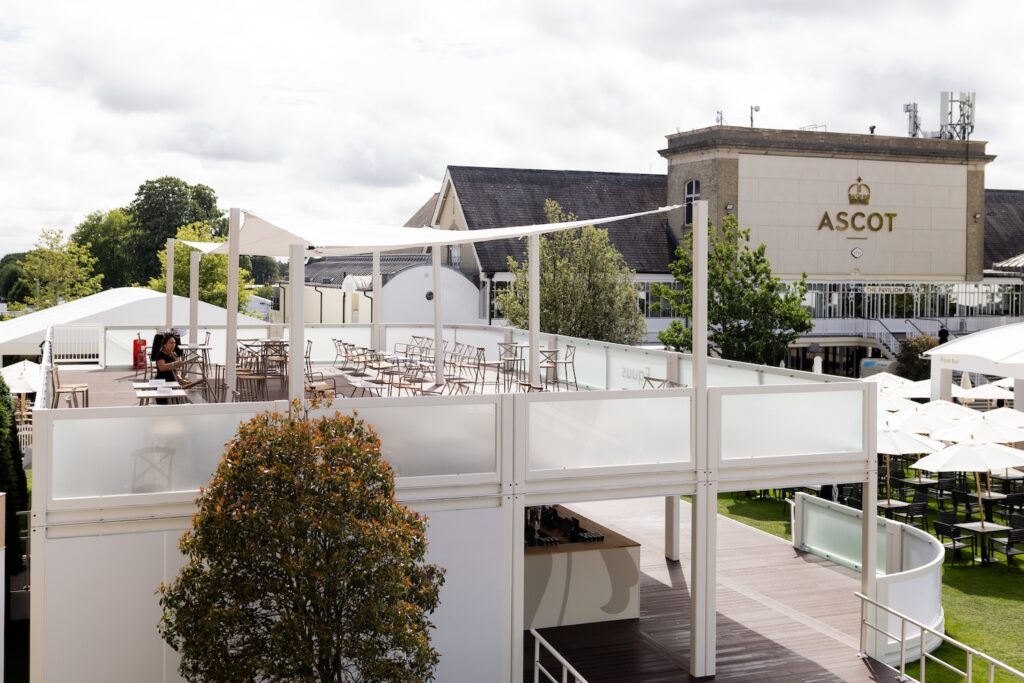
“Not only does Showblock have nice curves, it provides the opportunity to create two-story structures,” says Thompson. “We had a really nice one in the centre of our race viewing area in the Royal Enclosure, with a champagne bar in the middle. We also decided to bring one down to the Queen Anne enclosure; a public facing bar that has a bespoke experience upstairs where you can reserve a table for the day and enjoy the views of the plaza and band stand. That’s the first time we’ve had an elevated platform in that area. The Showblock structures are really impressive.”
Ross Roberston
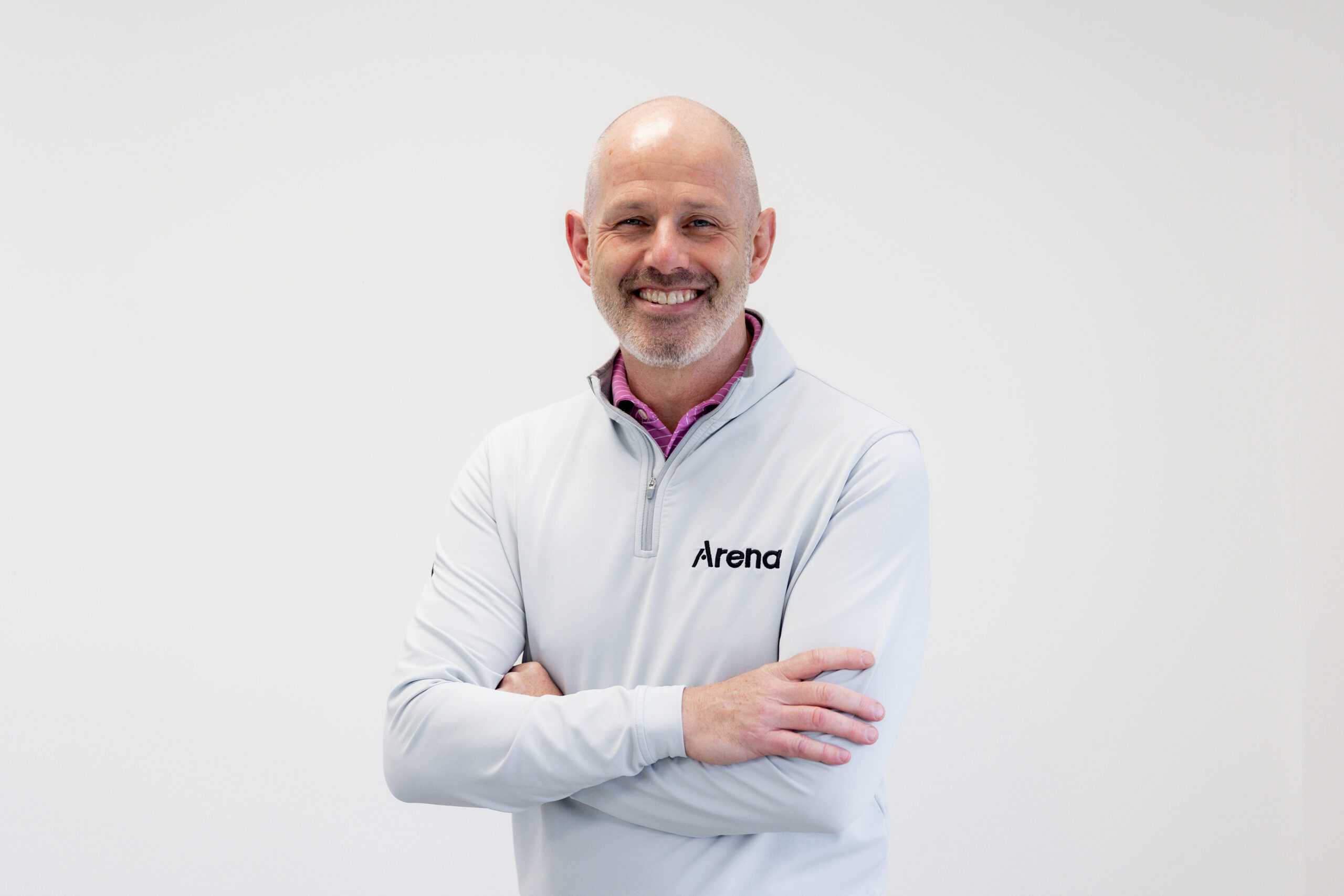
Arena Group regional MD UK & Europe Ross Robertson says that key to the company’s successful bid was the ability to create bespoke elements using Showblock and integrate them with existing Arena stock as part of its delivery of 6,000 square metres of structures across Royal Ascot.
“Innovation was key to it,” he says. “We thought, ‘Let’s look at a mix of existing stock structures and use the Showblock elements to expand the offering and capture the innovation piece’. We really went all out for the bid; we put a lot of work, new kit and investment into it and so to win it and then to deliver it has been a really rewarding experience. Designing, producing and delivering these bespoke structures has been a really creative process for the team to work on.”
For Arena this year’s Royal Ascot marked the first of a three-year contract with Ascot Racecourse. Arena started working on site at Ascot on 9 April, with the build taking place over nine weeks. Along with the 6,000 square metres of temporary structures, including the three bespoke Showblock facilities across two enclosures and new 12.5m Arcus structures purchased specifically for Royal Ascot, Arena provided 965 sqm of scaffold substructures and 142 linear metres of canopy flick structures.
Robertson says that every site comes with its own challenges and aside from the creation of two structure that needed to accommodate trees emerging through the roofs, other key considerations at Ascot included keeping clear of the grass at all times: “We are always very respectful of sites, and this one was a particularly special event on a special site, where the grass is absolutely immaculate.”
When it comes to respecting the environment, Thompson says the Ascot team work very closely with the local community to minimise the impact of the build, delivery and break-down of Royal Ascot: “There’s the safety element during the construction work, so we make sure that all our construction sites are fully enclosed and fenced off.
“People understand that we have a major global event running here and they love being near to the racecourse, and the prestige of Royal Ascot. We do everything we can to give something back; we invest heavily in local charities, and even the small things are appreciated, such as all the flowers and hanging baskets decorating the High Street.”
It all comes down to making sure that Royal Ascot is as important to the average person on the street at the VIPS, says Thompson: “We have around 720 helicopter landings throughout the week for clients and participants. Meanwhile, we have trains coming into the station every eight minutes from London. We’ve got to make sure that everyone can access Royal Ascot, and that everyone has the best day out possible.”
Says Johnson, “If you walk from one end of Royal Ascot to the other, which I’m not sure I’d recommend doing because it’s a fair old hike, it feels like you’re walking through 20 different event zones because there are so many distinct pockets of experiences.”
This article features in the summer edition of Access All Areas magazine – read it here.