

 Christopher Barrett
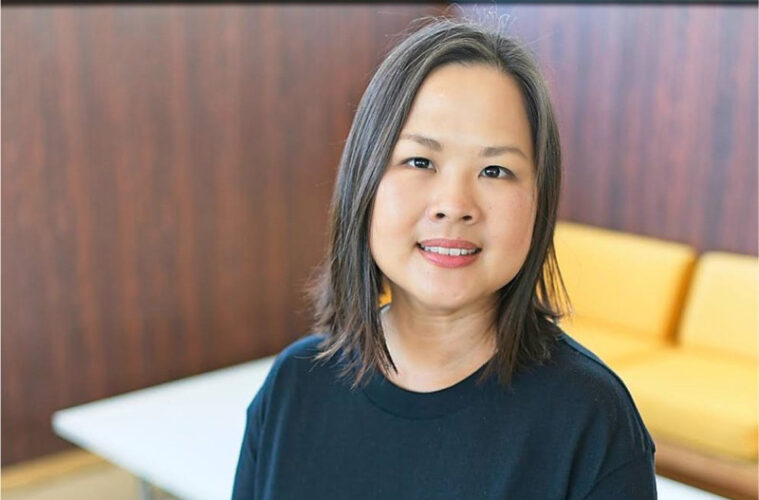
Following her SXSW London conference panel session exploring the reimagining of engagement, we caught up with TAIT senior creative director Margaret Kerrison to discuss how new tech is impacting the creation of immersive environments and what that means for the future of audience interaction.
At SXSW you spoke about the importance of creating emotional journeys and meaningful experiences that lead to lasting memories for audience members. How has your work in that field evolved in recent years and where do you see that going in the next five to 10 years?
When we design for emotion, not much has changed in terms of the result, which is to create an emotional, meaningful, transformative experience for every guest. What has changed is that we are constantly gaining new tools and technology over the years to help design and power that emotional storytelling.
Looking ahead five to 10 years, I see emotional design becoming even more predictive and participatory. We’ll move from designing for emotion to designing with emotion—where guests co-create their journeys in real time, guided by intelligent systems that understand context, mood, and intent. Experiences will become more fluid, adaptive, and deeply personal, blurring the lines between story and self.
Ultimately, the goal is still the same: to move people. But the ways we get there are becoming more sophisticated, more human-centered, and more magical than ever before.
“Experiences will become more fluid, adaptive, and deeply personal.”
Clearly you cannot rely solely on new technology to achieve all that, but which technologies are proving the best tools?
Technology alone can’t create emotional or meaningful experiences. It’s just a tool, and like any tool, its impact depends on how it’s used. That said, certain technologies have become especially powerful enablers in recent years.
Immersive technologies like augmented reality are enabling us to create environments that feel deeply personal and transportive, while artificial intelligence allows us to tailor experiences to individual preferences, making them more adaptive and emotionally resonant. Real-time data and sensing technologies further enhance this by offering insights into how people are engaging with a space, allowing us to shape the journey dynamically. What’s especially exciting is the growing role of the guest as a co-creator—something we already see today when people take selfies, apply filters, and share their curated versions of an experience. This desire to personalize and participate will only grow, as guests increasingly seek opportunities to embed themselves in the story, influence outcomes, and create meaning on their own terms.
But the real magic happens when these tools are used in service of a strong creative vision. It’s not about the tech itself; it’s about how it supports storytelling and human connection. The best experiences are those where the technology fades into the background and what remains is a sense of wonder, meaning, and emotional truth.
You touched on the hyper personalisation of environments as part of that evolution – can you expand on what that means and how that will and is being manifested?
Hyper-personalisation is about moving beyond one-size-fits-all experiences and creating environments that respond to the individual emotionally, behaviorally, and contextually – it’s always in the context of the world and experience you’re building. It’s the evolution from designing static spaces to designing responsive ones.
In practice, this means creating environments that can adapt in real time to who you are, how you feel, who you’re with, and what you need in that moment. Elements like lighting, sound, visuals, and even scent can shift dynamically based on your emotional state or personal preferences. A space might recognize returning guests and evolve the experience to reflect their past interactions, building a sense of continuity and personal connection. We’re already seeing this in areas like themed entertainment, retail, and wellness. Imagine a museum exhibit that curates its narrative based on your interests, or a spa or hotel room that adjusts its ambiance to match your mood. As technologies become more integrated and intuitive, these kinds of experiences will become more seamless and commonplace.
The real challenge lies in scaling that level of personalisation when you’re designing for many people at once. How do you make each person feel seen and uniquely engaged in a shared environment? That’s one of the most complex and exciting areas we’re exploring as designers.
Ultimately, hyper-personalization is about making people feel welcomed, seen, empowered, and valued. It’s not just about customization—it’s about emotional relevance. And that’s where the real power lies.
What are your views on emotion sensing technology?
I’m sure many people are suspicious about it, and who wouldn’t be? A technology that makes informed guesses on how you’re feeling at that moment in time? And to perhaps, know your emotions before you’re aware of them yourself? It’s part scary and part exciting. I’m curious about how we will move beyond passive storytelling into a realm where the story can listen and respond to the guest. That’s incredibly powerful.
What this means is that we can now design environments that are emotionally intelligent, spaces that can detect subtle cues like facial expressions, movement, voice tone, or even heart rate to understand how someone is feeling in real time. This data becomes a kind of emotional feedback loop, allowing the experience to adapt dynamically. For me, the most important part is not the technology itself, it’s how we use it to create meaningful moments. Emotion-sensing shouldn’t be about surveillance or control; it should be about empathy. It’s about designing experiences that are more human, more responsive, and more attuned to the emotional journeys of our guests.
If we handle it carefully and intentionally, I believe this technology will help us tell stories that are not only more immersive, but also more compassionate stories that truly meet people where they are.
“AI needs us more than we need it.”
How much of an impact is AI having on the creative process?
It’s here to stay. AI has become an integral part of our creative process, as designers, storytellers, and experience makers. But we must remember that it’s a tool, not the destination. It’s a means to an end, not the end itself.
The final product should always be rooted in human insight, emotion, and imagination. AI can support and enhance that but it can’t replace it. It will always be intertwined with our creativity and ingenuity because that’s where meaning is made.
In many ways, AI needs us more than we need it. It relies on our vision, our values, and our stories to have purpose. We need to keep reminding ourselves of that.